Nirvana: Fleeting Flowers, Radiance Within
Nirvana: Fleeting Flowers, Radiance Within
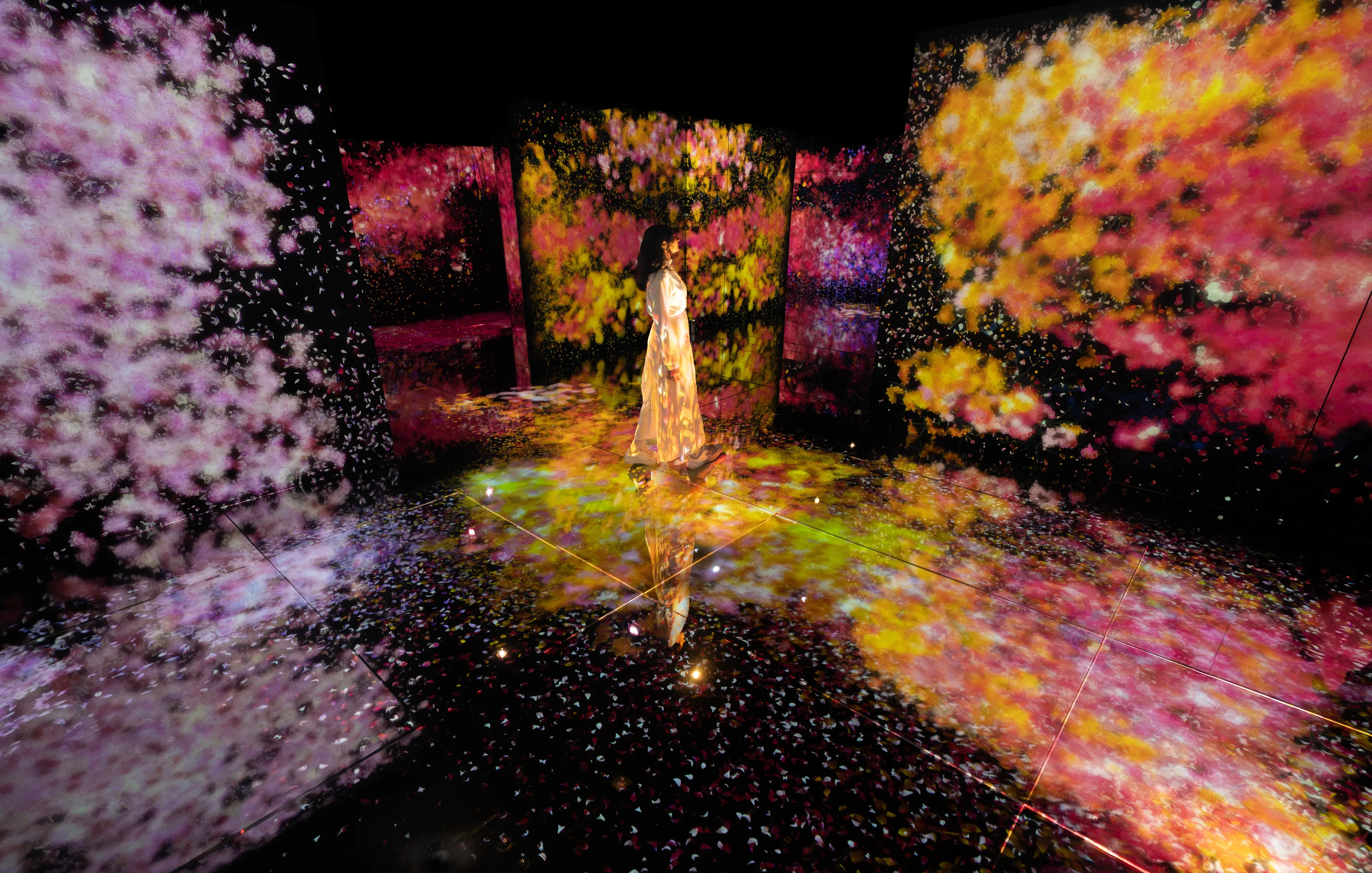
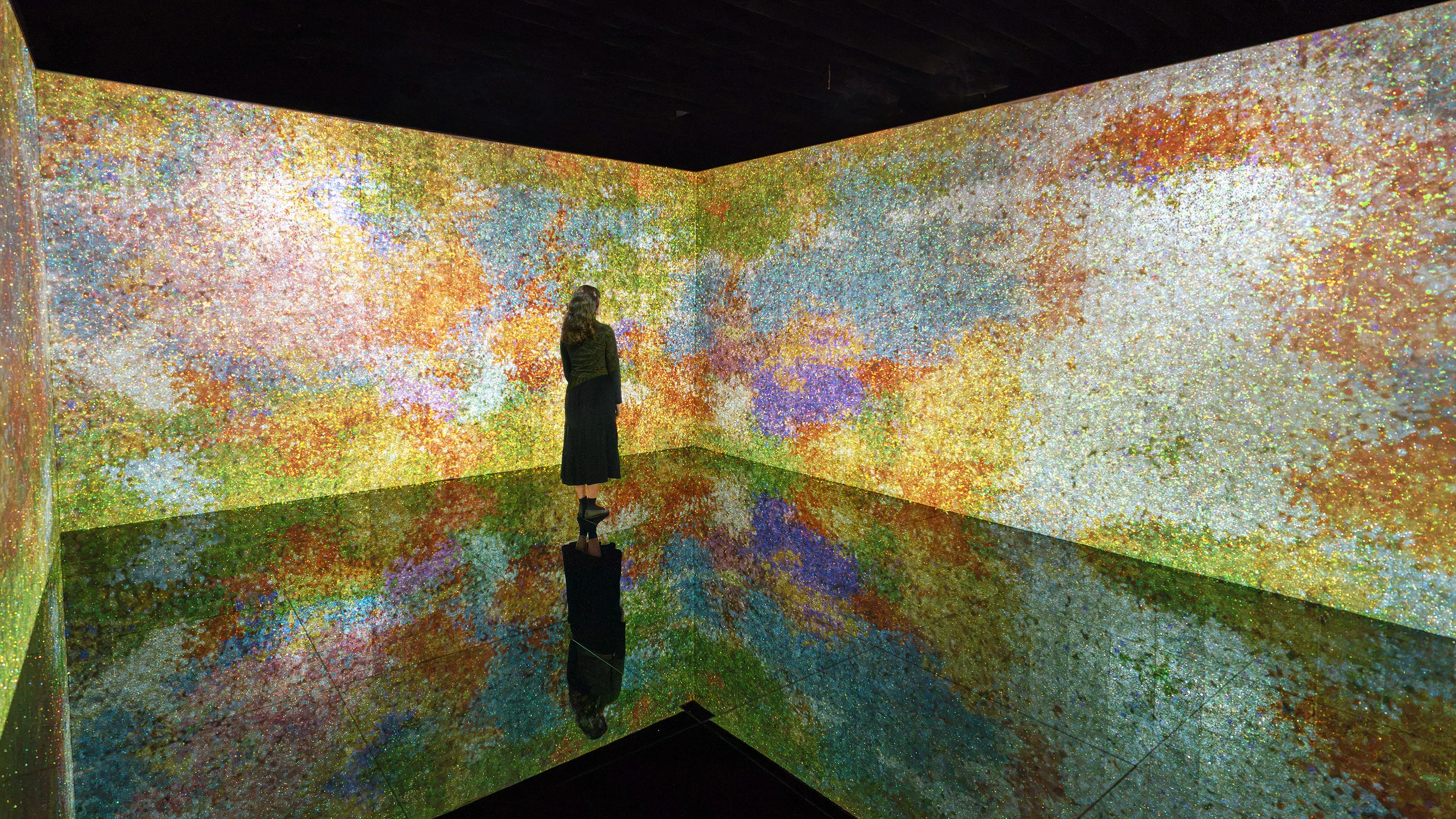
In this artwork from the Fleeting Flower series, the world of the artwork is depicted by flowers that repeat the cycle of life and death. When people touch them, the flowers scatter, and the world fades away. Everything exists miraculously and precariously in the boundless continuity of life.
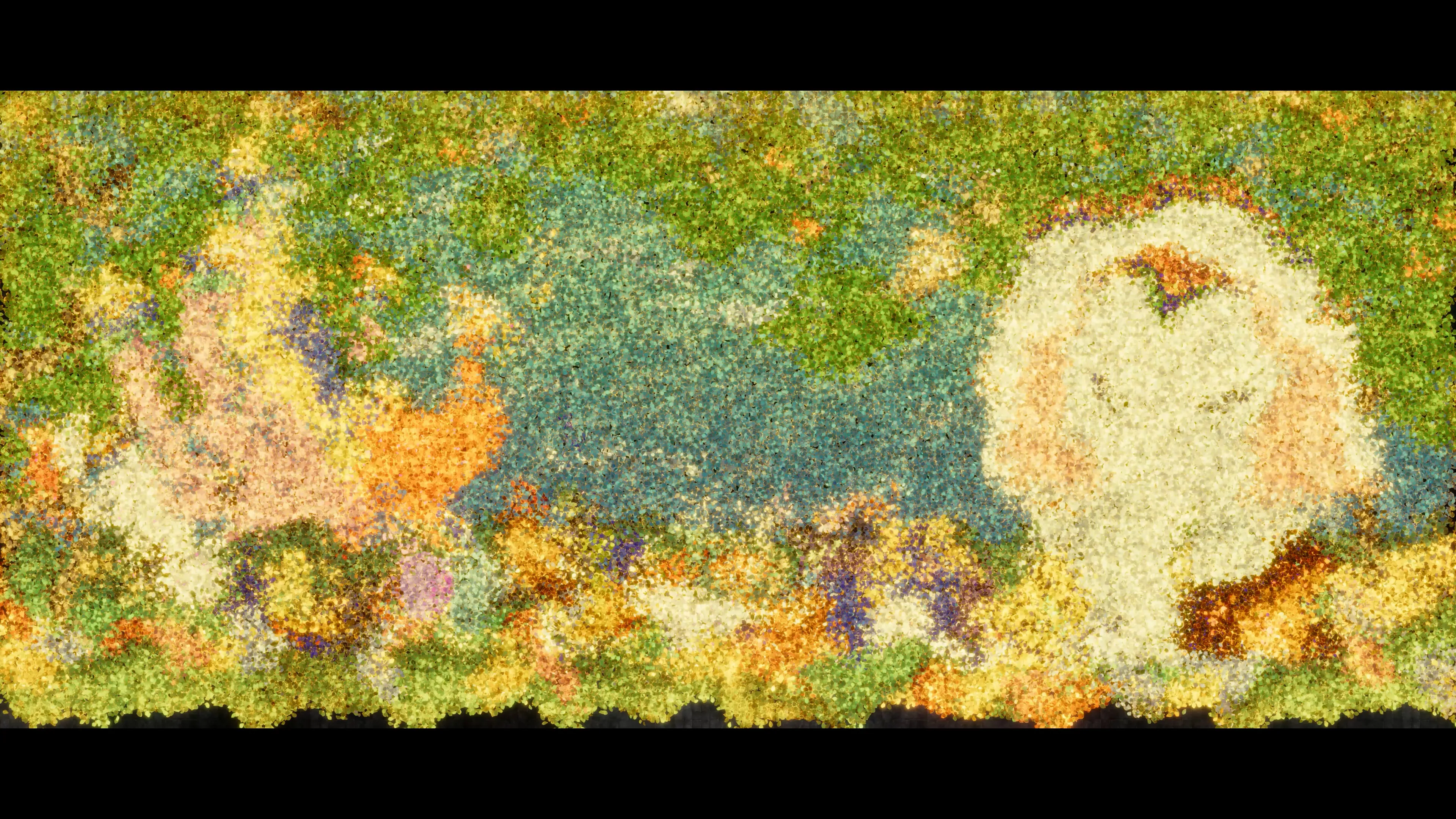
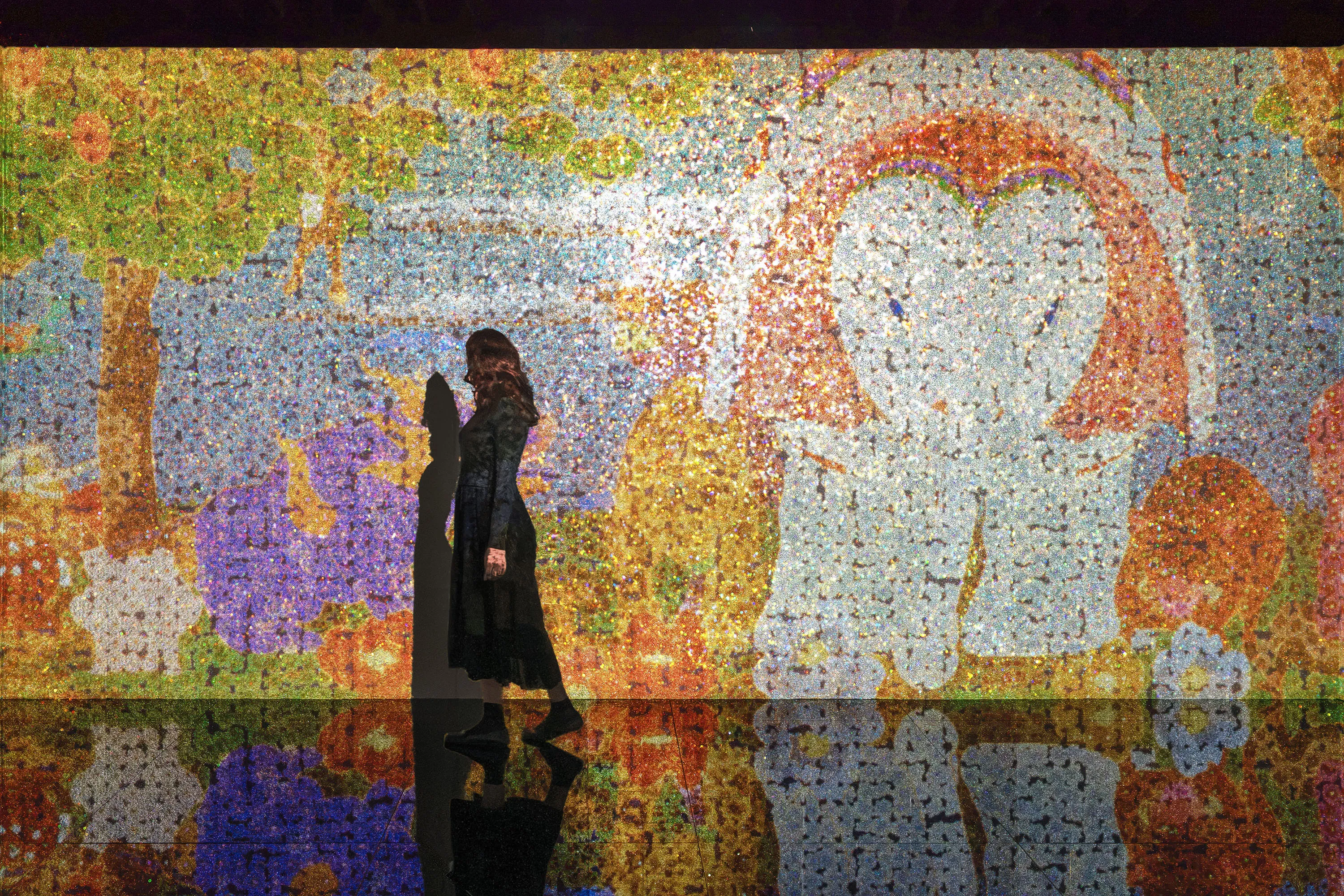
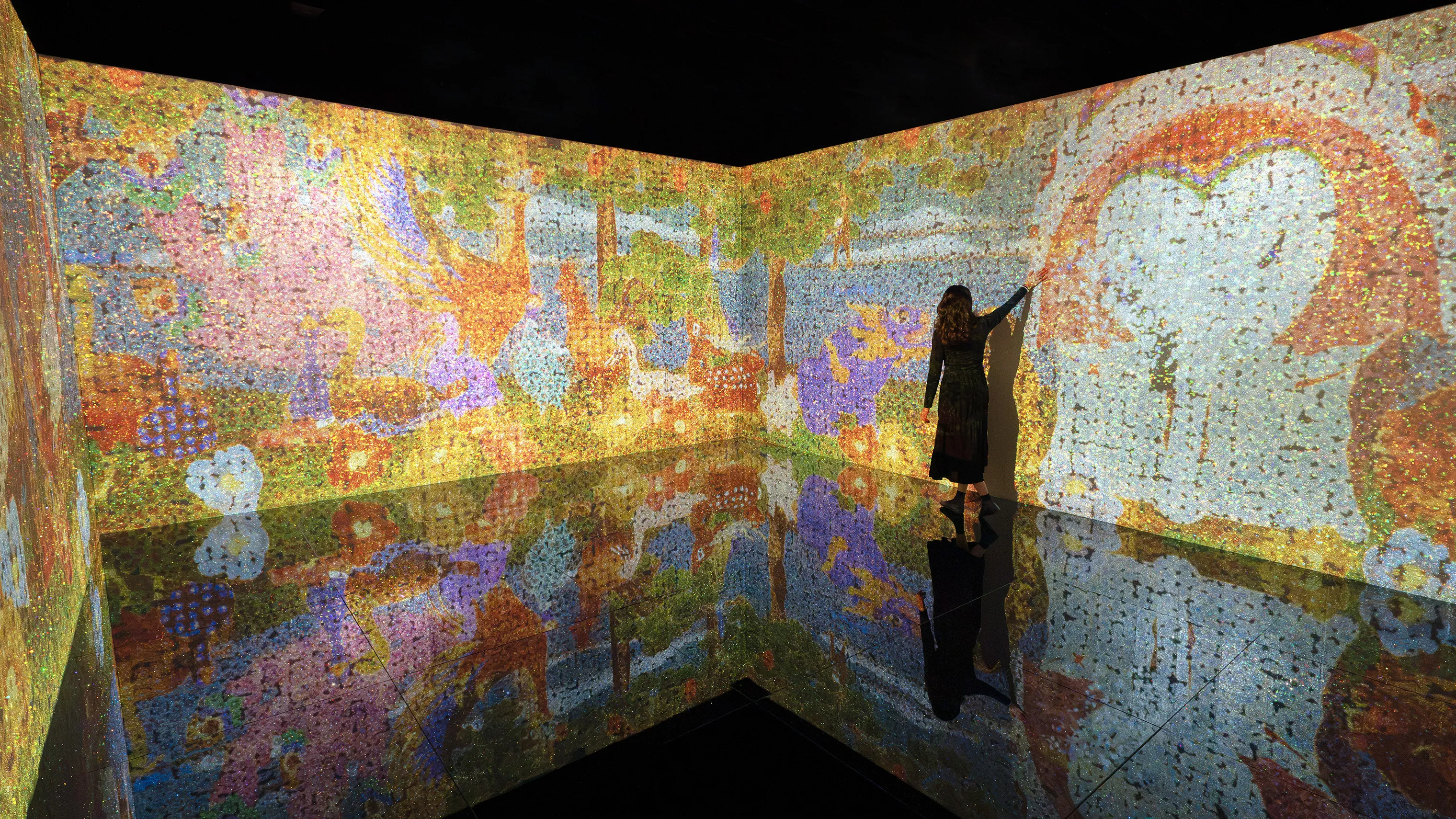
This artwork is inspired by the screen paintings “Birds, Animals, and Flowering Plants” and “Trees, Flowers, Birds and Animals” by Itō Jakuchū (1716–1800), an early modern Japanese painter who was active in Kyoto in the mid-Edo period. Jakuchū has left us with a unique style of painting in which the surface is made up of a grid of tens of thousands of squares, dividing and placing the colors of animals and plants in each square. When viewed up close, the painting appears as an accumulation of squares, but when seen as a whole from a distance, the divided colors blend through optical mixing and appear as images of animals and plants. The image seen changes depending on the distance. In this artwork, while referencing the logical structure of these square paintings where the image changes depending on the viewpoint and perception, the pictorial space continues to be generated through the life of the flowers, optical mixing of colors, the movement of the body, light, and relationships with others.
The four walls surrounding the entire room form a single pictorial space. Instead of viewing the screen from outside the painting, the viewer enters the world depicted by the flowers. When you touch them, the flowers scatter and the world fades away. At the same time, when others touch the flowers in another location, the flowers in that place scatter, and the world of the artwork changes. One's own body, the presence of others, and the world of the artwork interact with one another within the same space.
Here, the pictorial space is drawn through Ultrasubjective Space, and thus becomes a pictorial space that restores bodily freedom.
While the pictorial world is depicted on the screen, a radiance of sparkles simultaneously covers that world. This sparkle is produced when the very light that depicts the pictorial world reflects on the screen. The sparkle continues to change over time, even if the viewer does not move. Furthermore, in response to the environment and the moving body of the viewer, its appearance changes each time, shining from deep within the pictorial world.
The space created by this radiance of sparkles of light is not an illusion of depth depicted in a flat painting. It is a space that arises at that moment through time, the environment, the movement of the viewer's body and the light that depicts the pictorial world. While the pictorial space appears on the screen, it is continuously connected, without boundary, to the real physical space where the body exists, expanding into the depths of the pictorial space as a bodily space of light.
The bodily pictorial space created by Ultrasubjective Space, and the bodily space of the light overlap. A borderless bodily pictorial world, connected to the space where the viewer is located, comes into being.
This artwork does not exist on its own; it continuously updates its meaning in relationship with people. Your own touch, the touch of others, the movement of the body, and the sparkle of light—all of these transform the world of the artwork. Here, the flowers that bud, bloom, and scatter overlap with the viewer's body, the presence of others, and the sparkling of light. This expands the pictorial space into a bodily pictorial world of light that connects seamlessly with the real world.