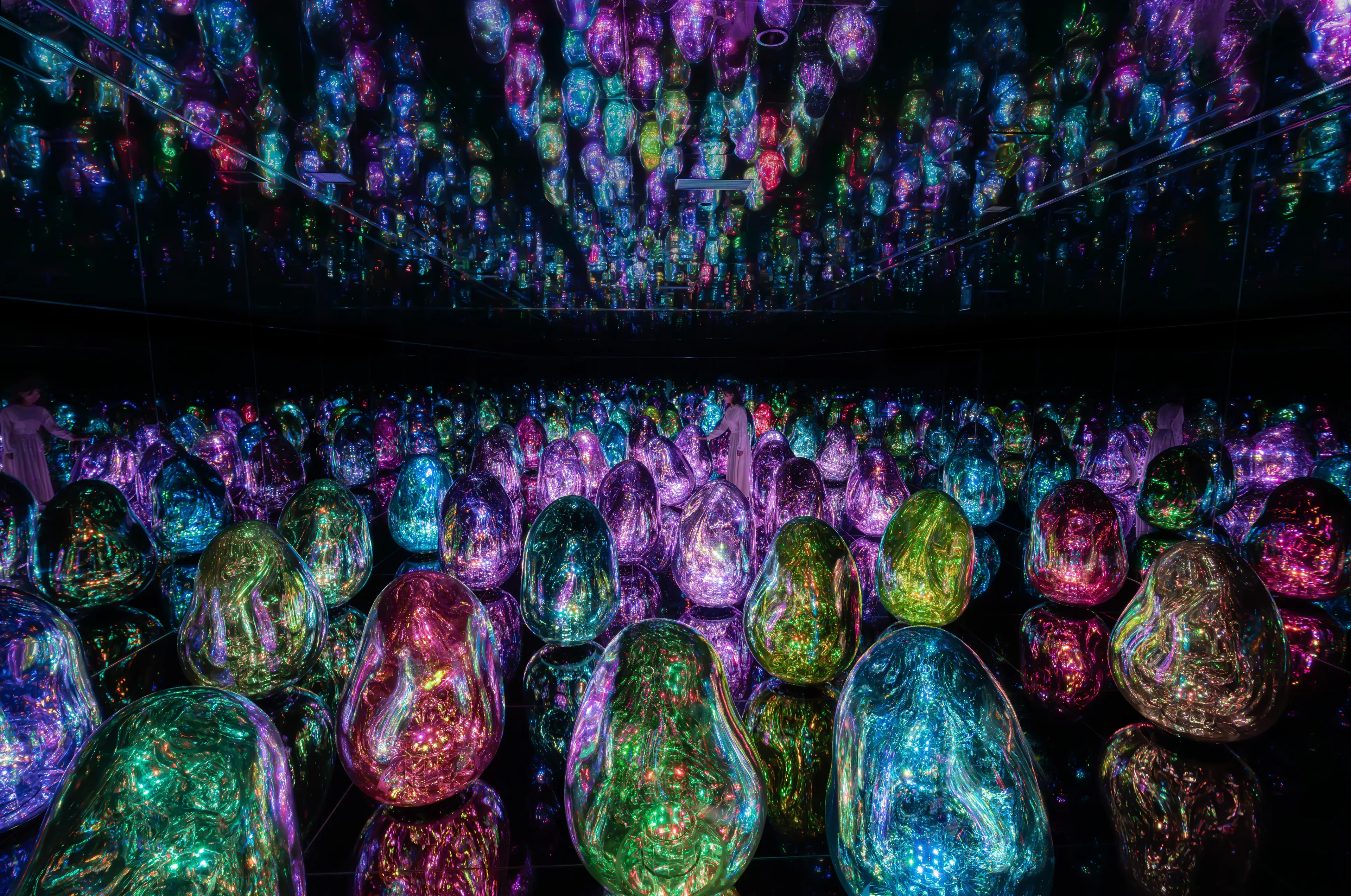
Resonant Collective Sculpture
2009
Where Bodies, Environments, and Works Resonate as One Continuous Field
Although each individual sculpture is an autonomous physical entity, they respond to one another, forming a single continuous field.
Physical actions such as being pushed by a body, moved by others, and when outdoors, the effects of the environment such as wind and rain, the behavior of wild animals, interactions with adjacent sculptures within the same group, and other surrounding artworks—all of these become triggers for resonance. The light, sound, and movement generated in a single sculpture do not remain closed within that individual entity, but there occurs a chain reaction to nearby sculptures, and further into surrounding artworks and spaces, continuing throughout the whole.
Here, it is not only humans that move the artwork. The body, others, the environment, and the artwork are connected to the same ecosystem and responsive field—individual sculptures do not exist on their own as a complete entity, but continue to exist in relationships.
This structure is an attempt to expand sculptures from solid objects, as autonomous individuals, into a network-like existence that continues to be generated within the relationships among the body, others, the environment, and other artworks. In this ecological responsive field, where humans and non-humans participate together, the boundaries of the sculpture do not remain within the contours of individual physical objects.
FEATURED WORKS
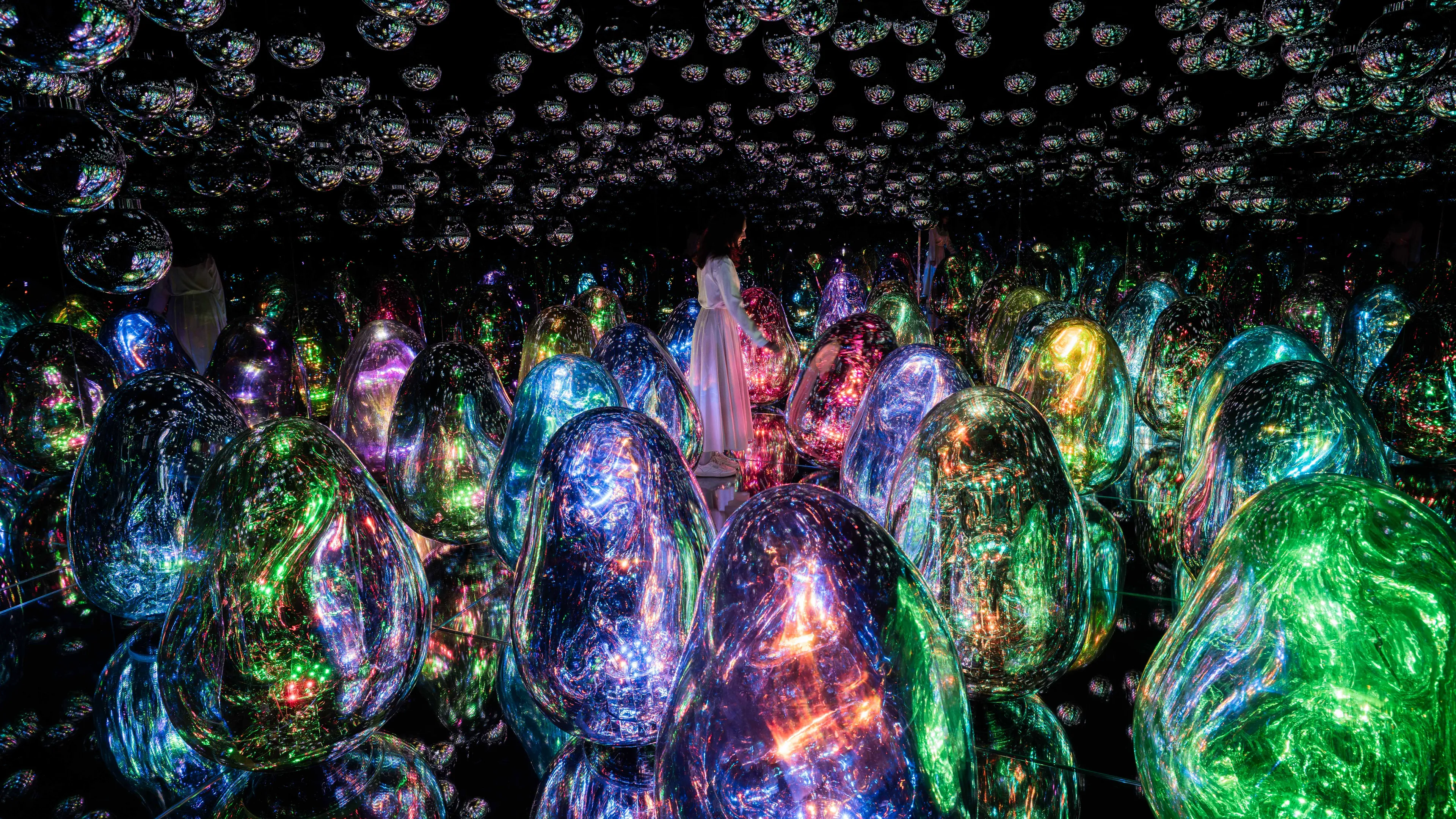
Resonating Microcosms - Solidified Light
teamLab, 2022, Interactive Installation, Endless, Sound: Hideaki Takahashi, teamLab, Production Support: Hirohito Saito (OryZa Design), Shinya Yoshida (SYD INC.)
When each ovoid is pushed over by a person, it shines brightly and emits a sound tone as it rights itself. The surrounding ovoids also respond one after another, and the same light color and tone continues to resonate out. The artwork space is transformed by people's actions, making people and the environment part of the artwork.
The patterns of color that appear within the ovoid exist as infinite possibilities until they are seen, and only at the moment it is viewed from a certain perspective is a single appearance fixed. They continue to transform in response to the viewer's moving body, the fluctuations of the sculpture itself, and the surrounding environment.
This artwork is part of the Resonant Collective Sculpture series, continuing from teamLabBall (2009-). Although each individual sculpture is an autonomous physical existence, they respond to one another, forming a single continuous field.
In this series, physical actions such as being pushed by a body, moved by others, and when outdoors, the effects of the environment such as wind and rain, the behavior of wild animals, interactions with adjacent sculptures within the same group, and other surrounding artworks—all of these become triggers for resonance. The light, sound, and movement generated in a single sculpture do not remain closed within that individual entity, but there occurs a chain reaction to nearby sculptures, and further into surrounding artworks and spaces, continuing throughout the whole.
Here, it is not only humans that move the artwork. The body, others, the environment, and the artwork are connected to the same ecosystem and responsive field—individual sculptures do not exist on their own as a complete entity, but continue to exist in relationships.
This structure is an attempt to expand sculptures from solid objects, as autonomous individuals, into a network-like existence that continues to be generated within the relationships among the body, others, the environment, and other artworks. In this ecological responsive field, where humans and non-humans participate together, the boundaries of the sculpture do not remain within the contours of individual physical objects.
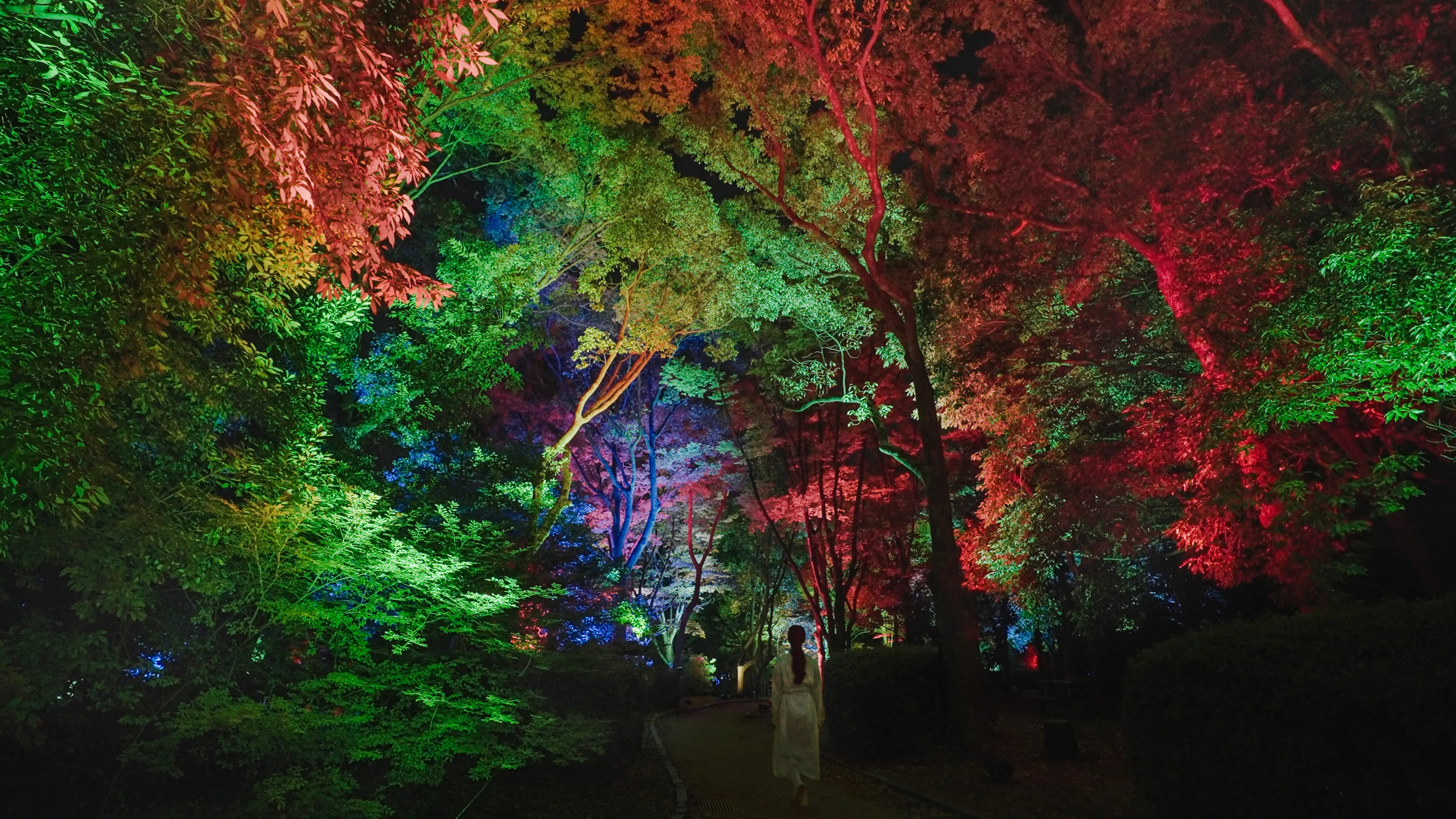
teamLab, 2014-, Interactive Installation, Sound: Hideaki Takahashi, teamLab
Each tree shines brightly and resonates a tone when people or wild animals approach it. The surrounding trees respond one after another, continuously transmitting the light and tone.
The trees also resonate with surrounding artworks, creating a continuous flow of light and tone with each other. If a wave of light approaches from the depths of the trees, it signifies the presence of people or wild animals there. The artwork space is transformed by the body, the behavior of others and wild animals, as well as the surrounding artworks, making the people and the environment a part of the work.
This artwork is part of the Digitized Nature art project. Digitized Nature is an attempt to explore how nature can become art as it is, without destroying it.
The shapes, textures, and changes of the forest trees themselves inherently contain a long period of time, the continuity of life, and relationships with the ecosystem. While a tree itself is part of an ecosystem, it also hosts life on its surface and inside, forming an ecosystem of its own. Unlike physical objects made by humans, the contours of its existence are ambiguous.
By layering non-physical materials such as sensing, networks, light, and sound onto these trees, the trees, remaining as they are, respond to each other and form a single continuous field as a collective. This is not an attempt by humans to sculpt nature as a material, but an attempt for the trees, shaped over a long period of time and within the ecosystem, to rise up as a resonating collective sculpture just as they are.
Here, humans are not the only ones who change the artwork. The body, others, wild animals, the environment, trees, and surrounding artworks are all connected to the same ecosystem-like responsive field. Individual trees do not exist independently as a single completed entity, but continue to exist within relationships. People do not just look at the artwork; they enter into the resonance of the trees and sense the presence of others, wild animals, and the environment through the continuity of light and sound.
This structure presents nature not as an object outside of the artwork, but as an ecosystem-like field that changes together with people and the environment.
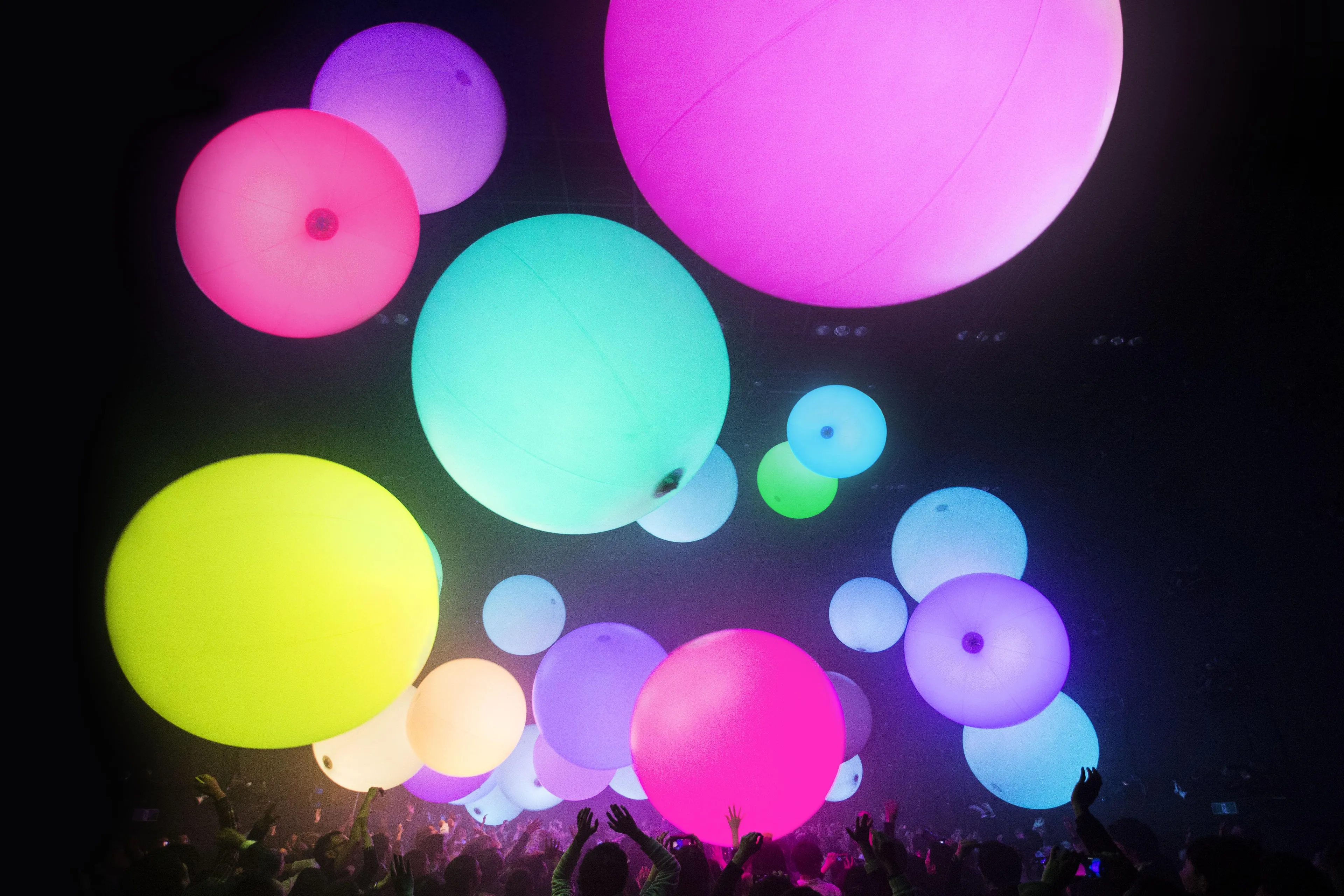
teamLab, 2009, Interactive Ball
When you touch the spheres, it causes effects such as a change in color, or the generation of a sound. Each sphere is synchronized by wireless P2P (Peer to Peer), so it is possible to change the colors of all of the spheres or to change the color of the lighting of the space. Furthermore, it is possible for directors/designers to change the colors remotely without touching the spheres. Anybody present can take part in the design of the space by tossing the floating spheres. The moment you toss the sphere, you take center stage and that moment is shared by everyone in the space.
Utilizing all teamLabBalls as a common interface allows the creation of a digital space where people can get immersed and feel emotionally involved.
※teamLabBall patent pending.