teamLab Ruins and Heritage: Rinkan Spa & Tea Ceremony | teamLab

A New Experience of Art and Sauna
within History and the Forest
within History and the Forest
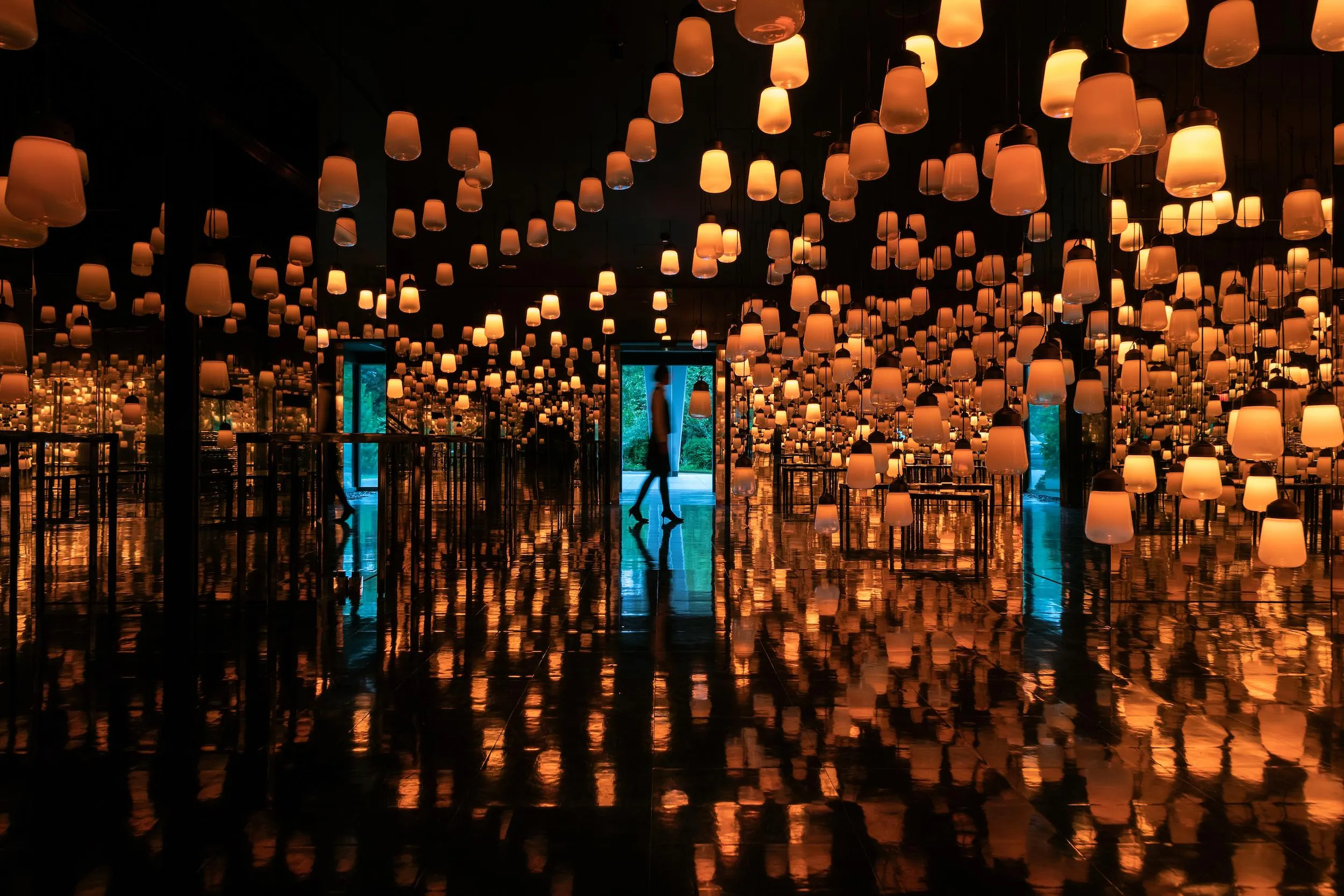
Combo tickets for a day trip to the Mifuneyama Rakuen Hotel Rakan Bath and teamLab’s art in the ruins are available, allowing visitors not staying at the Mifuneyama Rakuen Hotel or Onyado Chikurintei to enjoy a new experience of art and sauna. (*1) There are also tickets available that allow visitors to experience the artworks without entry into the sauna.
(*1) The annual exhibition in the forest teamLab: A Forest Where Gods Live is not currently on view. The exhibition runs annually from July to November.
Exhibition Concept
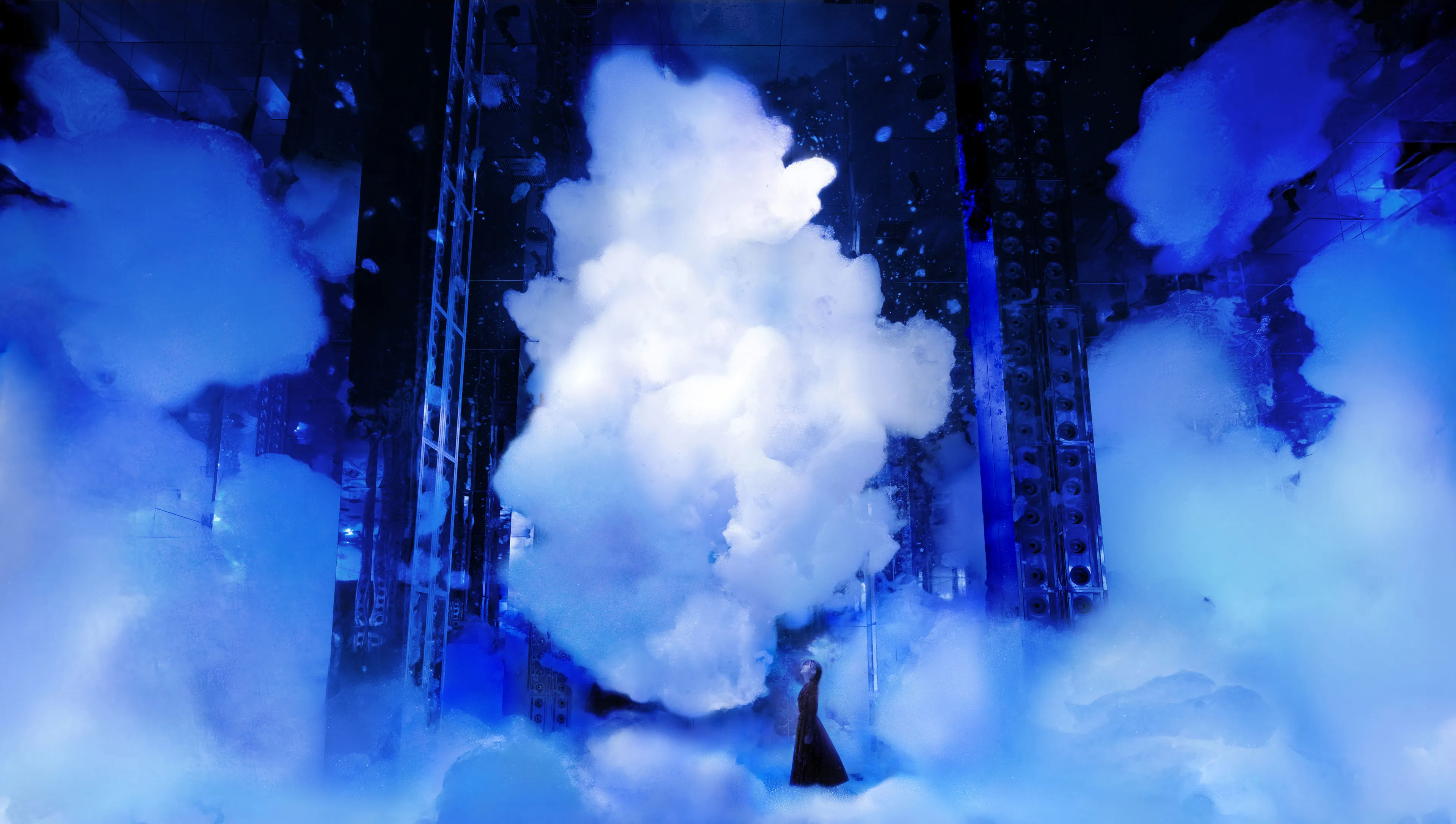
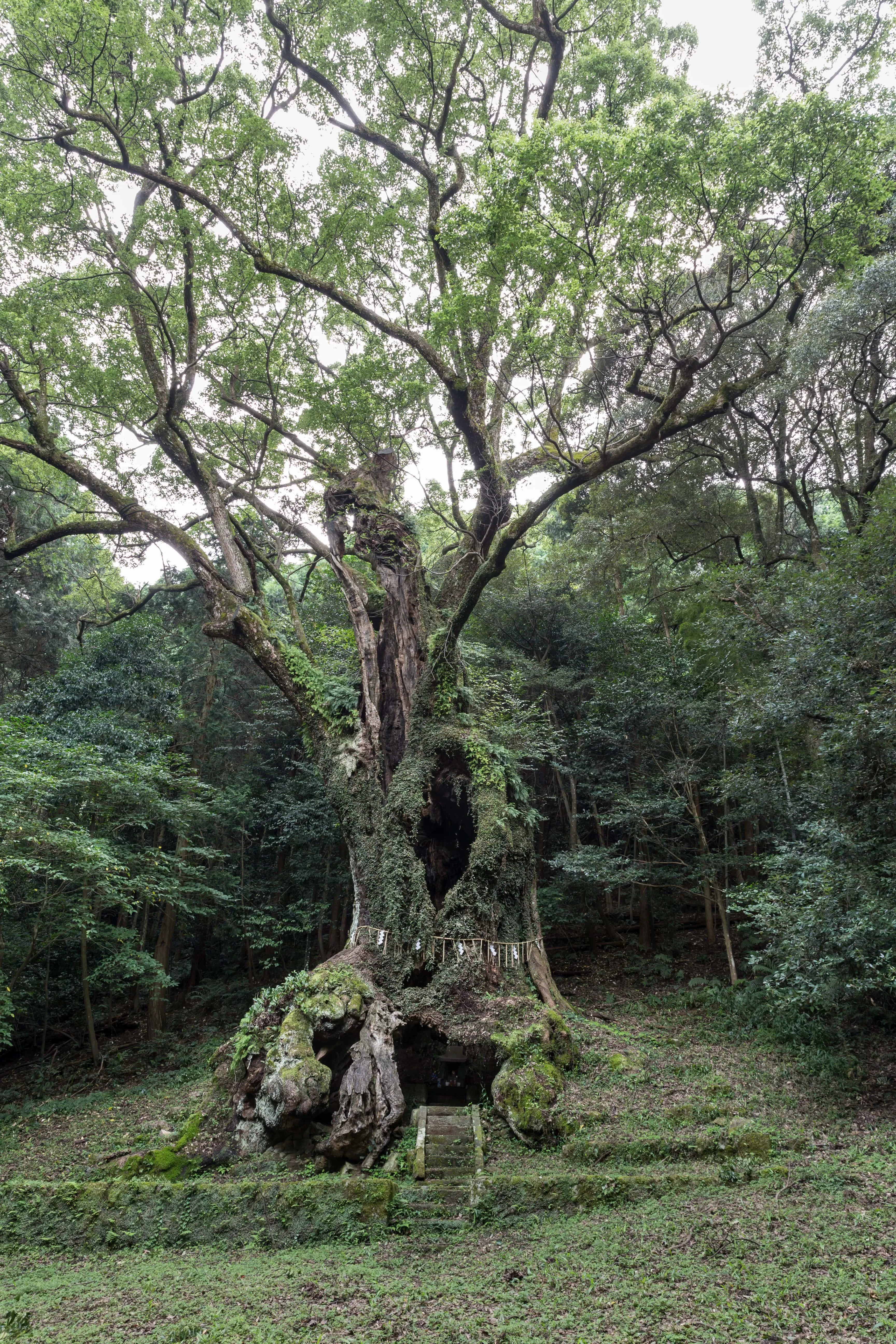
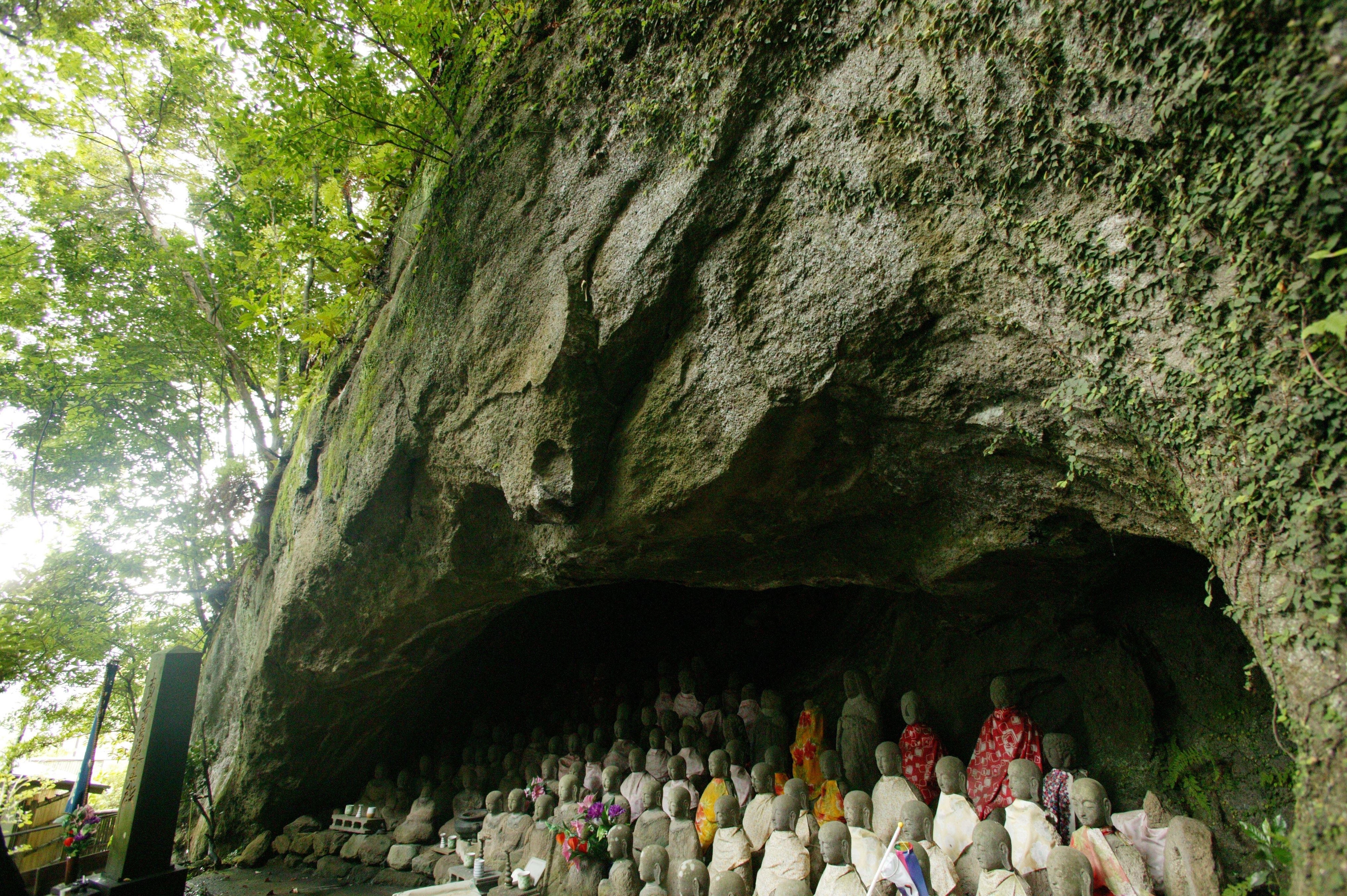
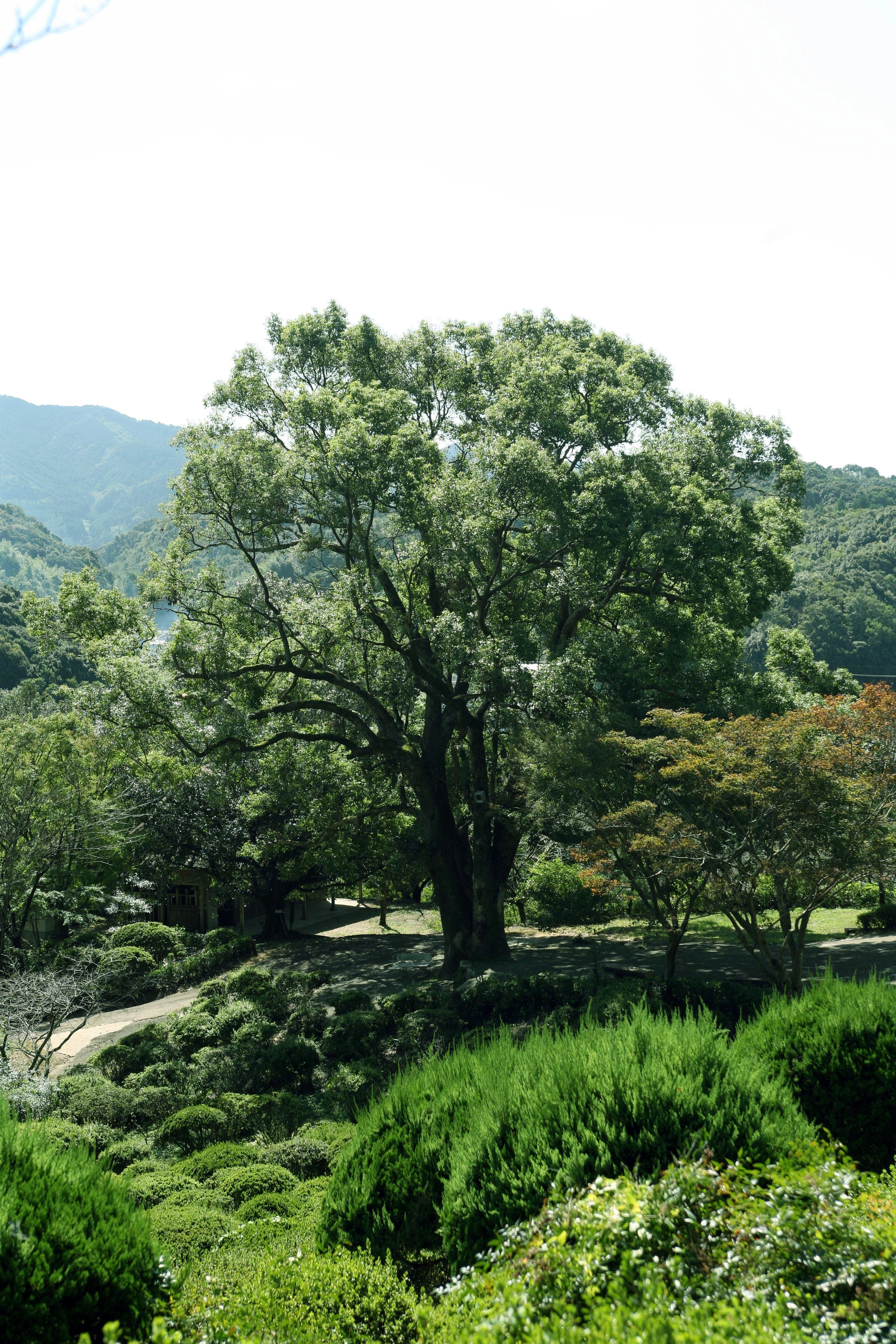
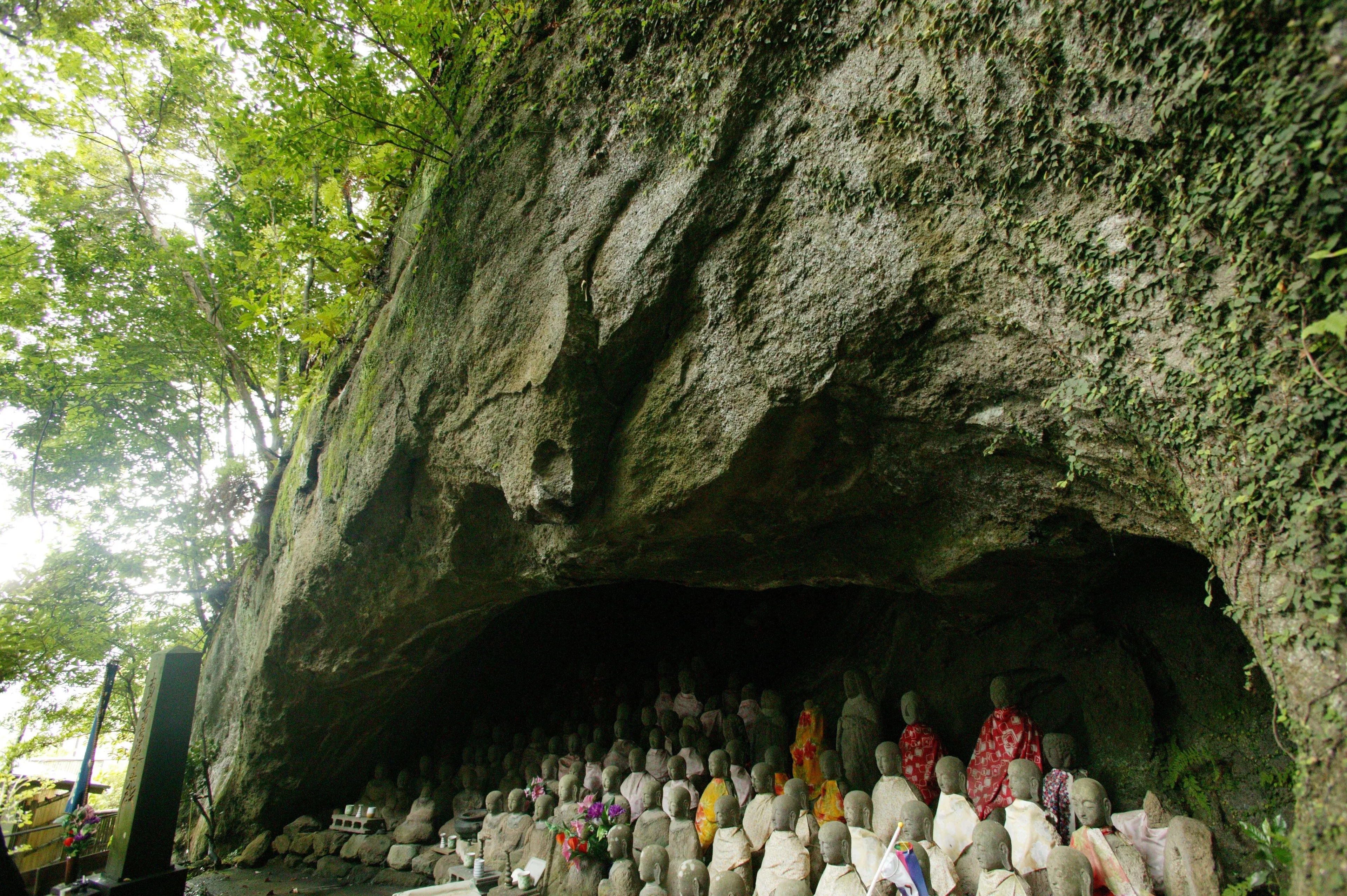
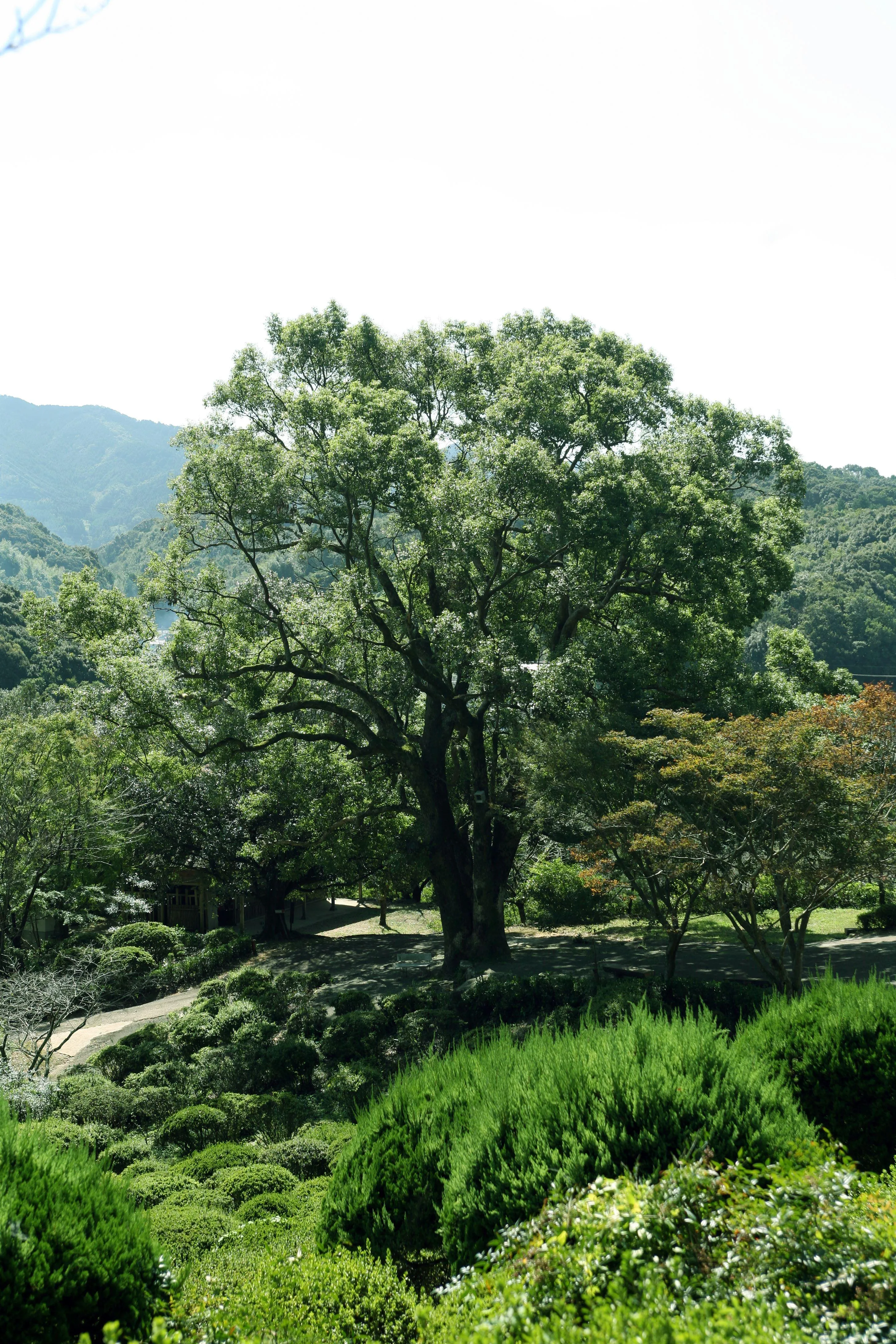
In the forest where the 3,000-year-old sacred Okusu tree resides, is a cave of five hundred Arhats carved 1,300 years ago by the Buddhist monk Gyoki. (* See Gyoki and the Origins of Japanese Baths (Saunas)) The sauna (alternating hot and cold baths) stands nearby this cave within the historic forest. Visitors can clear their minds, feel the ever-expanding space through their bodies, and immerse themselves in the art and the forest dotted with ruins. As we realize that the mind, body, and environment are the wholeness of our being, we become a part of nature and history, and reconnect with the long continuity of time and the world.
Concept behind Artworks in the Ruins: A Place where Varying Space-Times Intersect
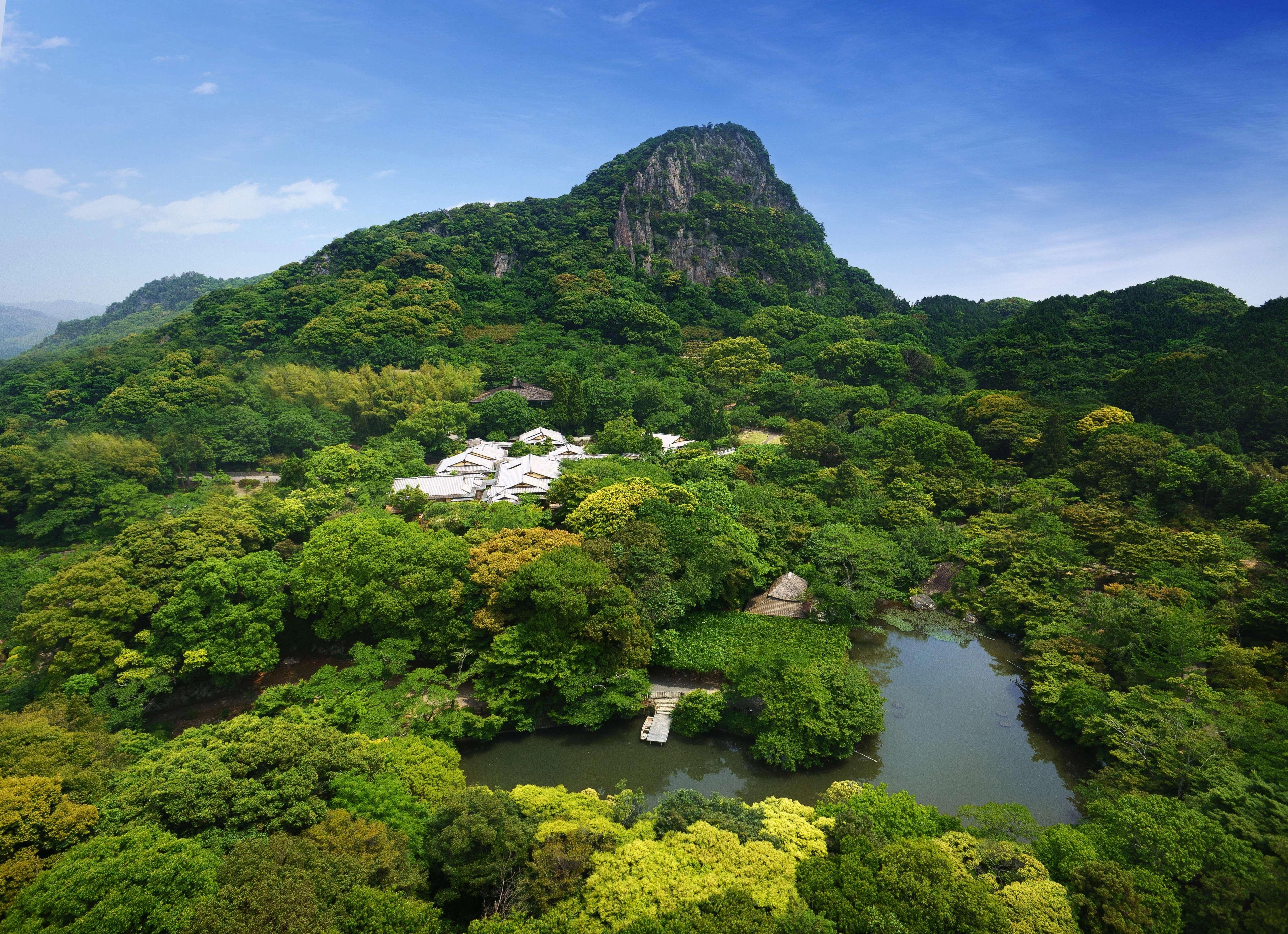
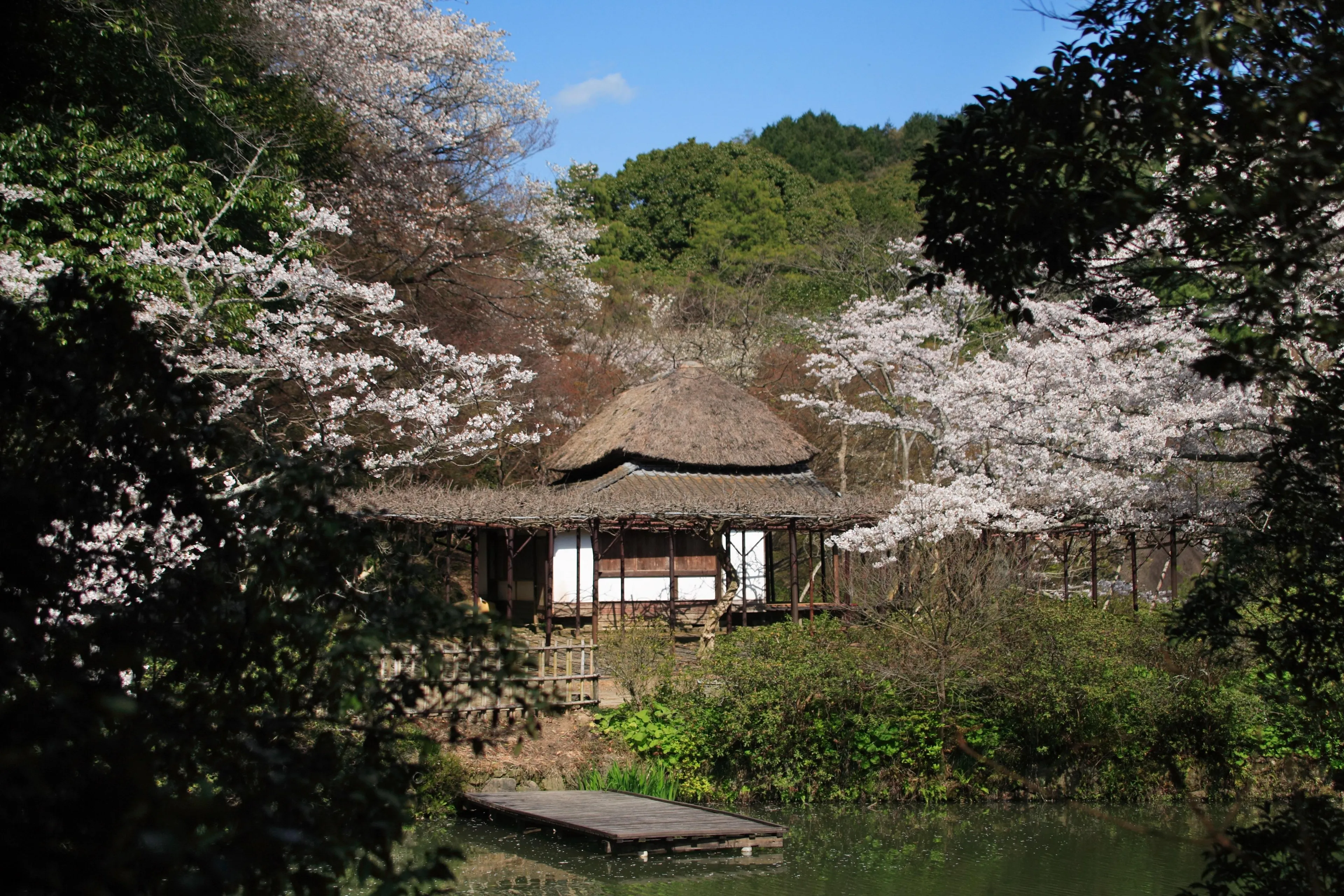
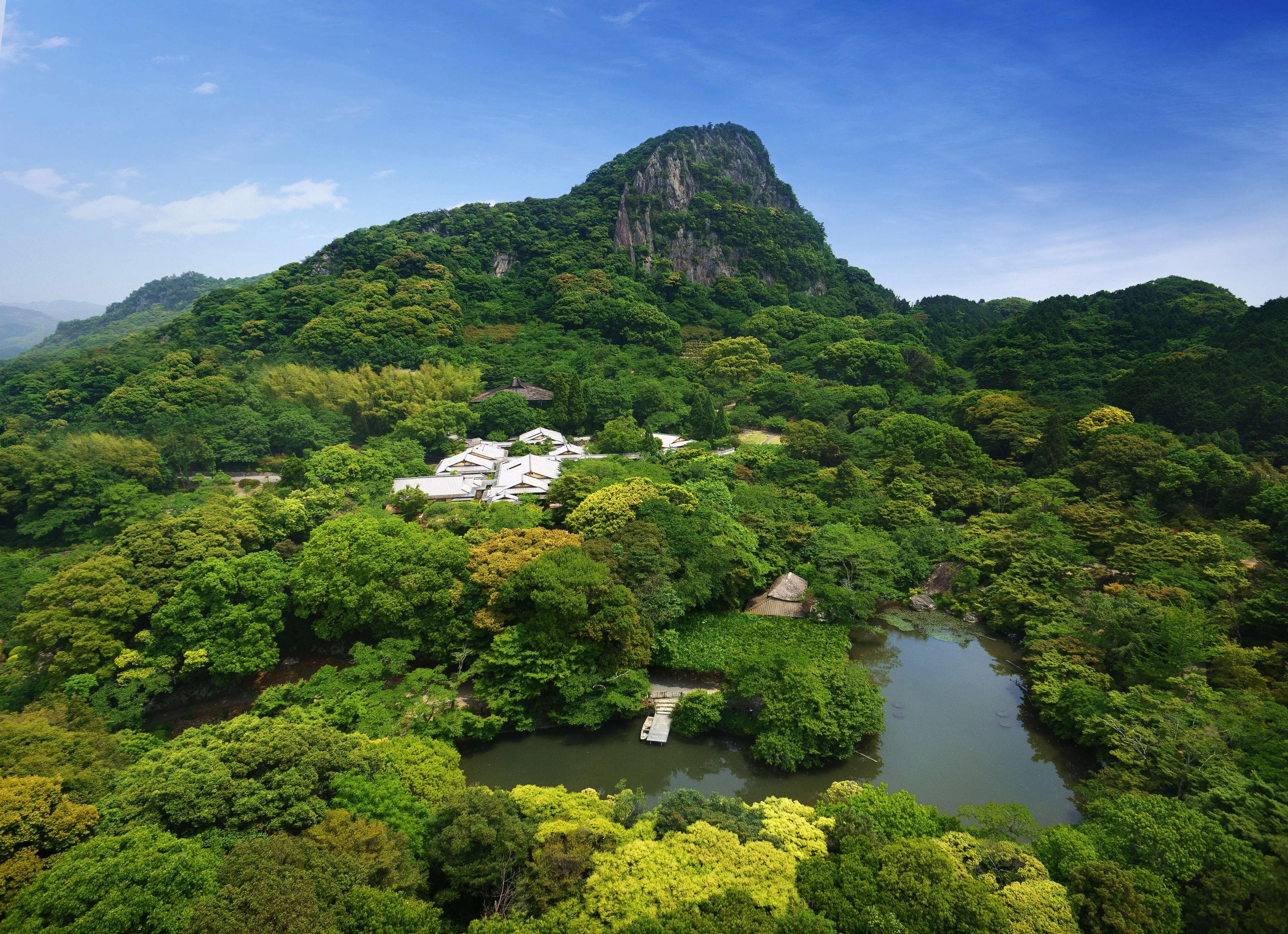
The 500,000 square meter Mifuneyama Rakuen Park was created in 1845, during the end of the Edo period. Sitting on the borderline of the park is the 3,000-year-old sacred Okusu tree of Takeo Shrine, which is Japan’s 7th largest. Also in the heart of the garden is another 300-year-old sacred tree. Knowing the significance of this, our forebears turned a portion of this forest into a garden, utilizing the trees of the natural forest. The border between the garden and the wild forest is ambiguous, and when wandering through the garden, before they know it, people will find themselves entering the woods and animal trails.
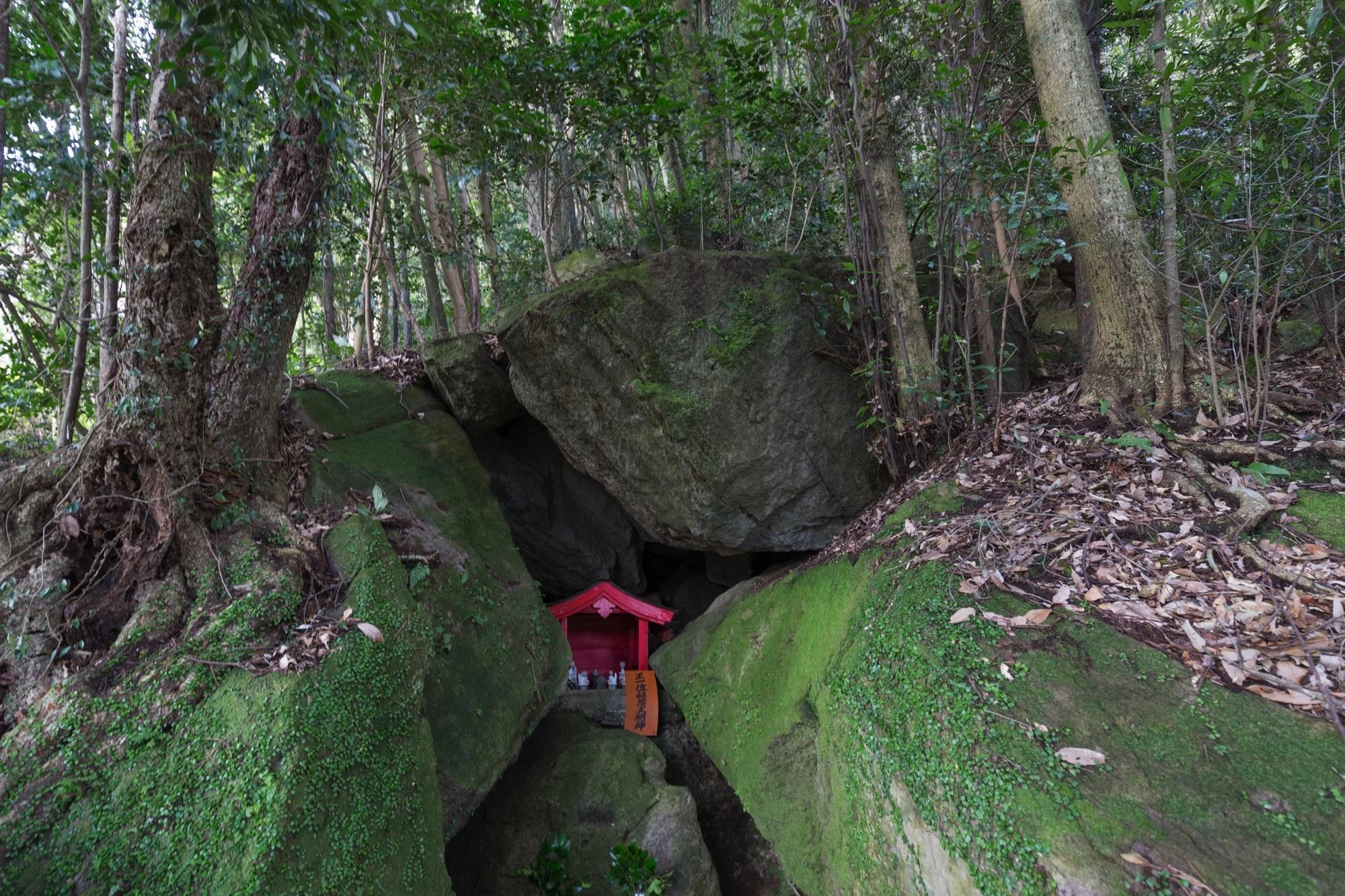
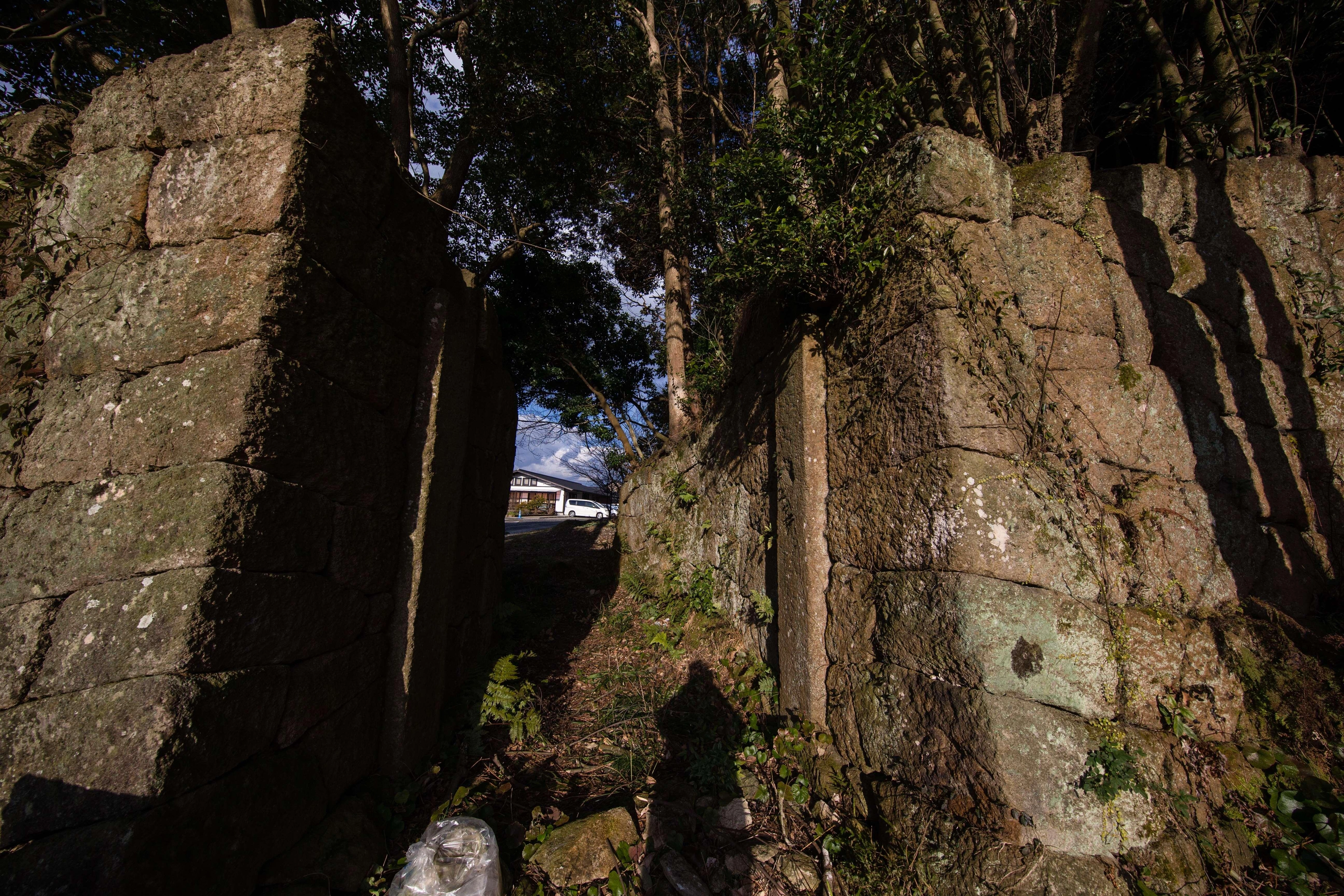
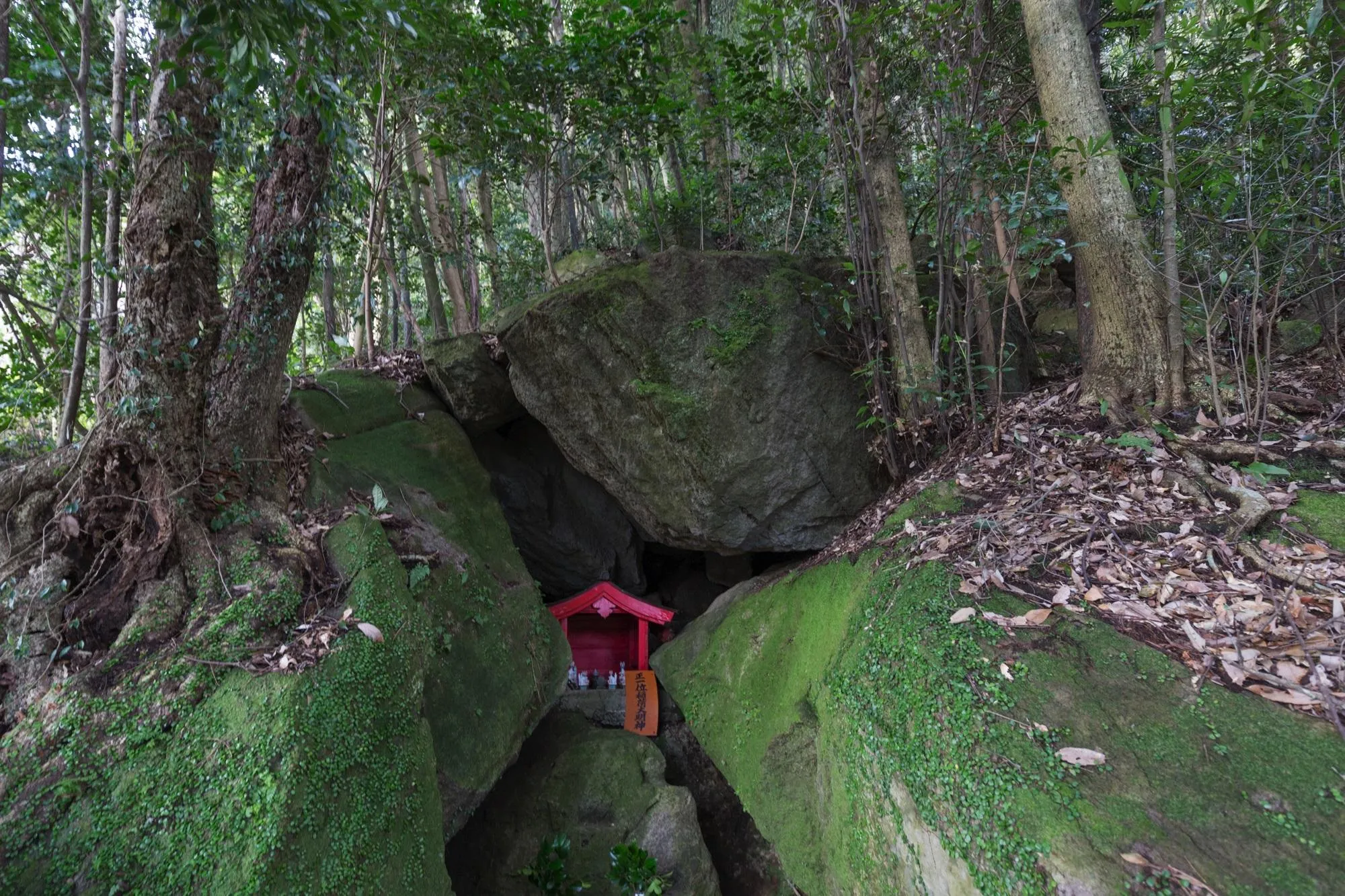
Within the forest, there is an enormous megalith, almost supernatural in its formation, known as an iwakura (a dwelling place of a god in ancient Japanese nature worship, or “animism”) that has been preserved as a small shrine. Around the 7th century, a sorcerer named En-no-gyouza-ozunu carved a 23-meter-tall figure over the entire surface of a sheer cliff on Mount Mifuneyama. And 1,300 years ago, the priest Gyoki, who created the Great Buddha in Nara, came to Mifuneyama, carved 500 Arhats and Buddha figures directly onto the rock face of the caves within the forest, which remain to this day. On the edge of the forest, the stone gate of Tsuzaki Castle and other ruins remain within and along the borderline of the forest.
We exist as a part of an eternal continuity of life and death, a process which has been continuing for an overwhelmingly long time. It is hard for us, however, to sense this in our everyday lives, perhaps because humans can not recognize time longer than their own lives. There is a boundary in our understanding of the continuity of time.
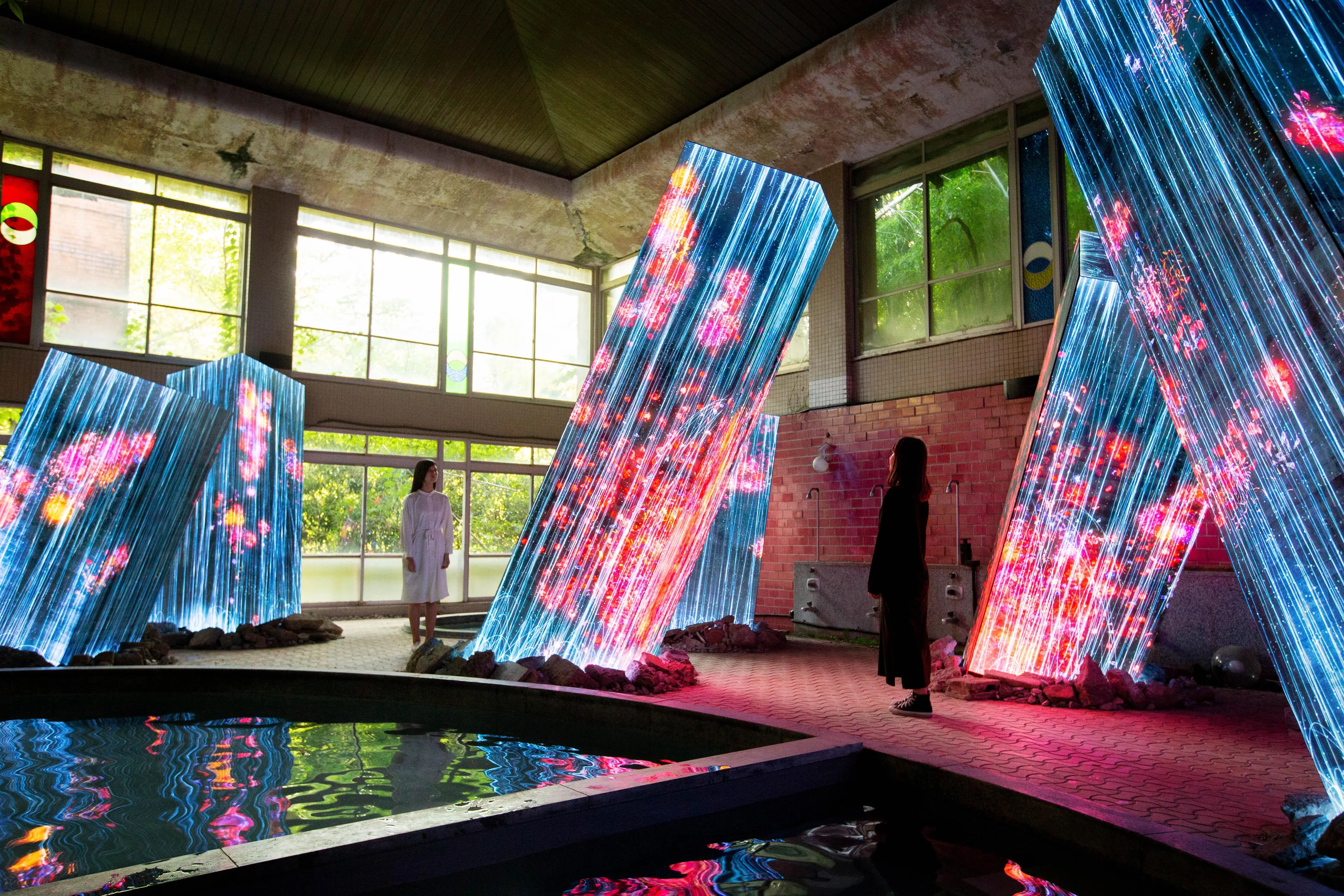
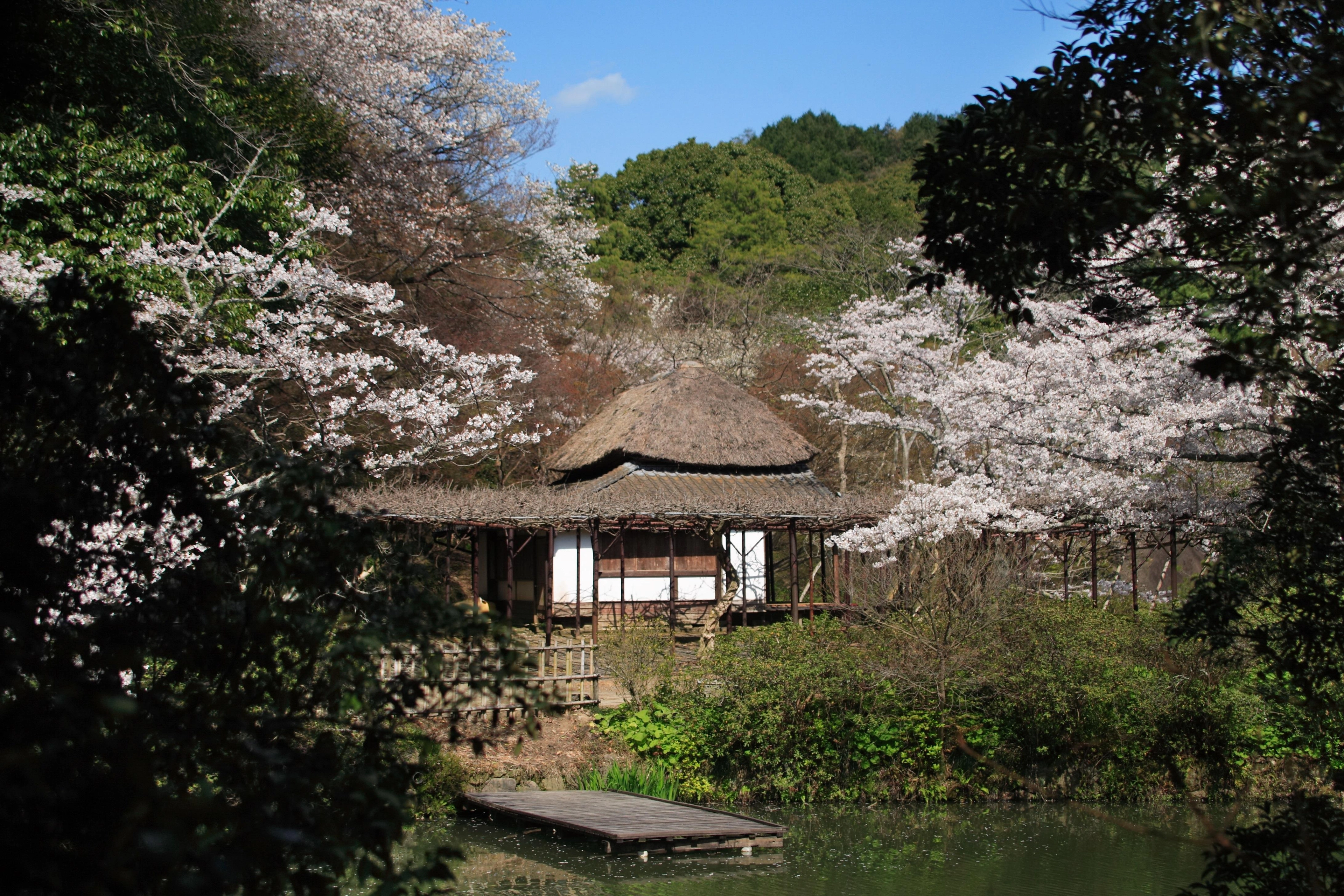
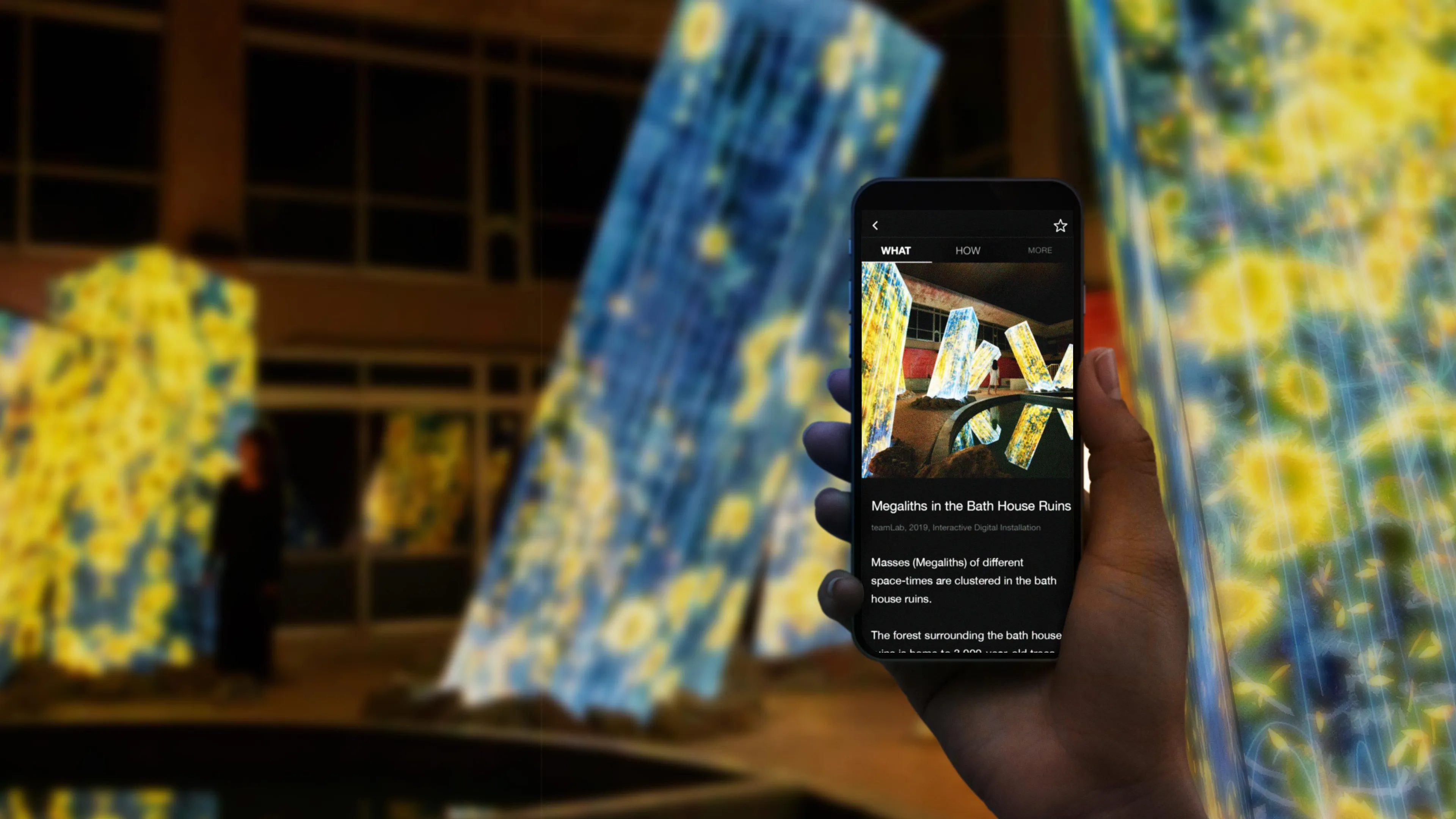
The forest is home to a 3,000-year-old tree, and it changes daily with the imperceptible, slow flow of time, repeating every year, as a space where the endlessly long time accumulates. The ruins from ages past scattered in the forest and the Edo-period garden which remains today each have their own respective space-times. The bath house in the garden was constructed in modern times, but after just a short period, it was abandoned, becoming a space where time had stopped completely.
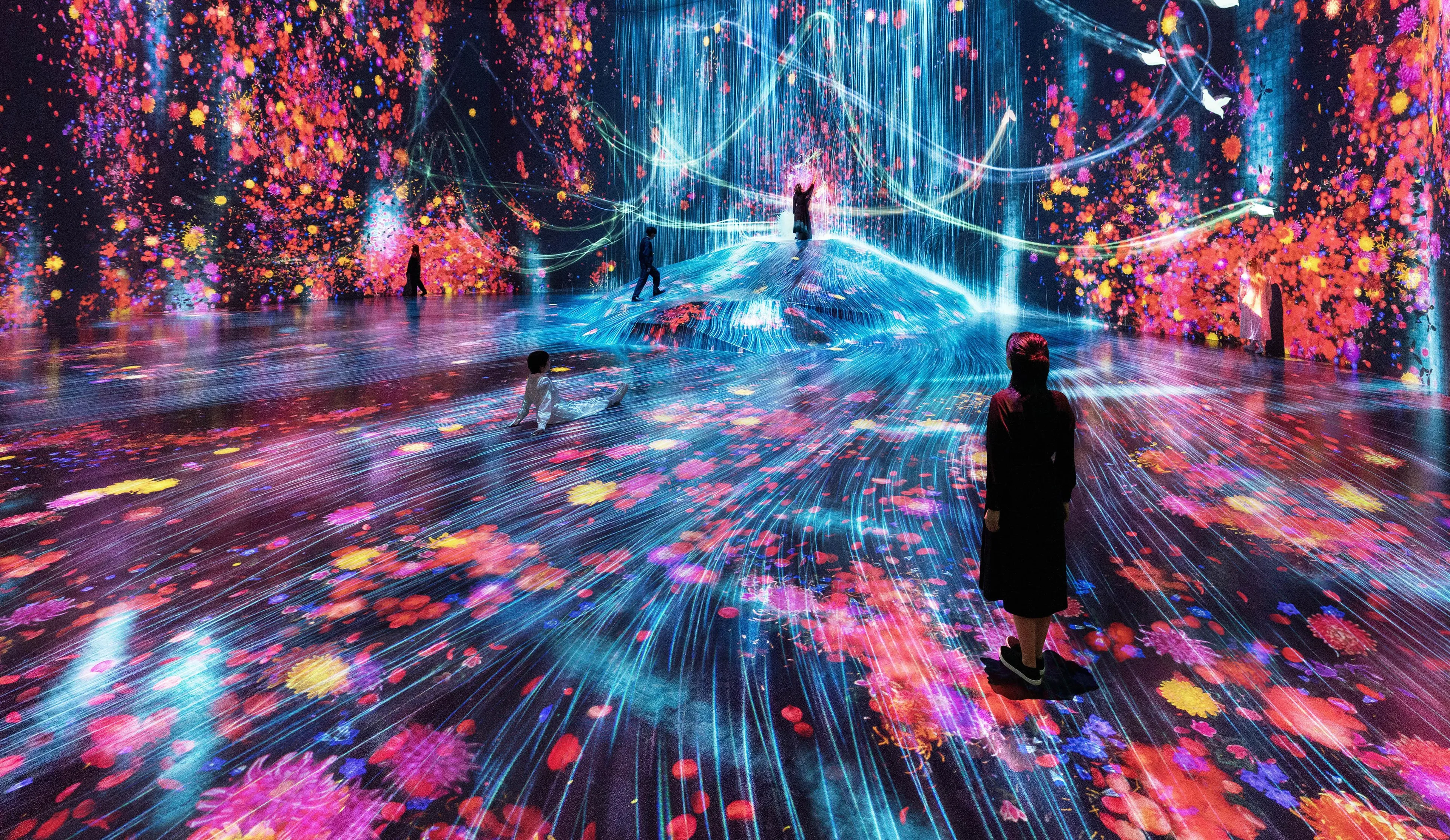
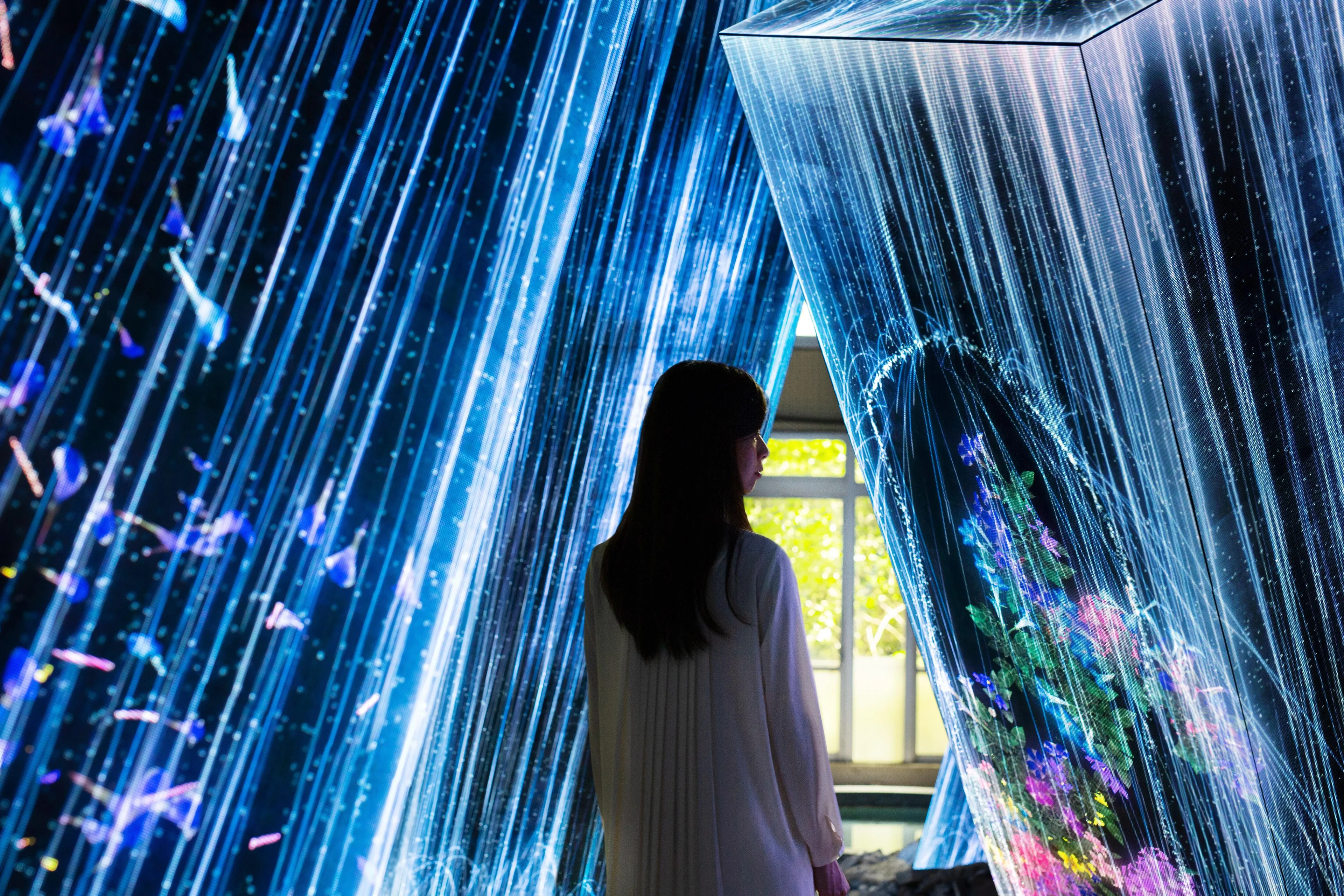
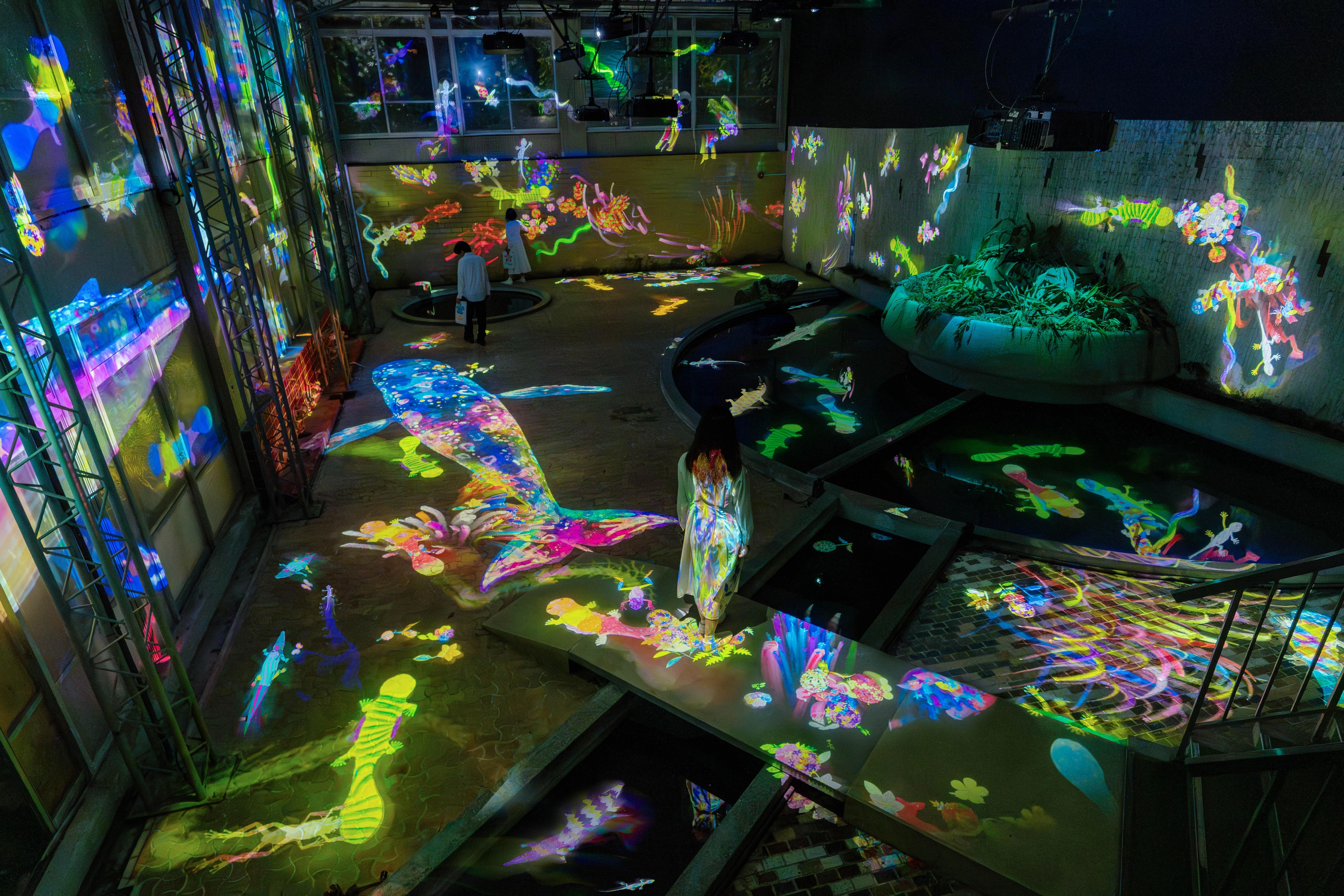
Within the space of the ruins of Mifuneyama Rakuen, we make artworks with their own, separate space-times, thereby creating a place where these varying spaces intersect and overlap, allowing us to transcend the boundary in our understanding of the continuity of time.
Gyoki and the Origins of Japanese Baths (Saunas)
Gyoki (668 - 749), who carved the five hundred Arhats in Mifuneyama, was a monk during the Nara Period. Later, he became the first Buddhist priest of the highest order in Japan and built the Great Buddha in Nara. In Todaiji Temple, where the Great Buddha is housed, there was a bathhouse called Oyuya, which had a steam room (sauna) and a washroom where common people could bathe. It is said to be the first kudokuyu or “hot water alms” (a pious act to provide common people with a bath), and the beginning of bathing in the city. Baths in that era were steam baths (saunas).
Japan at the time sought to stabilize its national government through the teachings of Buddhism and built temples throughout the country. For temples that were responsible for spreading Buddhism throughout Japan, the kudokuyu became an important means of gaining support from the people, and before long, many temples other than Todaiji came to offer it as well.
Empress Komyo (701 - 760) is said to have been the originator of the practice of bathing, and Gyoki, who was born 33 years earlier, is said to have handed down the same bathing legends as Empress Komyo. The Tsukahara no Karafuro, one of the oldest existing saunas in Japan, is said to have been built by Gyoki, an ascetic who traveled all over Japan before building the Great Buddha in Nara, hoping to cure people of their illnesses. From this, it can be inferred that Gyoki was the first person to introduce baths (saunas) to the people. And it could be said that baths (saunas) drew people to the temples, helping to spread Buddhism and establishing the nation of Japan.
Historical Background of Art and Sauna: Rinkan-Chanoyu
The Japanese custom of seyoku (the practice of providing temple baths for the poor, the sick, and prisoners) began during the Nara Period, when Gyoki was active, and reached peak popularity in the Kamakura Period. Even during the Muromachi Period, the practice of seyoku was continued by the shogunate and various temples.
Seyoku also became popular among individuals. Starting at this time, inviting people over and providing baths became known as furo (bathing), and bathing (at the time in steam baths, or saunas) was done in a variety of ways, with tea ceremonies or food and drink served afterward. This was the so-called furo-furumai (bath hospitality).
In the middle of the Muromachi Period (1336 - 1573), a type of tea ceremony in which tea was served to guests after their baths was called rinkan-chanoyu (rinkan sauna and tea ceremony). Much like with shoin-cha (decorative tea time), paintings, incense burners, vases, and hanging scrolls were displayed in the bathing rooms, and it is said that many spectators came to watch toucha (tea-tasting games) after bathing.
Rinkan-chanoyu was a widely-practiced basara (eccentric hobby) in Japan, particularly at the Kofukuji Temple in Nara.
In those days, a bath was a steam bath, or what we would today call a sauna, in which water is poured over heated sauna stones. People in Japan have long enjoyed the acts of viewing art in a sauna and drinking tea as a cultural pastime.
The term basara refers to the social and cultural trends in the middle ages in Japan, mainly during the early Muromachi Period (the Nanboku-cho Period). It was an aesthetic of meritocracy, one that disregarded the status quo, belittled, ridiculed, and rebelled against the authority of those noble in name alone, and instead favored extravagance, flamboyant behavior, and chic clothing. This culture was also the seed of the later revolutions in the Warring States Period.
It is said that Murata Juko (1422 - 1502), the teacher’s teacher of Sen no Rikyu (1522 - 1591) and the inventor of wabi-cha (tea ceremony), was also enamored with rinkan-chanoyu when he was young. He later studied under the Japanese monk Sosun Ikkyu at Daitokuji Temple, reached a state of chazenichimi (the realization that tea ceremony and Zen are one), and created wabi-cha. Then, the brothers Furuichi Tanehide and Furuichi Choin, who were main figures of rinkan-chanoyu, became disciples of Murata Juko, and rinkan-chanoyu became wabi-cha.

艺术作品
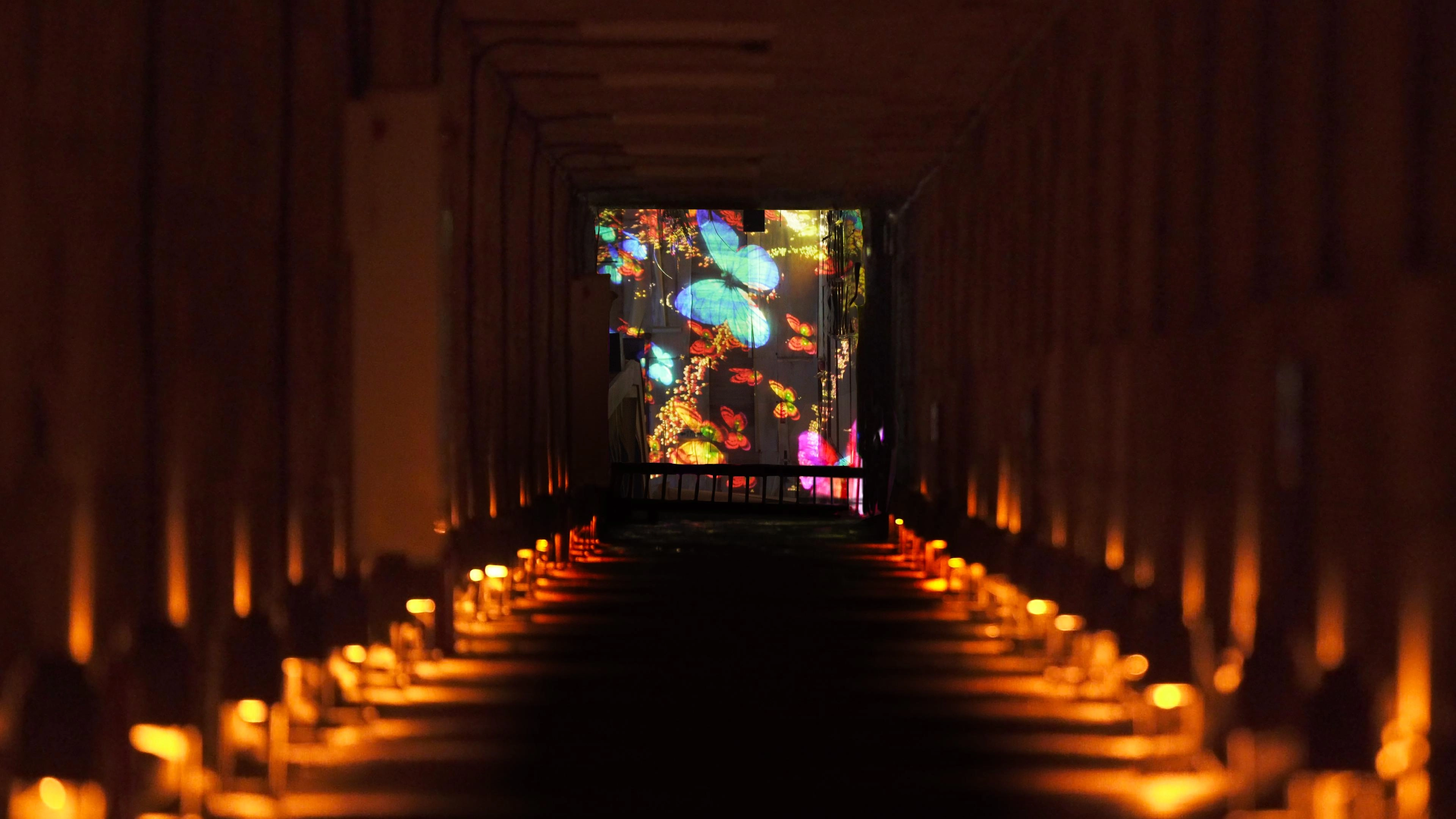
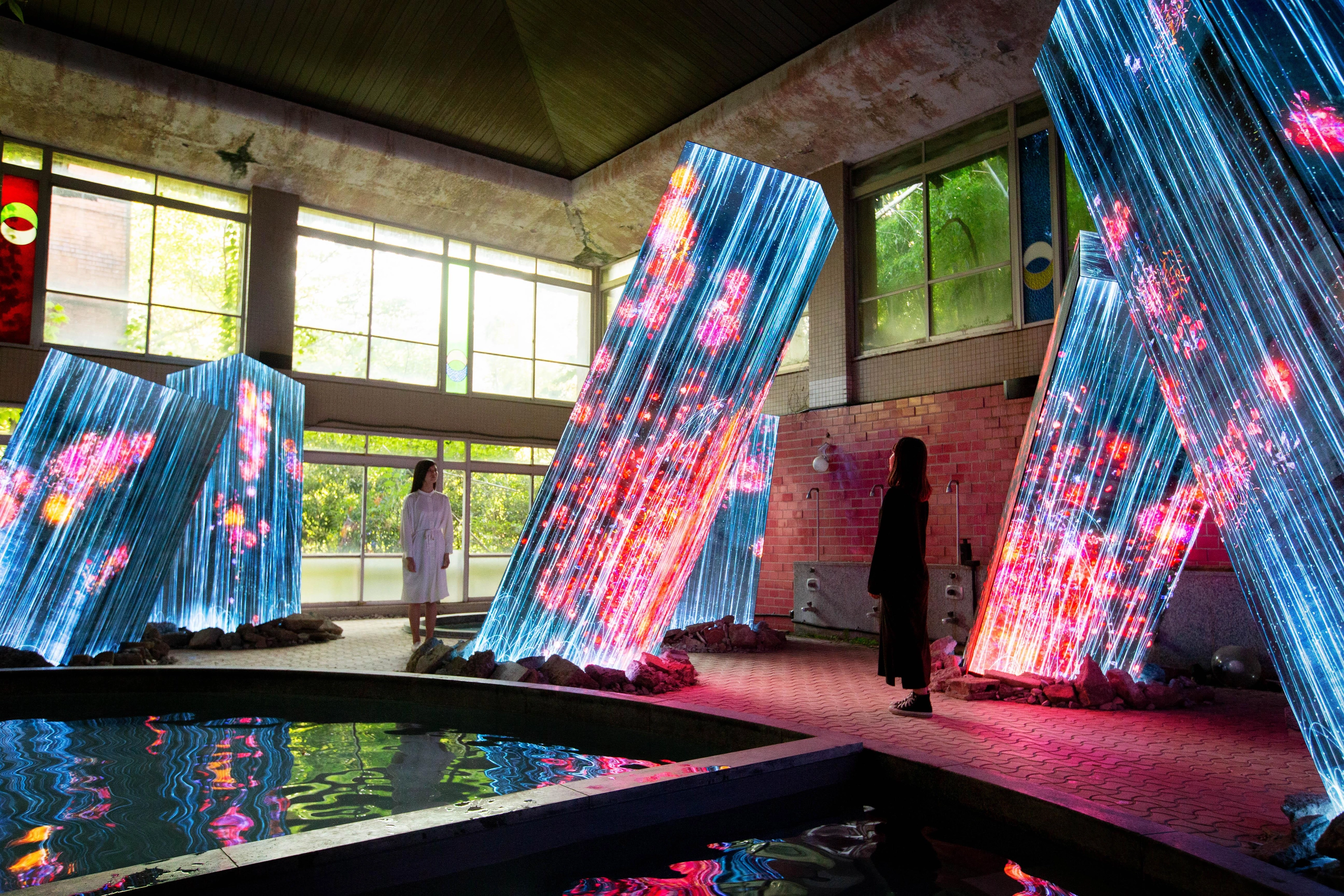
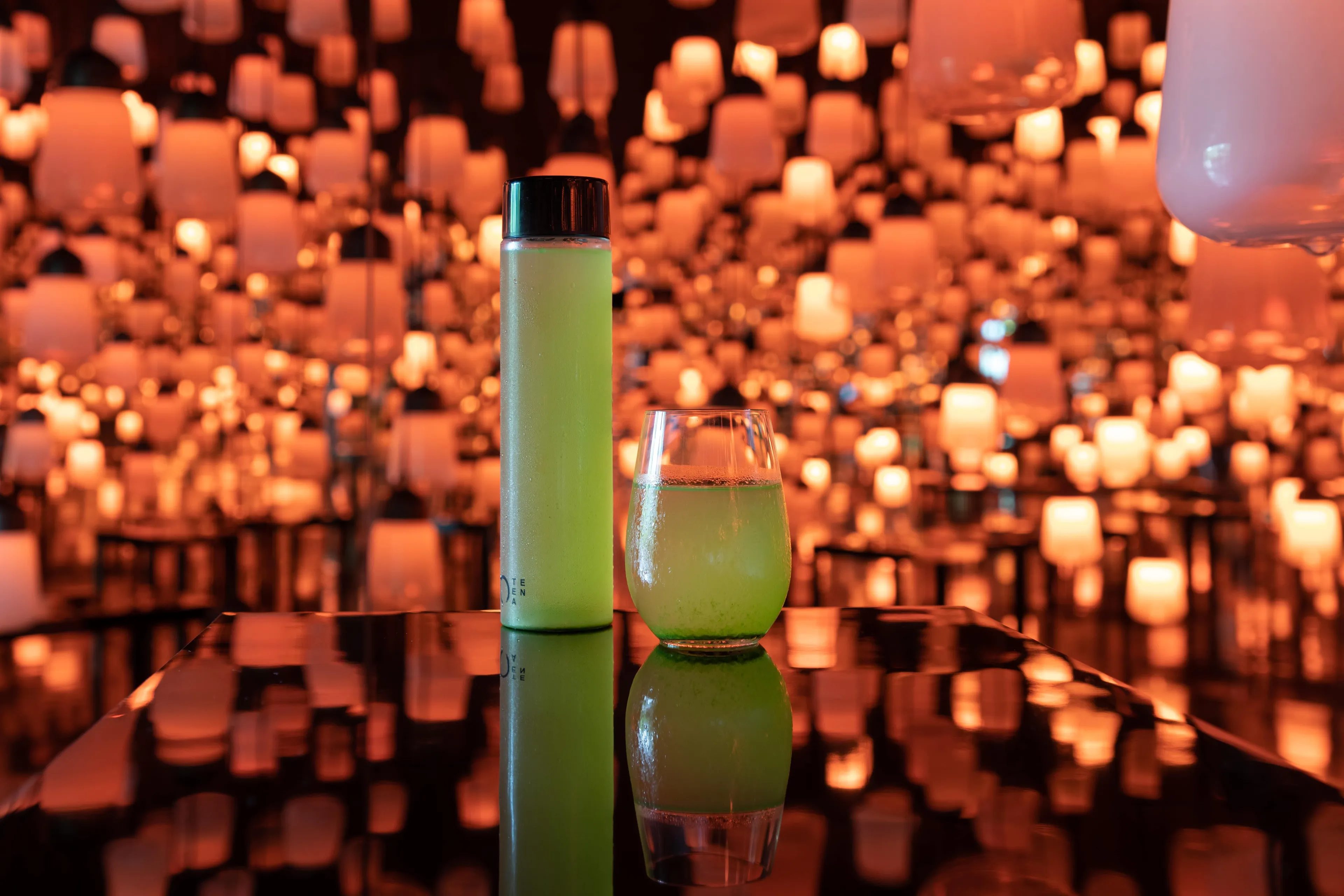
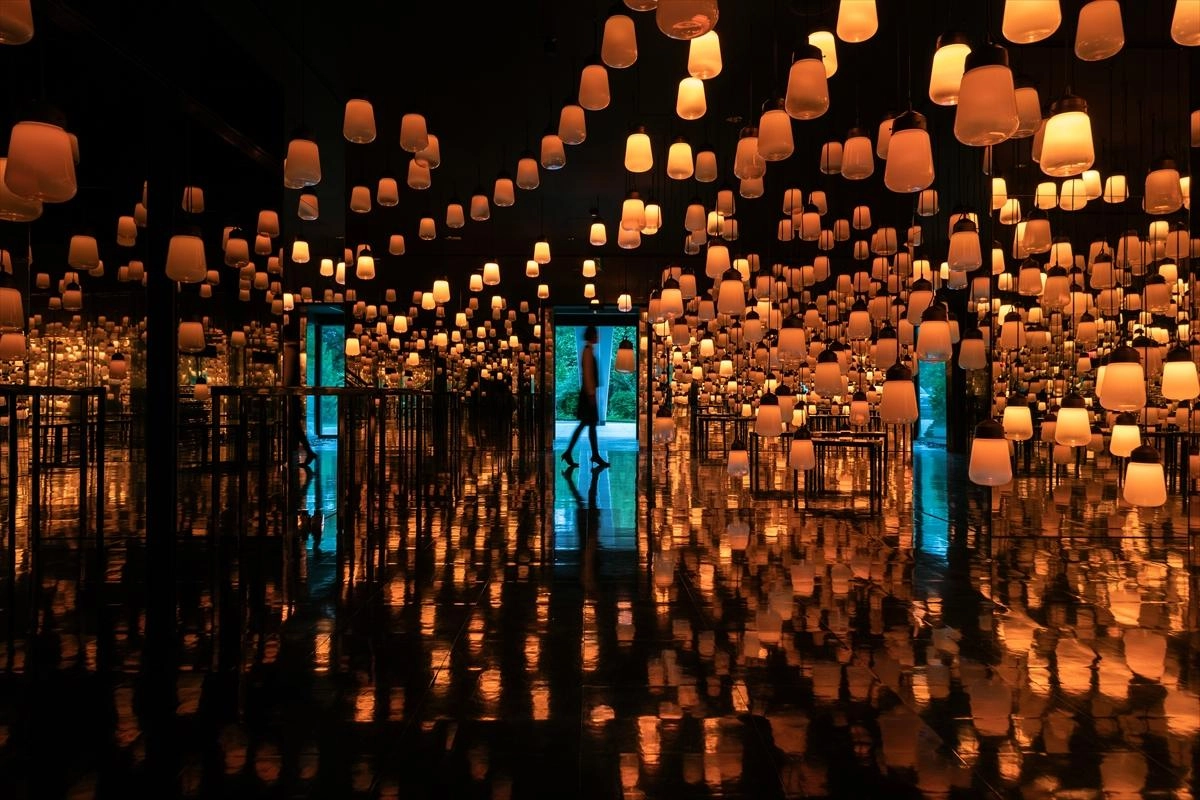
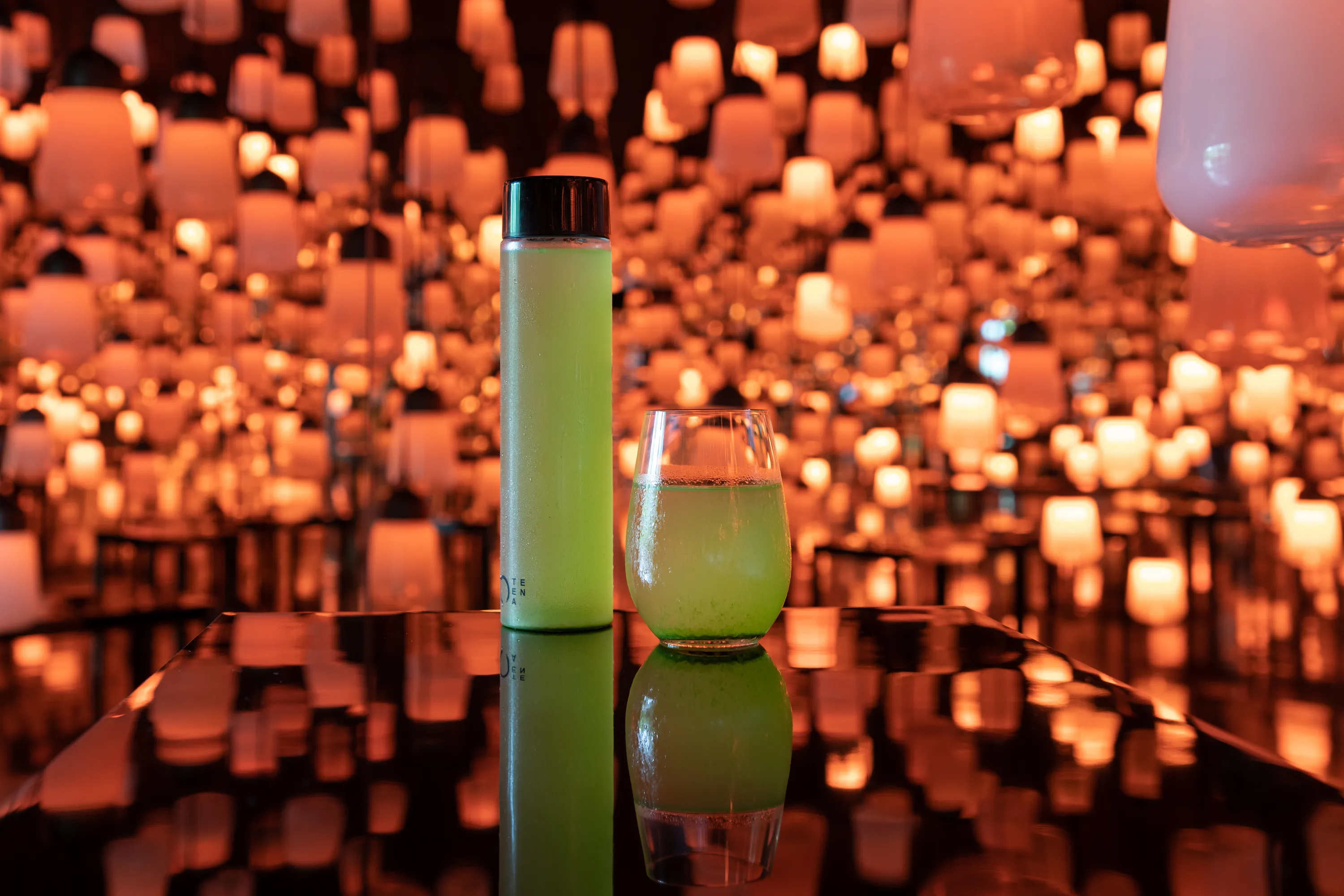
EN TEA HOUSE
Ruins and Heritage

Tea House
Reservation required / fixed capacity
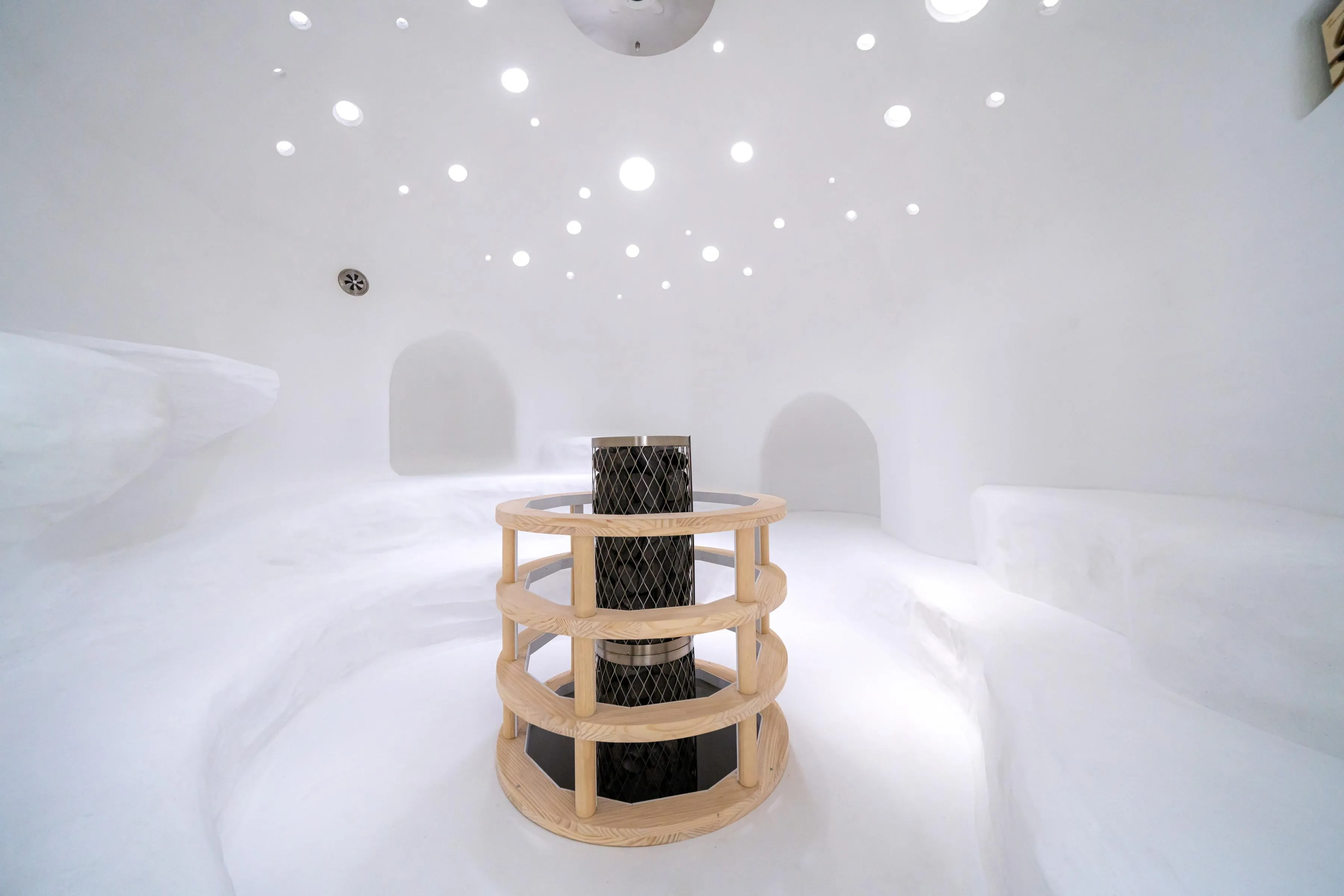
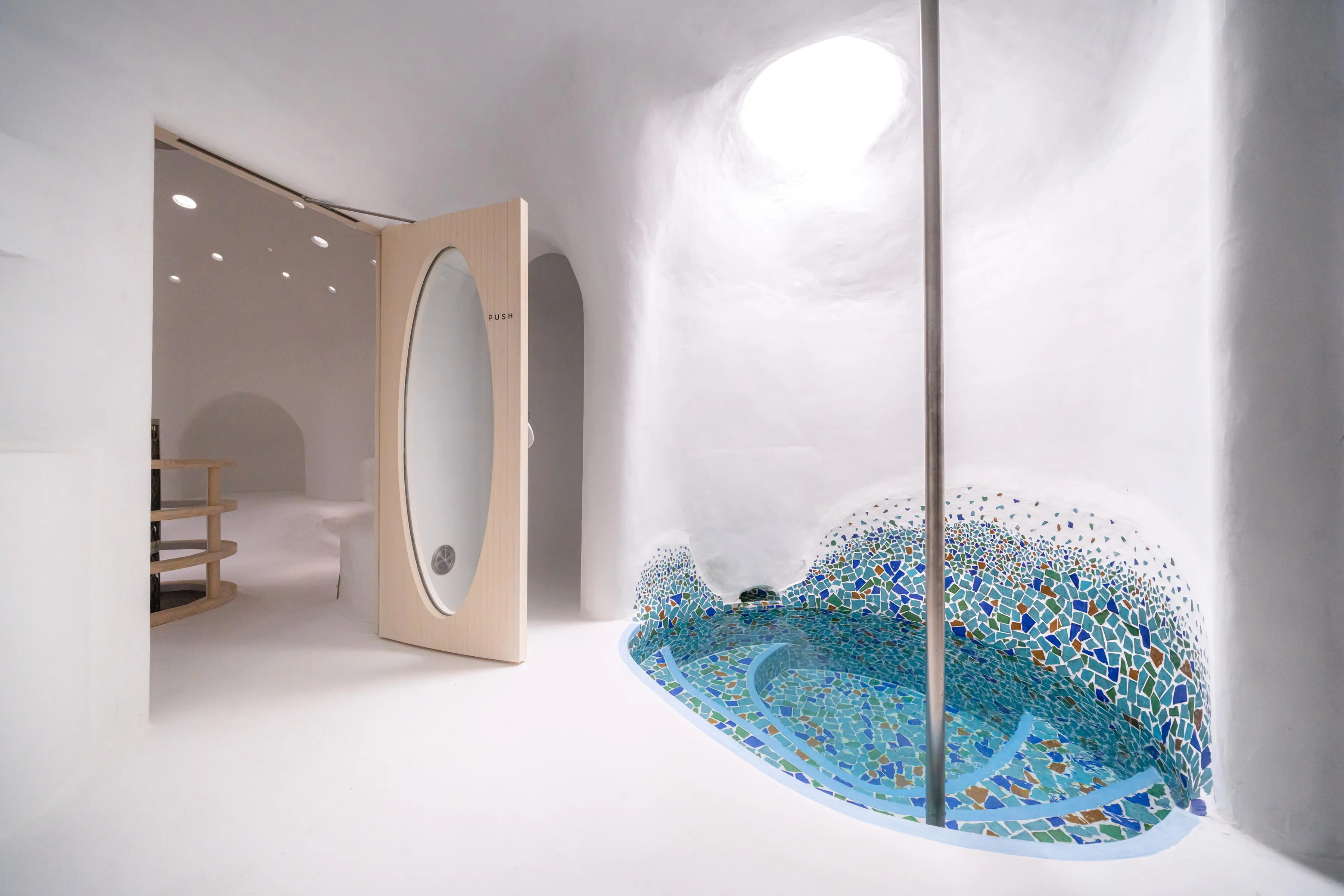
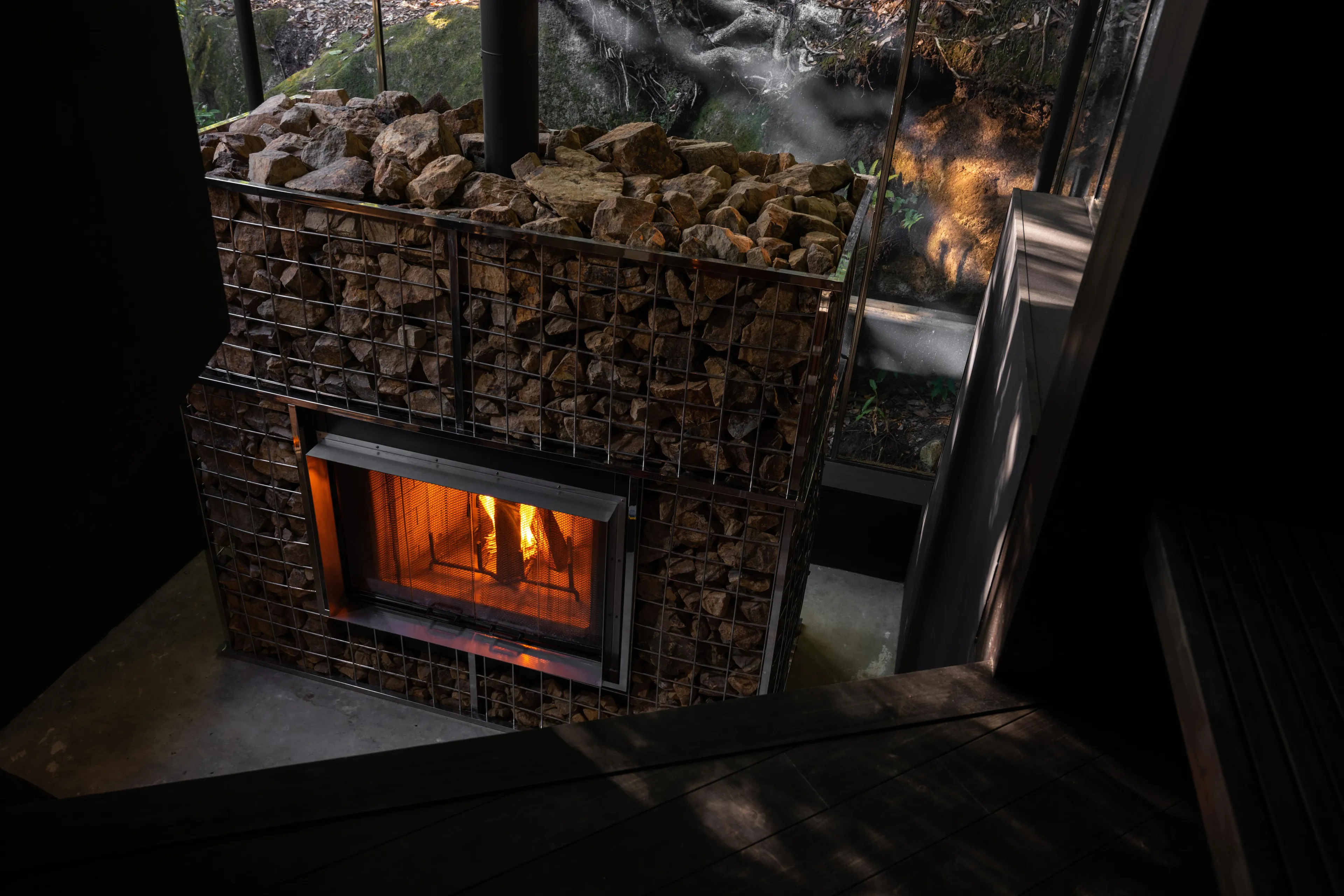
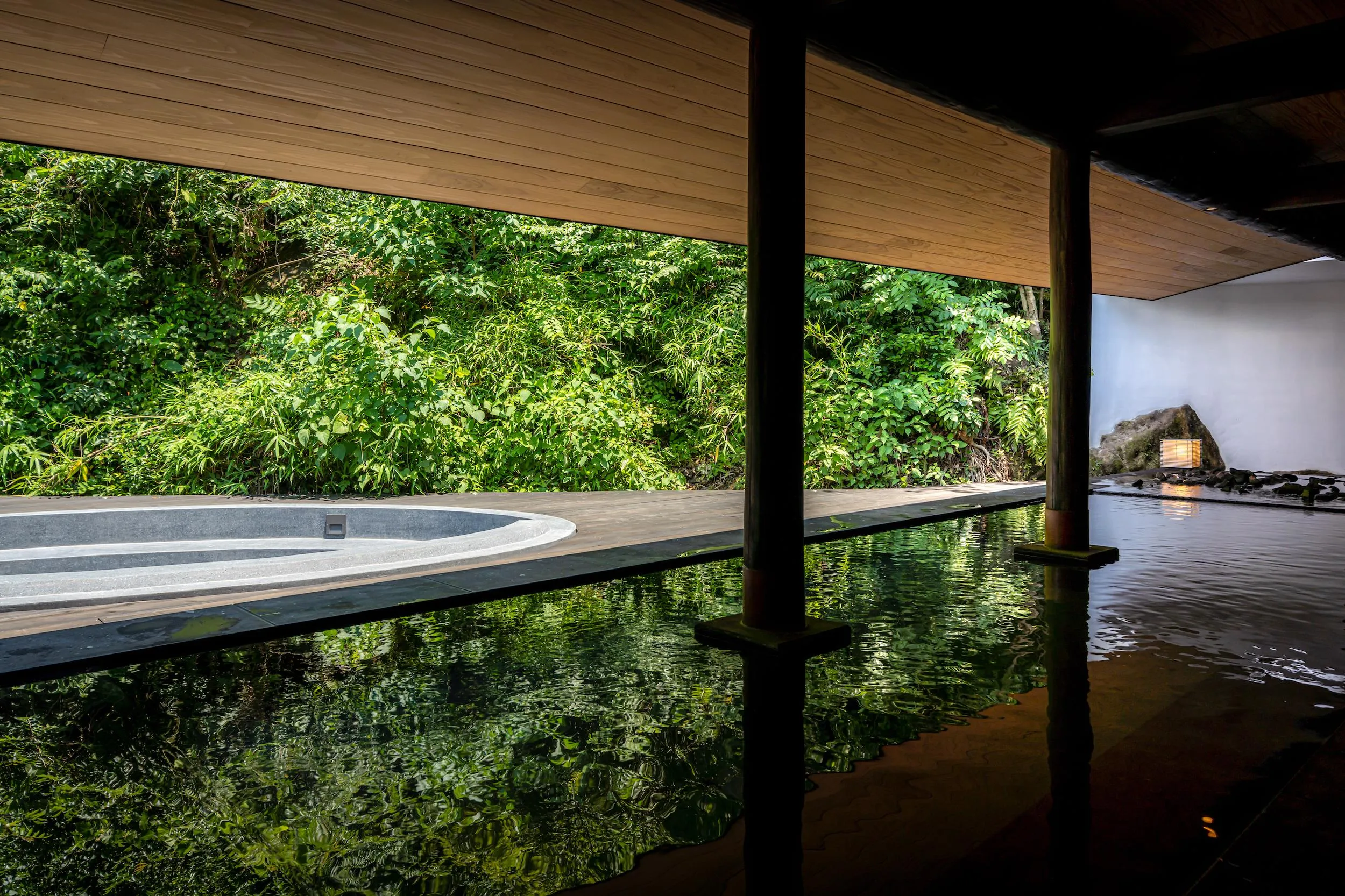
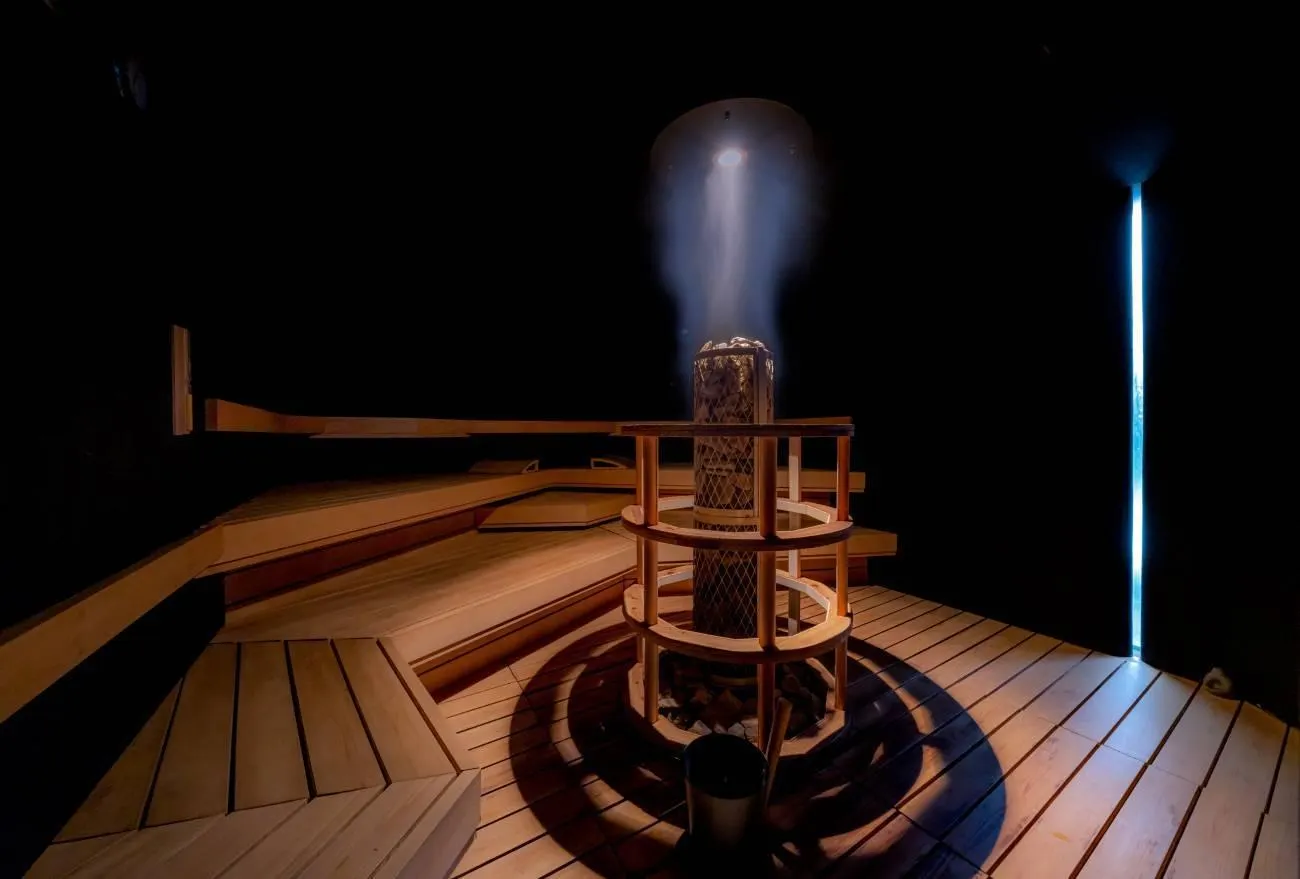
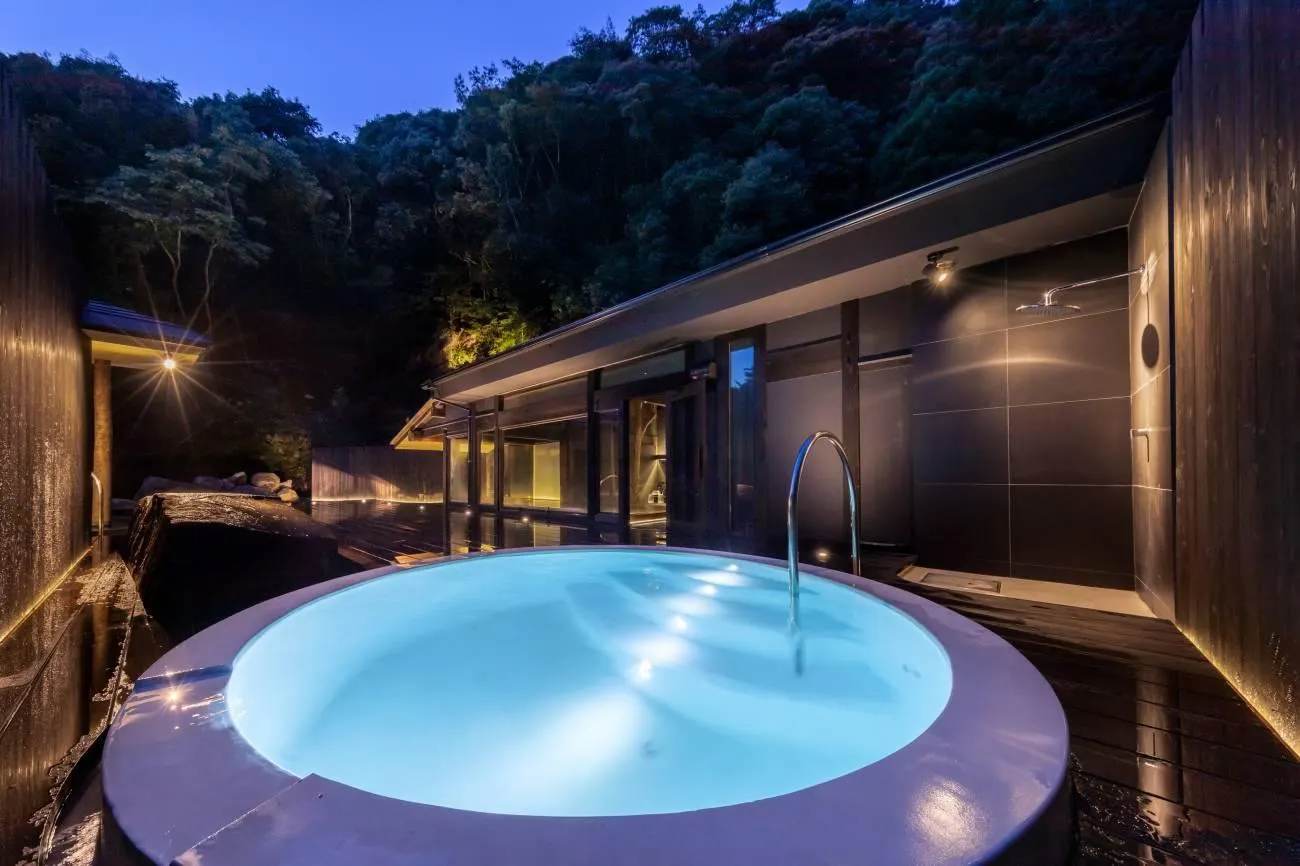
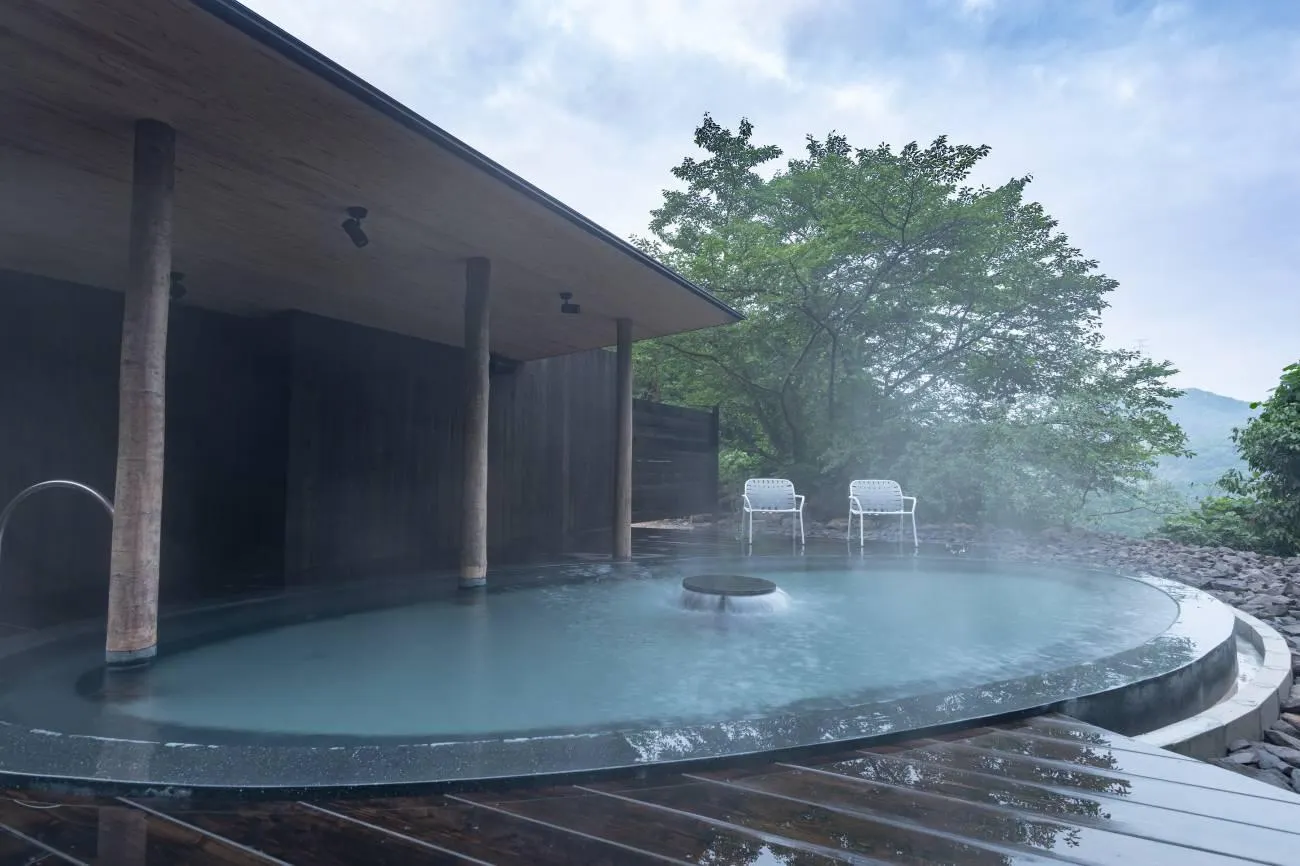
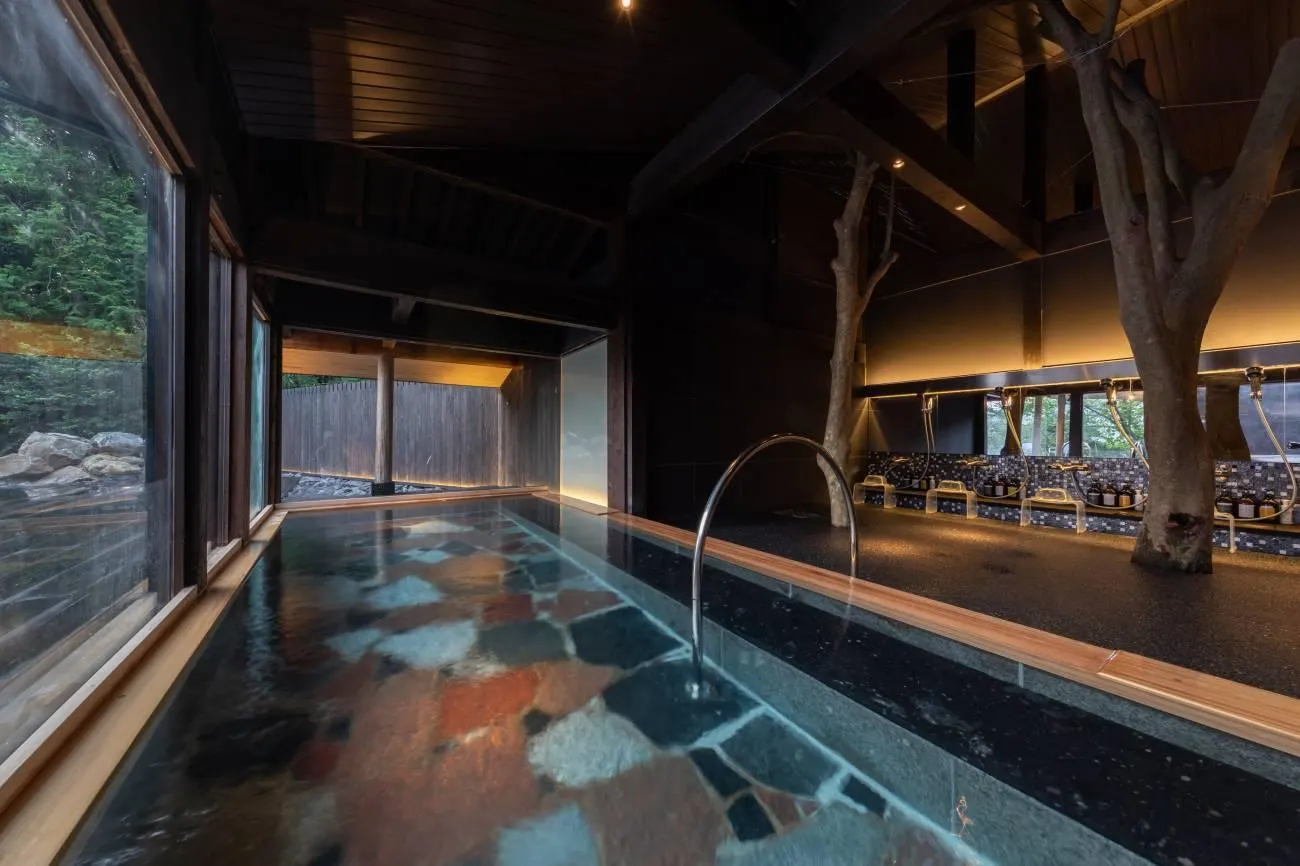
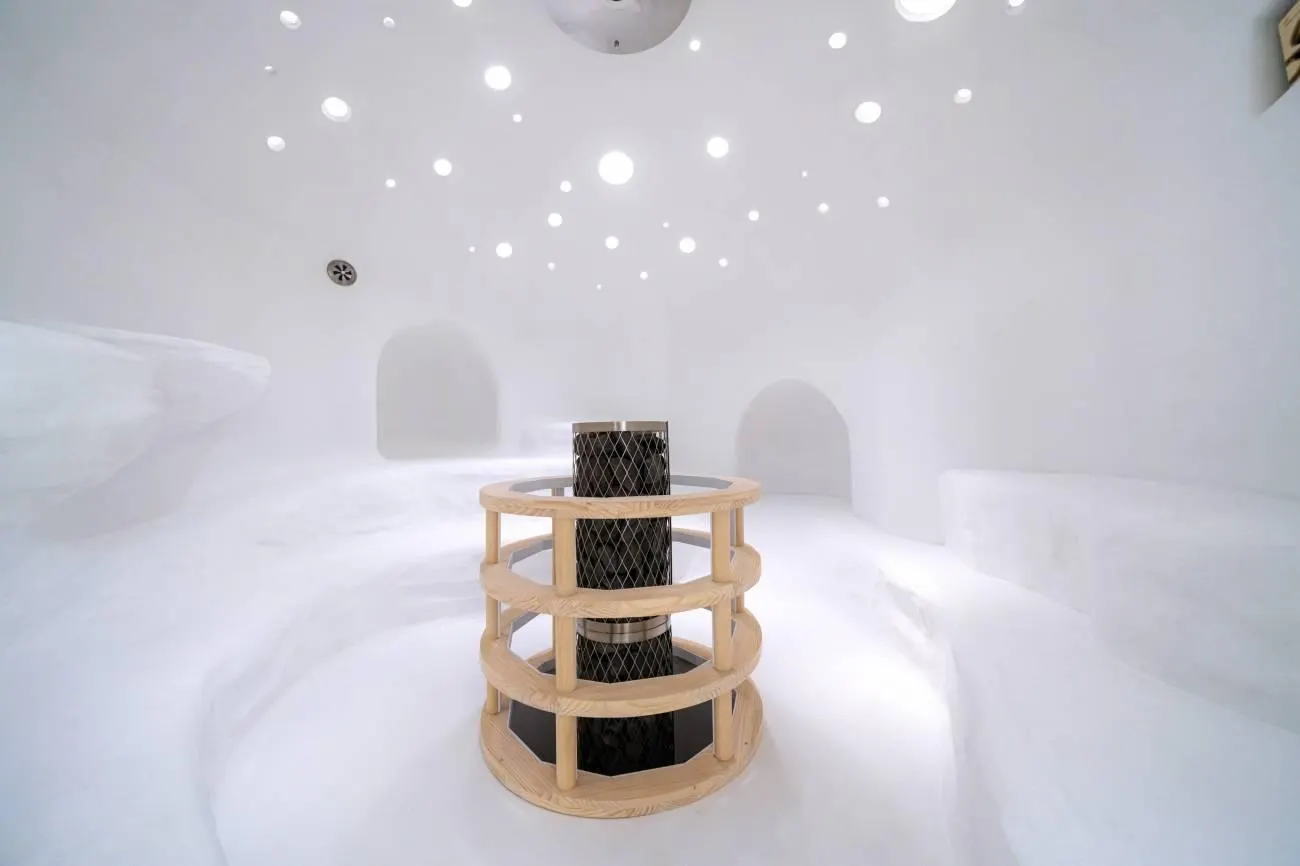
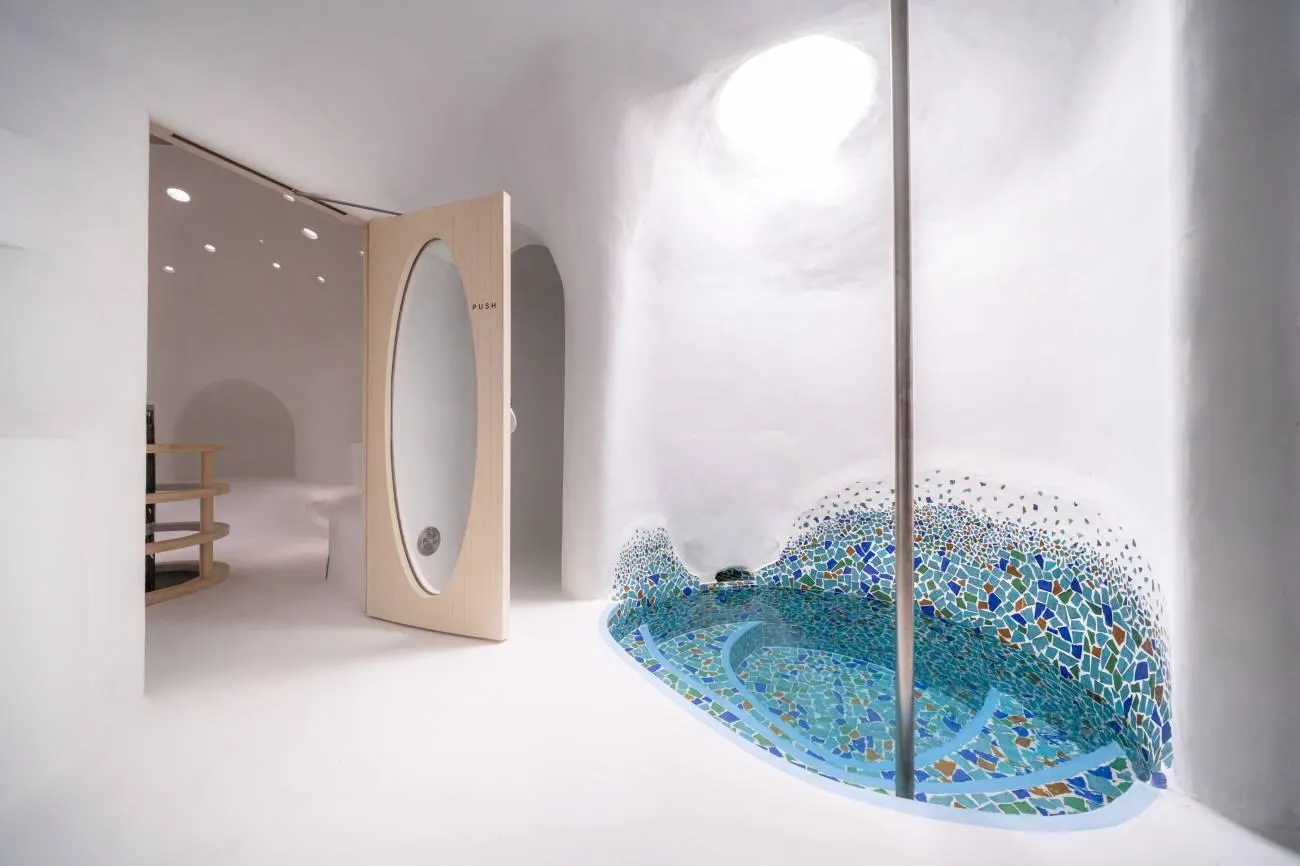
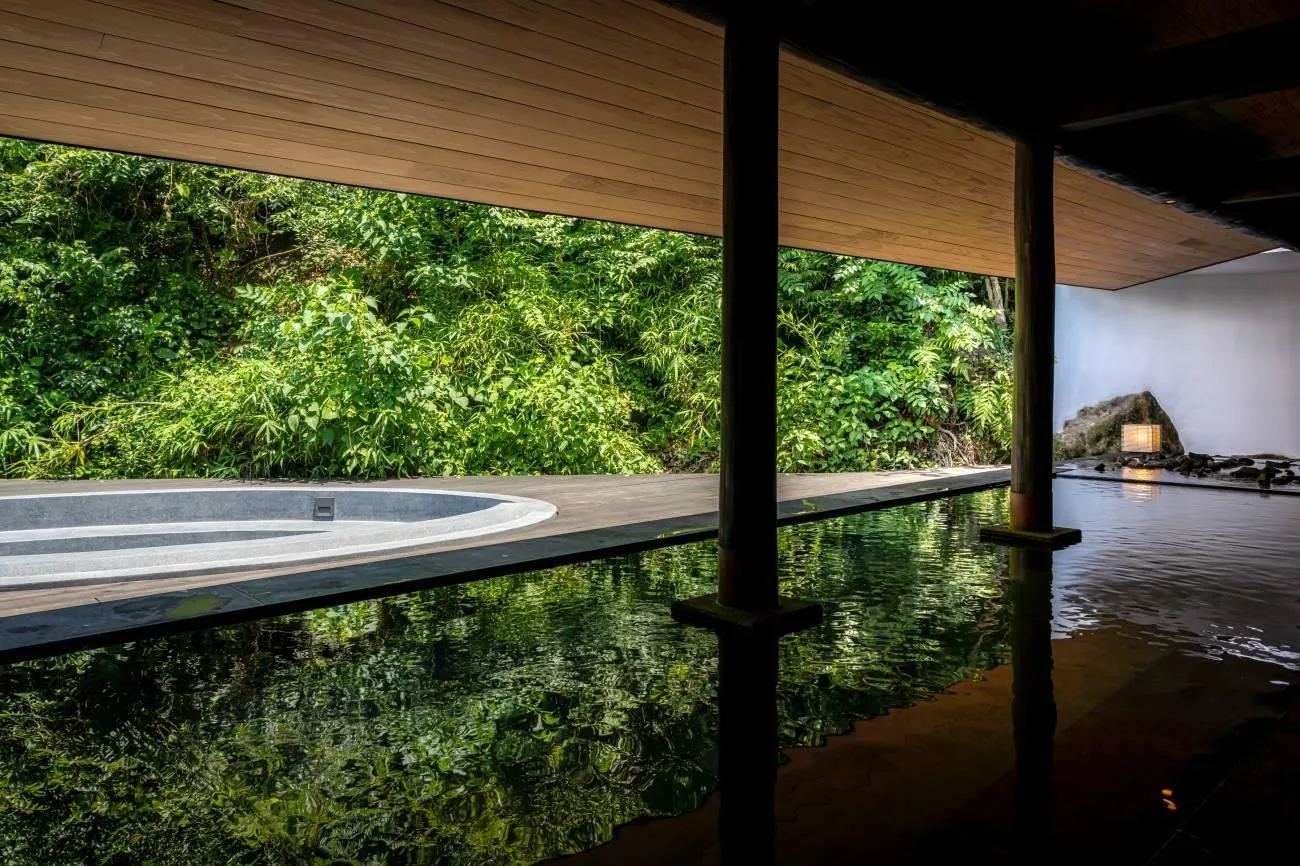
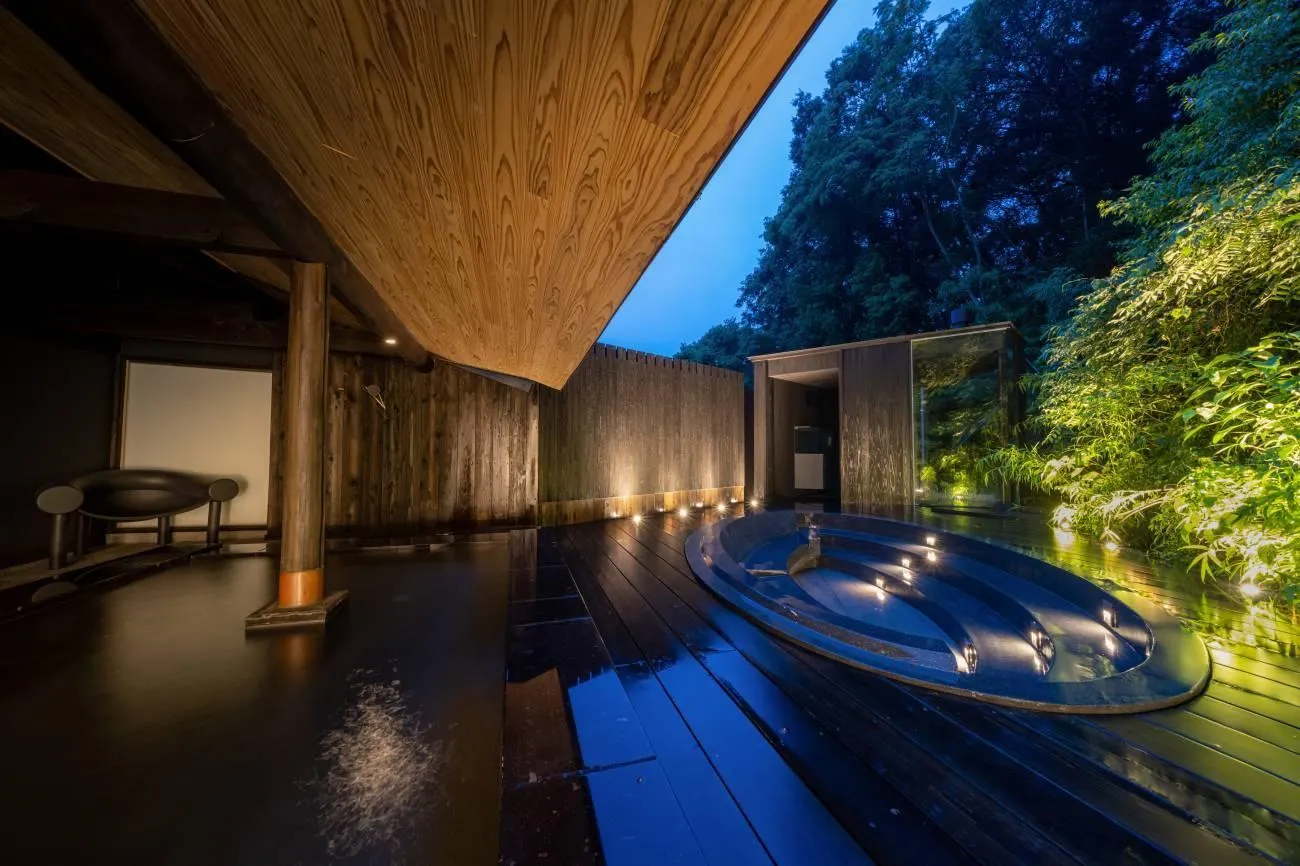
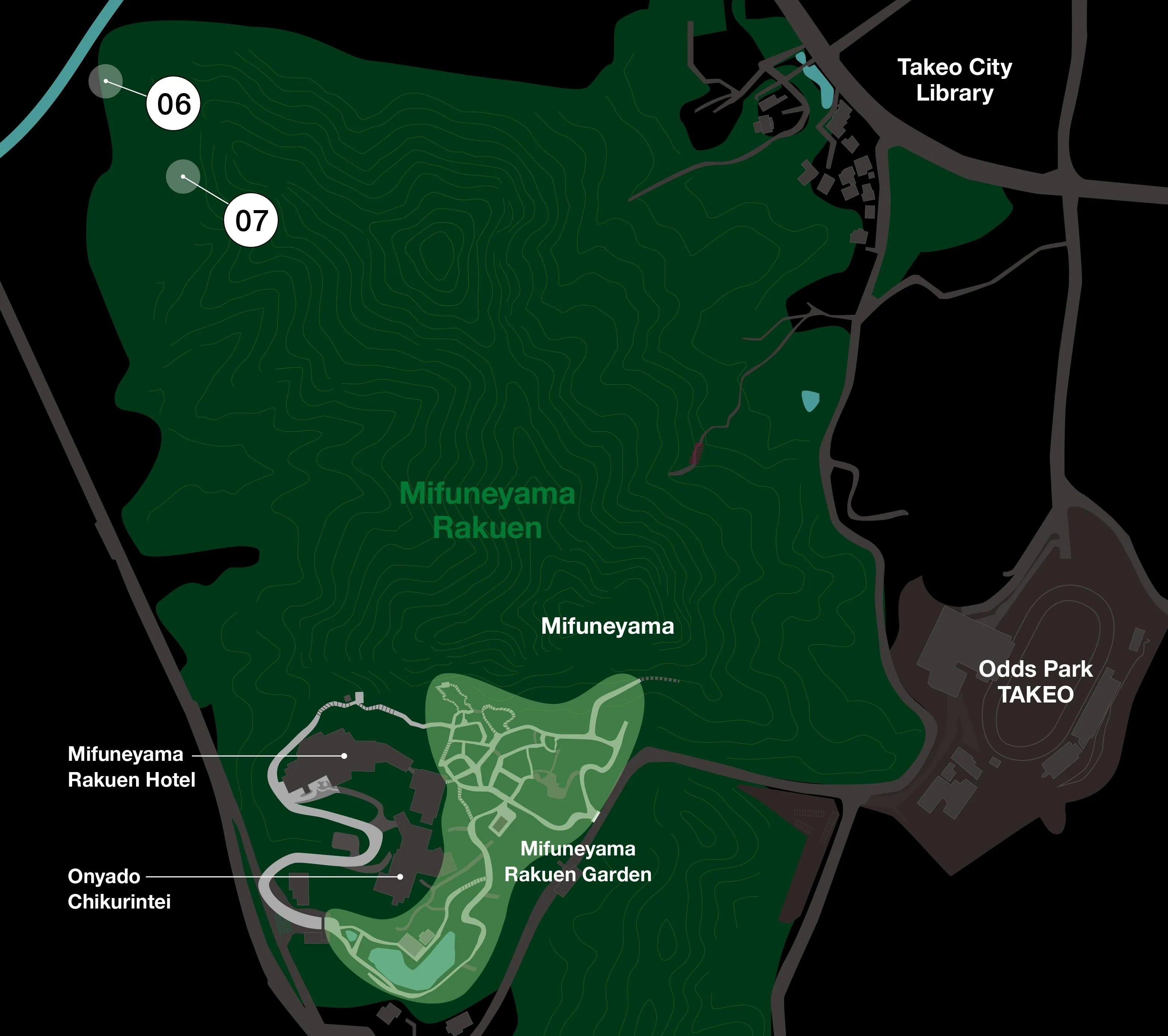
The large communal baths at Mifuneyama Rakuen Hotel have been completely renovated (both men's and women's). The men's bath now has a dry sauna where guests can enjoy löyly (pouring hot water on sauna stones to produce steam, uses natural water from Mt. Mifune and roasted tea from Ureshino, Saga). The men's bath also has a cold water bath with hot spring water cooled to 16 degrees Celcius, and a large open-air bath/bathing space surrounded by the nature of Mt. Mifune.
The women's bath is also now equipped with a dry sauna, allowing guests to enjoy löyly (uses natural water from Mt. Mifune) and Kugel (aroma balls that produce a scent when on top a sauna stove). It also has a cold water bath with hot spring water cooled to 17 degrees Celcius, a steam sauna, a cafe (has homemade pudding, detox water, etc.), and an open-air bath/bathing space surrounded by the nature of Mt. Mifune. We hope you will enjoy a relaxing time in our baths while gazing at Mt. Mifune's beautiful nature.
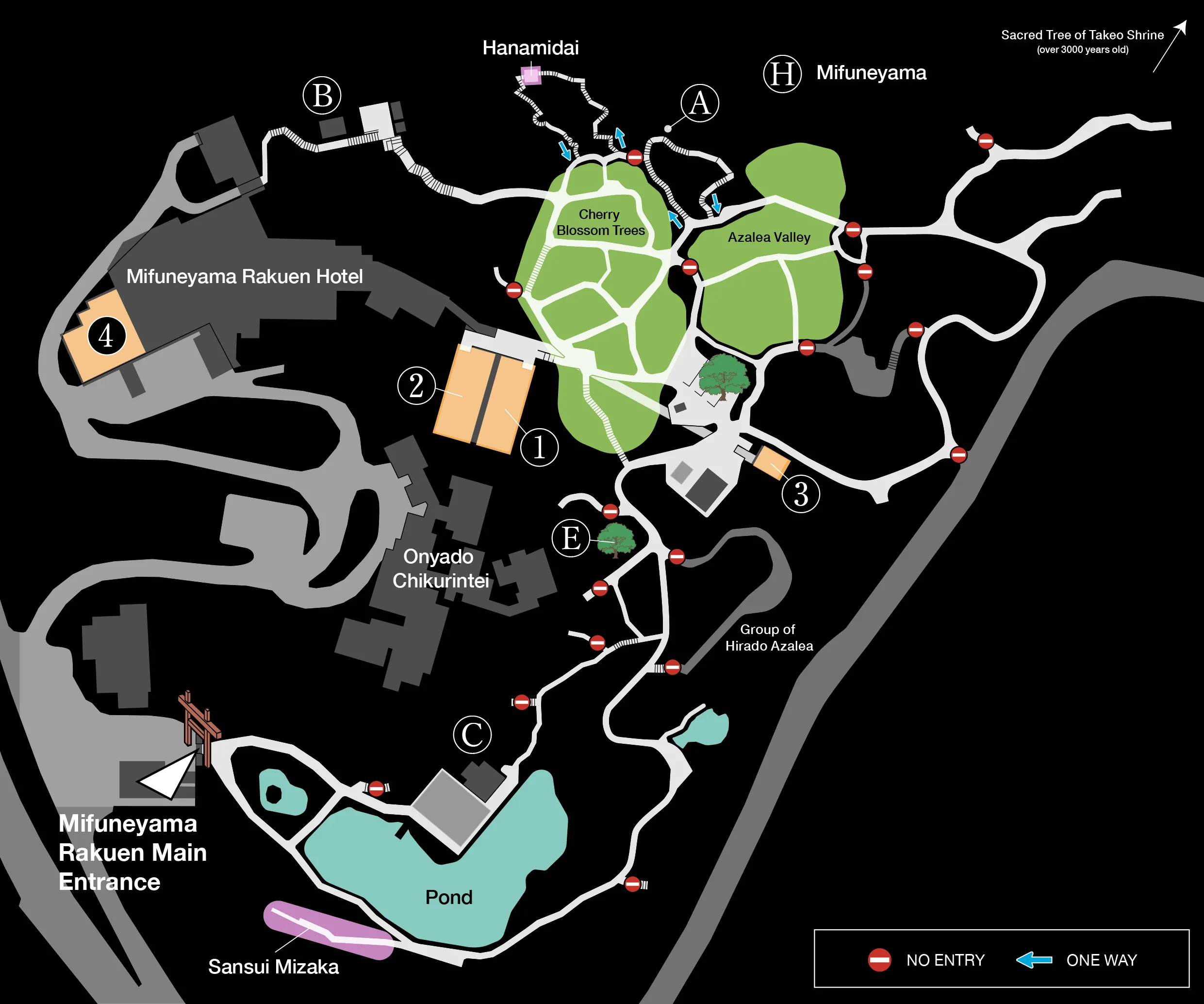
Map



会场信息
展期
时间
11:00-22:00
* 最后入场时间为21:30
御船山乐园大浴场“罗汉之汤”一日游入浴
预约制 / 定员制
第1批: 8:00 - 10:30 (最多 15名男性/10名女性)
第2批: 15:00 - 17:30 (最多 15名男性/10名女性)
第3批: 17:30 - 20:00 (最多 15名男性/10名女性)
第4批: 19:30 - 22:00 (最多 15名男性/10名女性)
第5批: 21:30 - 24:00 (最多 15名男性/10名女性)
----------
* 不可过夜。
* 11:00-22:00期间可随时入场。
* 16岁以下儿童不可使用本套票。
* 谢绝同性别4人以上的团队顾客。
* 请通过电话或官方售票网站进行预订。
关于御船山乐园的开放时间
因季节而异,具体请查看 御船山乐园网站。
交通指南
地址
佐贺县武雄市武雄町大字武雄4100
联系我们
Inquiry on tickets
Tel
Mifuneyama Rakuen Hotel
注意事项
关于入境
根据人群的不同,可能会限制进入。由于时间限制,如果您的组中的访问者数量突然增加,则可能无法允许进入。
轮椅和婴儿车访问
花园拥有自然小径,可能很难通过轮椅或婴儿车进入。
无障碍艺术品包括;
呼应灯之森林与螺旋 - 一笔"
责任
对于个人物品的任何伤害,丢失或损坏,主办方不承担任何责任。
垃圾免费公园
为了保护环境,这个公园不提供垃圾桶。准备好把垃圾带回家进行处理和回收。
禁止抽烟
所有公园和自然区域都严格禁烟和无烟。
服装
这个公园有陡峭的山坡和自然小径。建议游客穿着合适的衣服和鞋子。
不准带宠物
公园内不允许携带宠物。欢迎服务犬。
由于天气导致展览暂停或延迟
如遇大雨和/或风,展览将暂停。有关详细信息,请查看官方网站,Facebook或Instagram。
摄影与摄像
禁止在公园内使用闪光灯,无人机和/或三脚架。
其他
进入本次展览,即表示您同意由官方摄影师和摄像师拍摄您的图像。主办单位或当地宣传单位可以在新闻材料,宣传材料,网络和其他财产上使用由此产生的材料,包括静态照片,录像和录音,不受限制或经济补偿。
<御船山乐园大浴场“罗汉之汤”使用时的注意事项>
本馆禁止以下客人当天往返入浴,敬请谅解。
* 同性4人以上的团队
* 中学生以下当天往返入浴
* 被认为是黑社会相关人员、反社会团体或组织的相关人员
* 有纹身的人
* 酒醉的人(过度饮酒的人)
* 大声喧哗的人
* 有皮肤病或可能有其他传染病的人、医生要求禁止入浴的人
* 发热、严重体虚、咳嗽、呼吸困难等患有呼吸道疾病的人、或其他身体不适的人
* 有打扰其他客人的行为、被认为危险的行为、不卫生的行为的人
* 被认为不符合使用本馆条件的人
主办单位
teamLab
附近的展览
2025.7.18(Fri) - 常设
御船山乐园, 御船山乐园, 九州
2018.7.19(Thu) -
御船山乐园酒店, 武雄温泉, 九州
2020.7.21(Tue) - 常设
在MIZUHO PayPay Dome FUKUOKA旁边, 福冈
2017.3.30(Thu) - 常设
Fukuoka Airport Domestic Terminal JAL DP · Sakura Lounge, 福冈