
Memory of Waves in the Sky
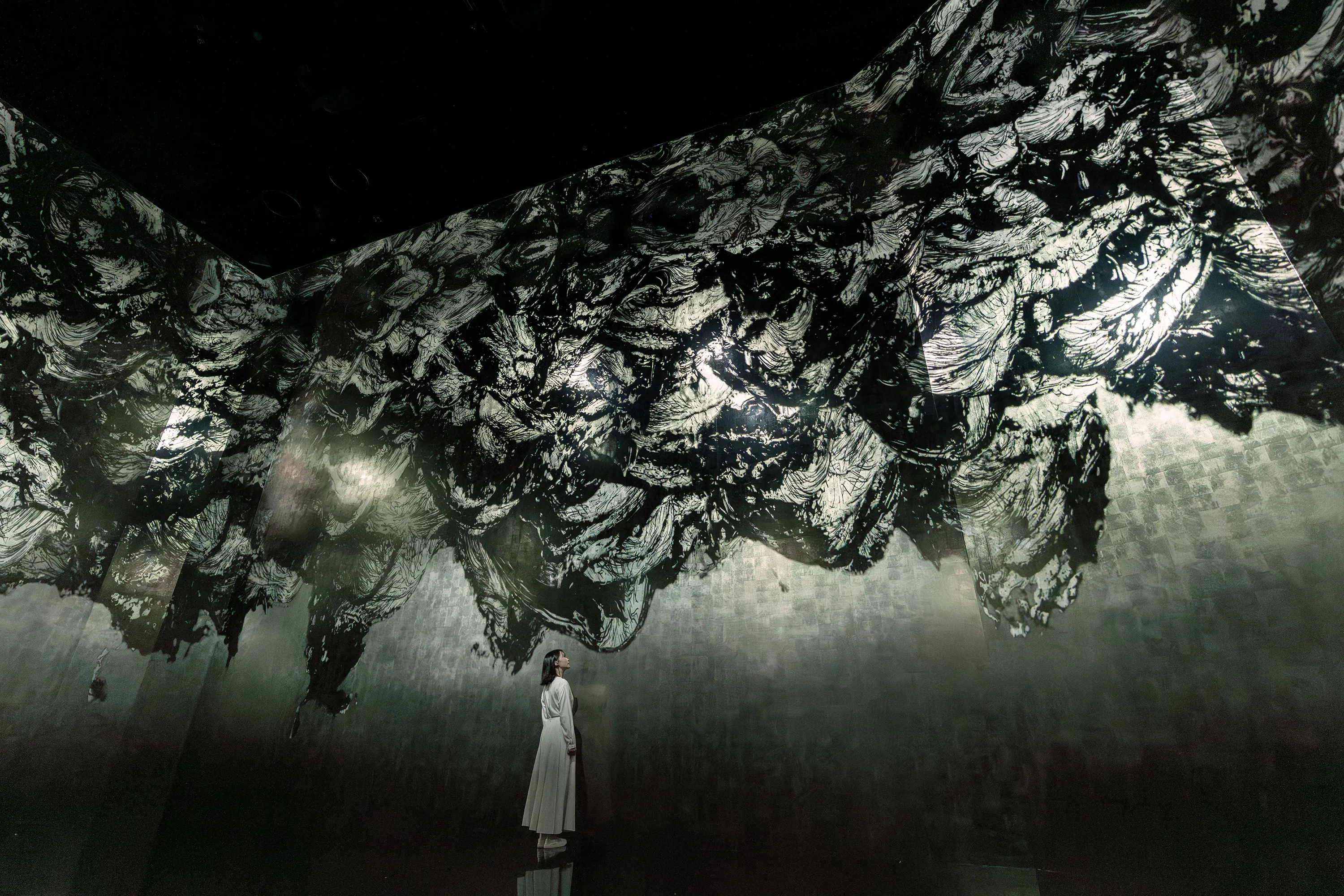
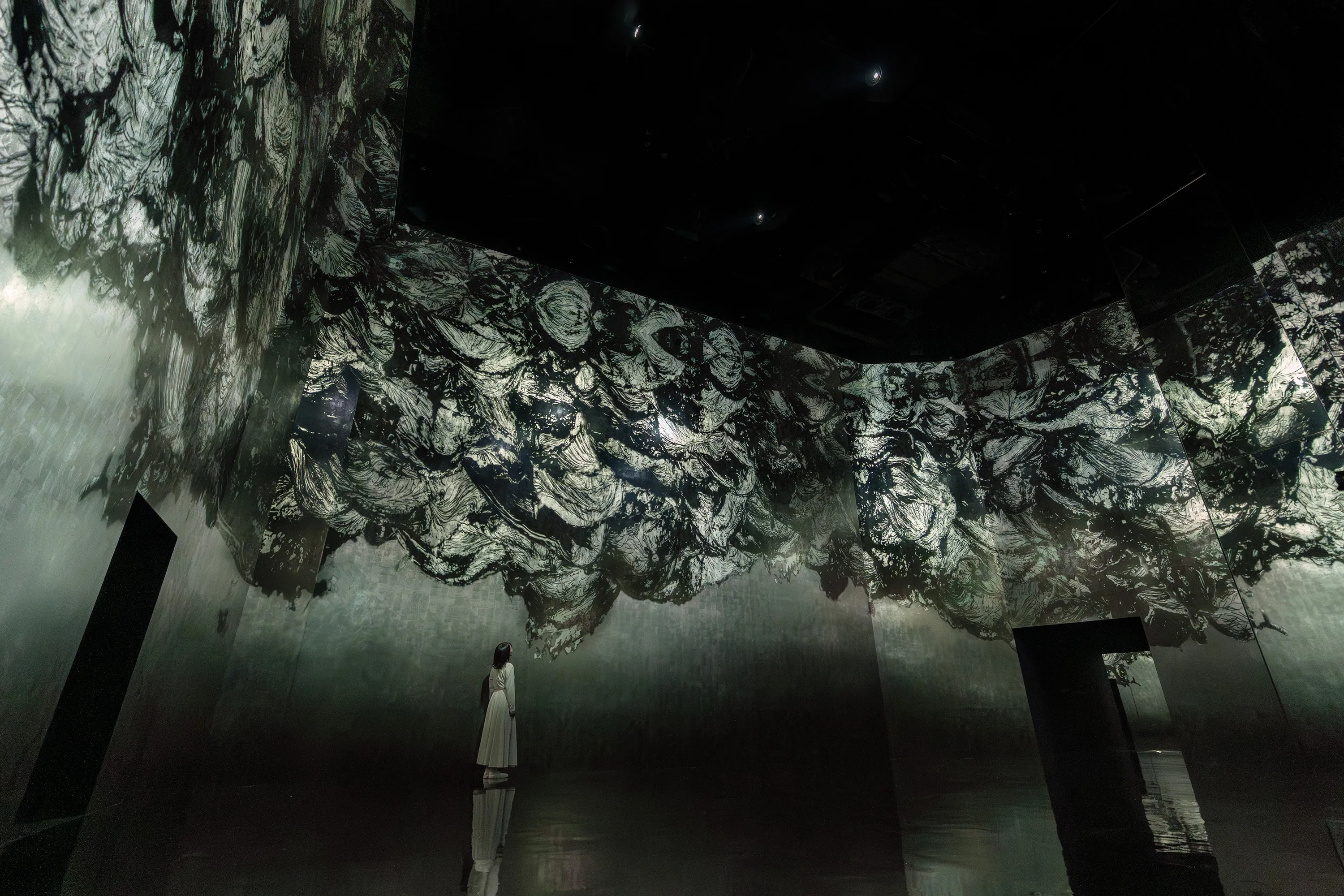
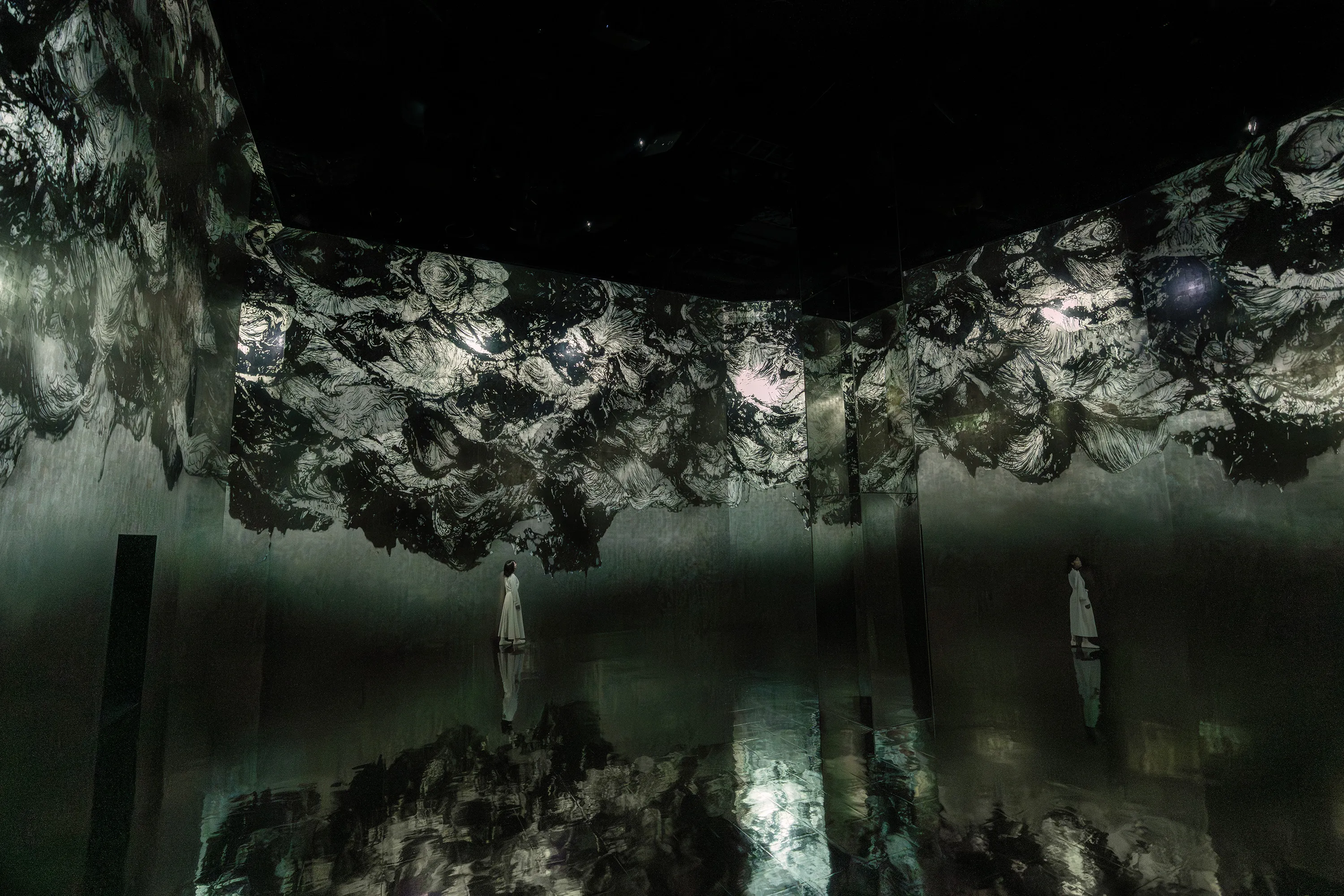
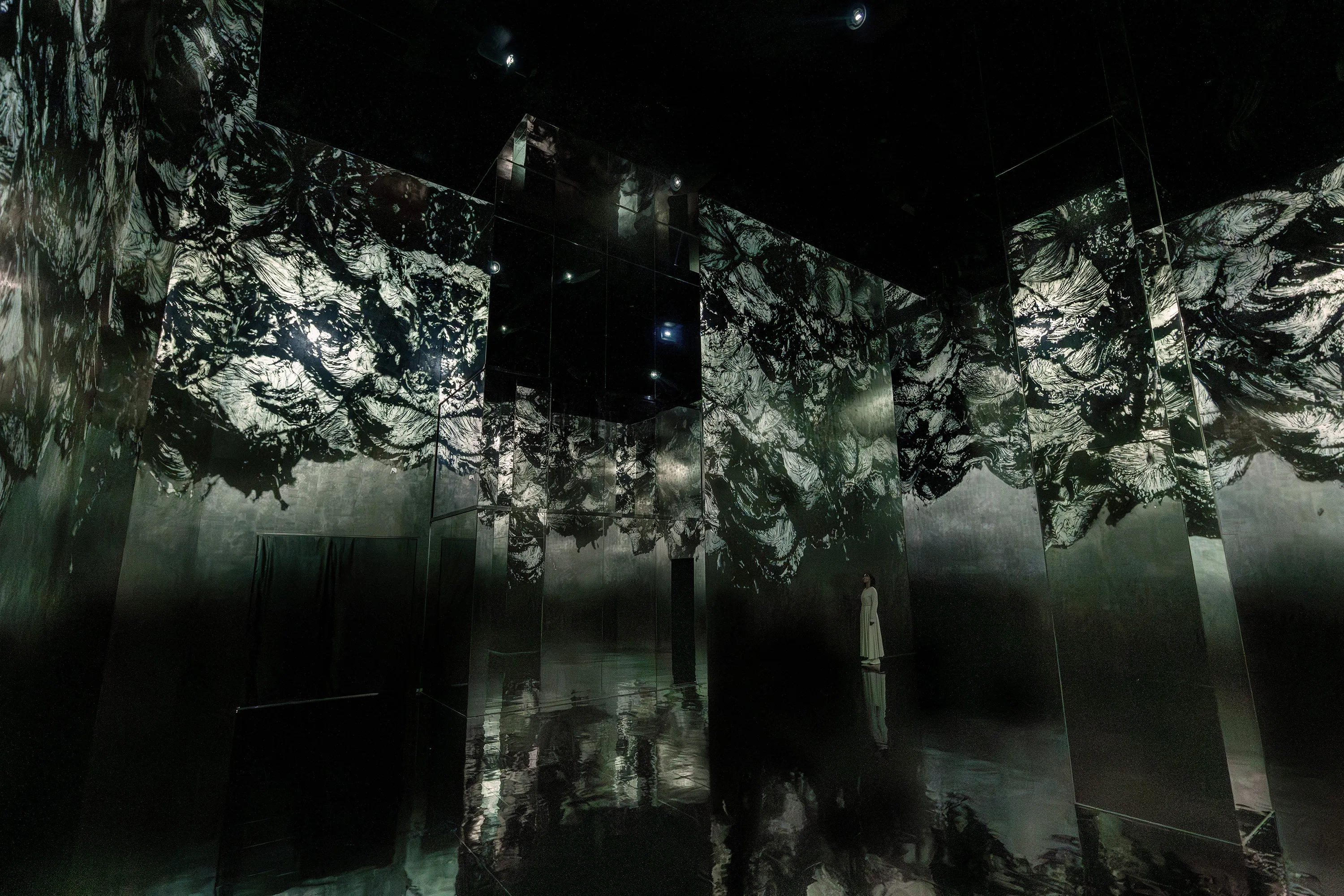
Memory of Waves in the Sky
Within eternal time, the sea shines from its depths.
The black of the lines that trace the waves is darkness — that is, a state without light.
Yet these lines, drawn by darkness, exist in front of the white of the sea and continue to flow, even though neither matter nor light is present within them.
To recognize existence is not simply to acknowledge that an object or light is there.
It arises and takes shape within relationships to what surrounds it.
This pictorial space is a cognitive space. The space created by the radiance is not an illusion of space, but a space that is bodily experienced. Here, the pictorial space is drawn through Ultrasubjective Space, and thus becomes a pictorial space that restores bodily freedom. As these two kinds of space overlap, this bodily pictorial world comes into being.
The pictorial space drawn through Ultrasubjective Space differs from a picture plane flattened by a lens or by single-point perspective.
In images or paintings produced by a lens or single-point perspective, space appears behind the picture plane; the space that opens there and the space the viewer inhabits are split, and the picture plane becomes a boundary surface. The viewpoint is fixed at a single point, and the body is lost.
A picture plane formed by Ultrasubjective Space is not a boundary that separates where we are from the world of the artwork.
The world of the artwork is not outside a window; it appears as a single field that is continuously connected, without boundary, to the space in which the viewer’s body exists.
Moreover, any position — front, back, left, or right — can become a viewpoint, so viewpoints exist in infinite number, and the viewer regains a free body.
Not bound to a single point, the viewer moves their body and lets their gaze roam freely, continually re-composing the world of the work as it changes over time, and building pictorial space within themselves.
In that moment, the work becomes a subjective, embodied spatial art in which the viewer walks around inside that pictorial space.