teamLab: Dance! Art Exihibition, Learn & Play! Future Park | teamLab

メイン画像
ロゴ画像
นิทรรศการที่ผ่านมา
2017.7.08(Sat) - 11.30(Thu)OCT Harbour-OCT Creative Exhibition Center, Shenzhen
メイン画像
ロゴ画像
นิทรรศการที่ผ่านมา
2017.7.08(Sat) - 11.30(Thu)OCT Harbour-OCT Creative Exhibition Center, Shenzhen

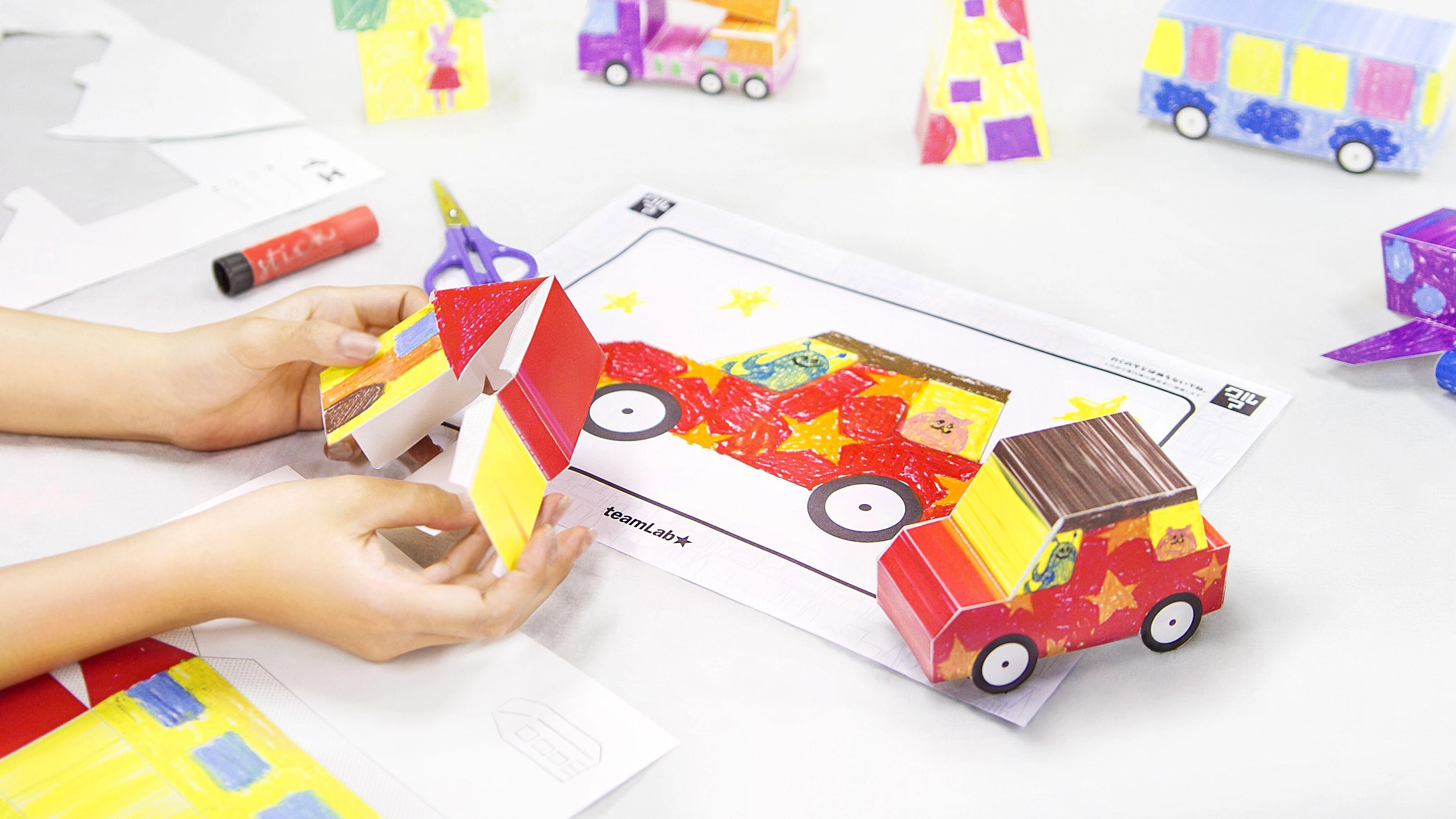
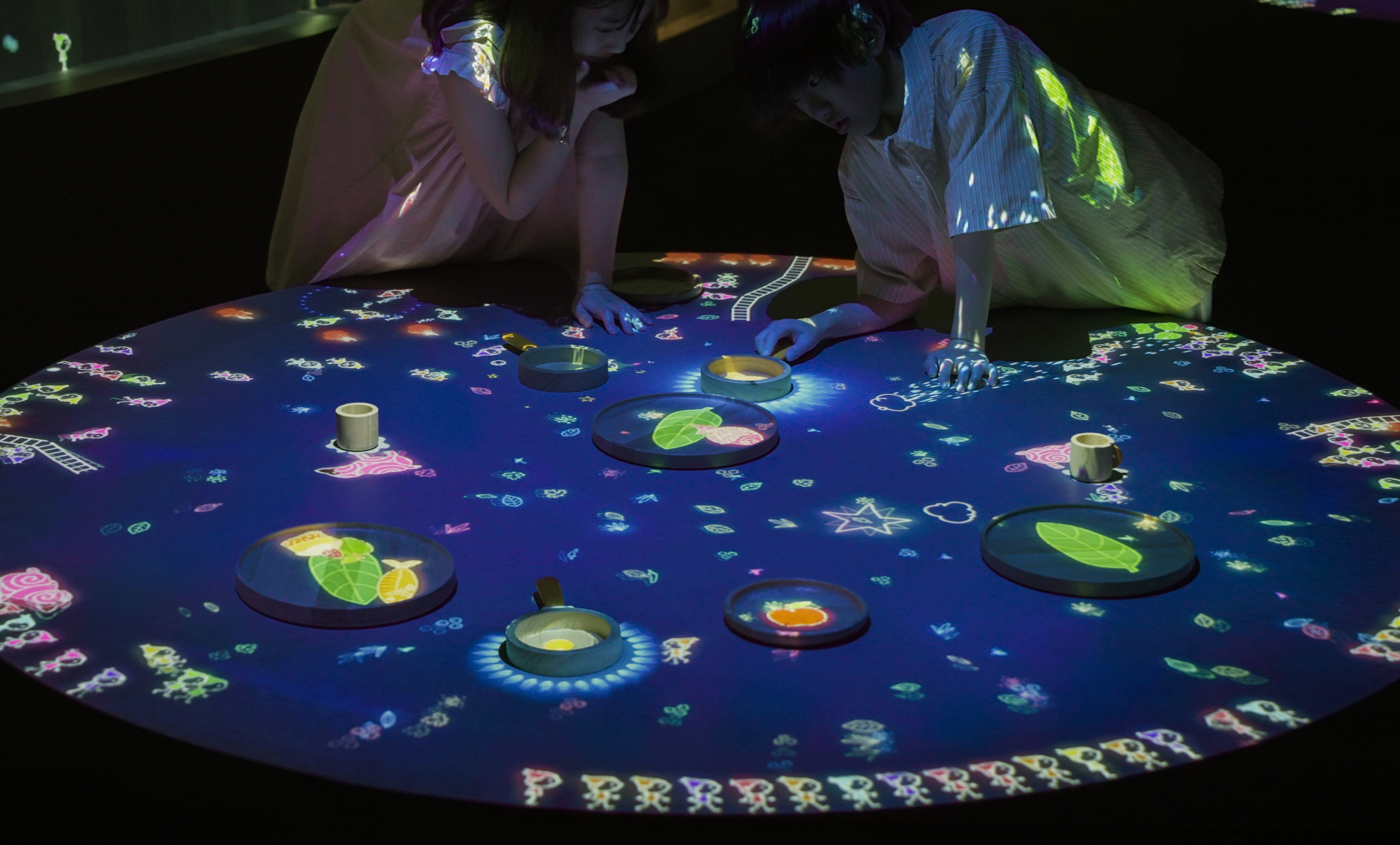
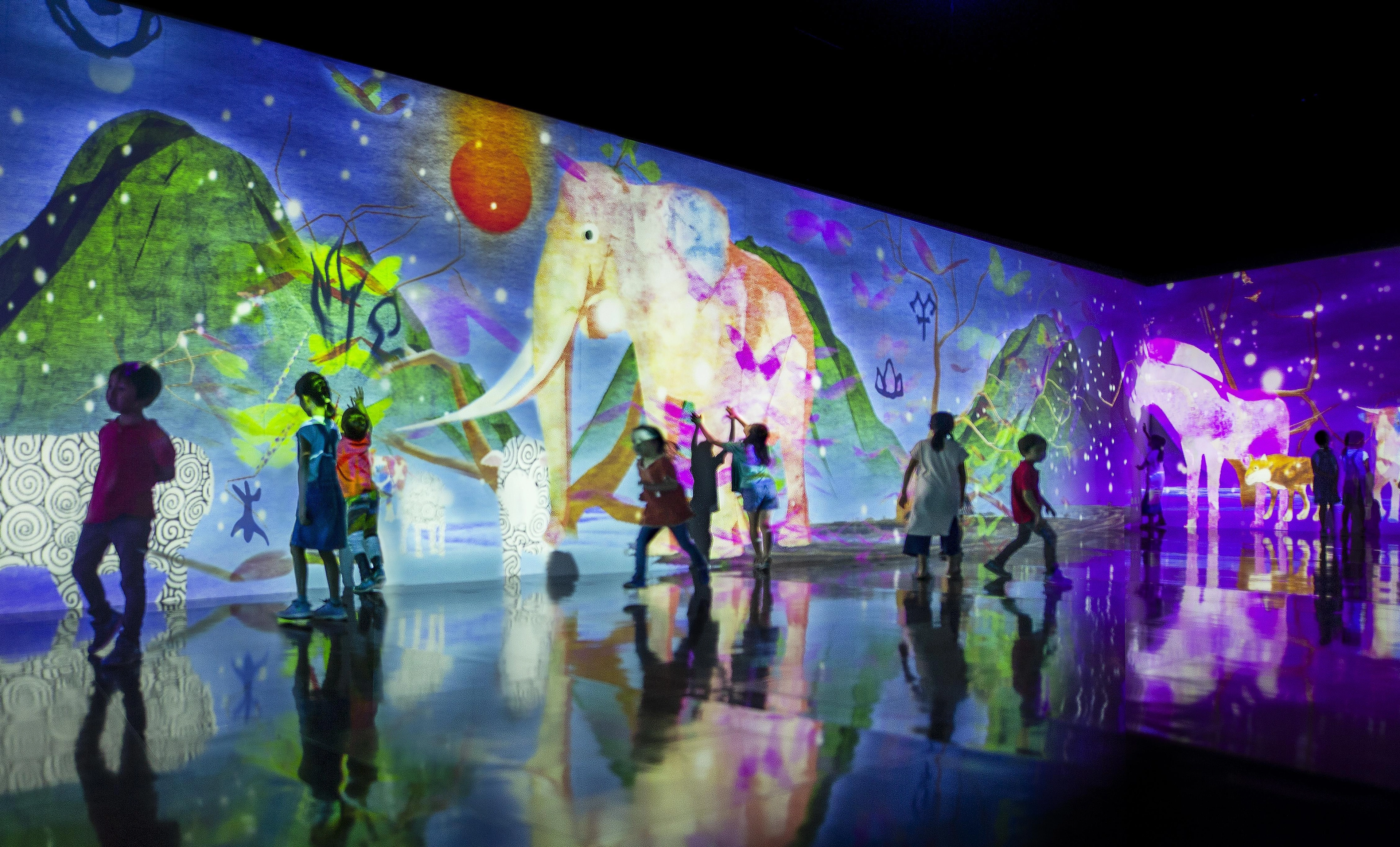
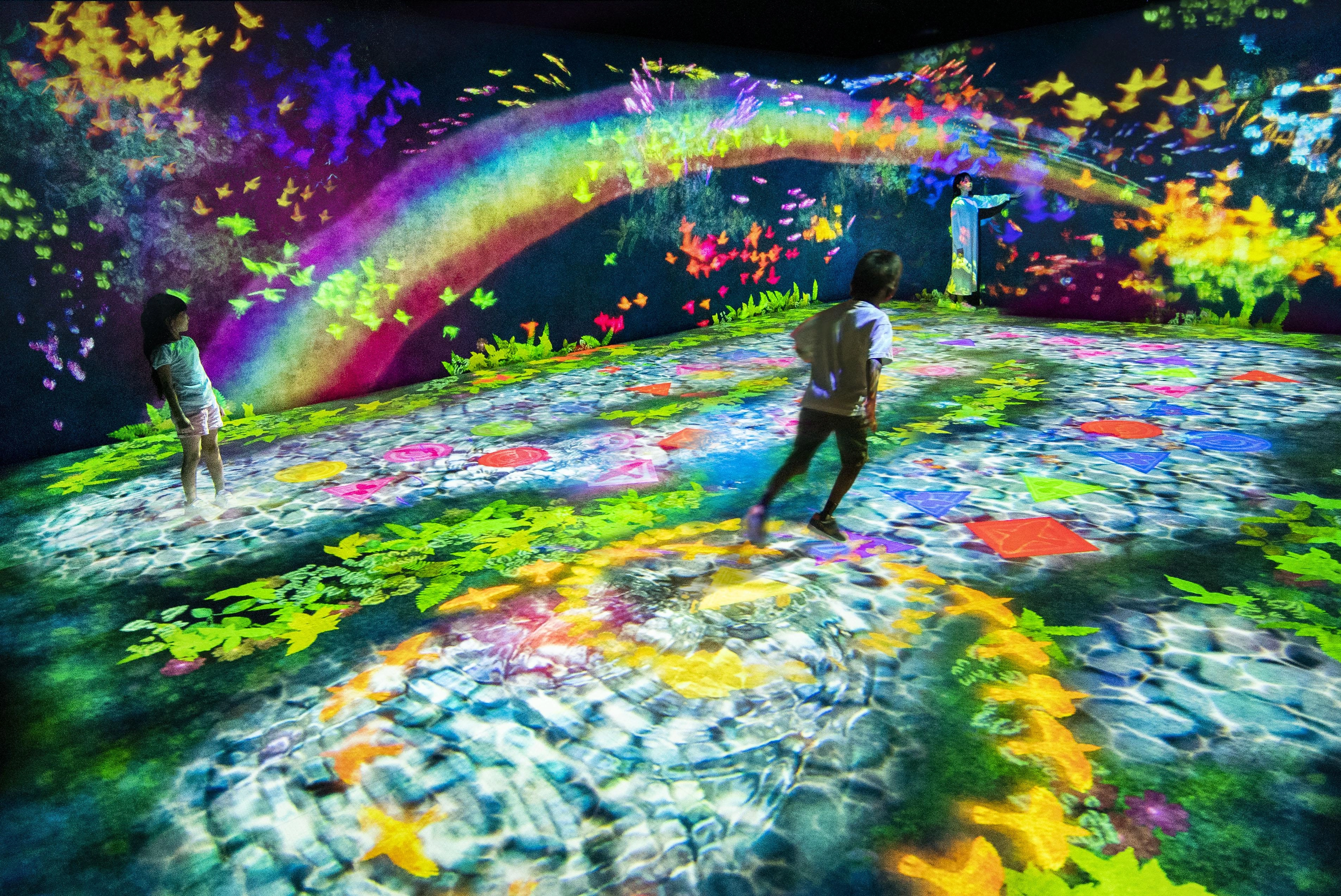
“teamLab: Dance! Art Exhibition, Learn & Play! Future Park” is a large-scale exhibition that is designed to stimulate people’s creativity and collaborative minds with a form of Future Park. Combining art exhibitions and futuristic amusement park, this exhibition attracted more than 460,000 visitors when firstly opened in Odaiba, Tokyo, in 2015. It was awarded ‘TOP 10 art exhibitions of 2015‘ from the world’s biggest creative media ‘designboom’.

‘The Living Digital Space and Future Parks’, the 2nd exhibition that is currently being held in Silicon Valley, reportedly destroyed the long-lasting anti-art tradition of the west coast. Marina Bay Sands, the world's biggest hotel complex located in Singapore, is home to a permanent exhibition since March 2016. The news is covered by numerous local media, including 2 top national newspapers in Singapore. teamLab’s exhibition has been opened also in Thailand from May. From August, teamLab opened their second permanent exhibition at Lotte World (Seoul, South Korea).

Dance! Art Exhibition

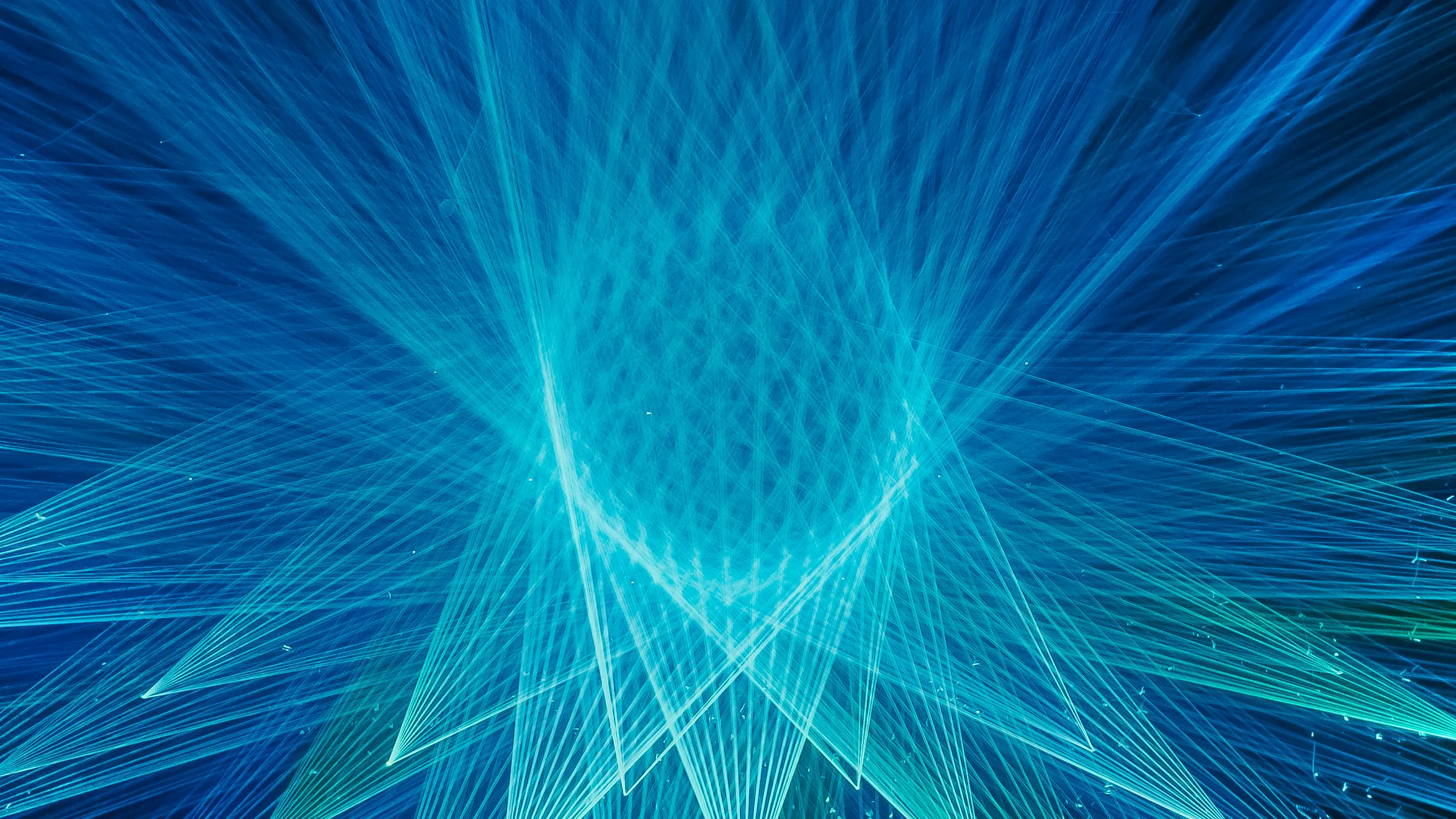
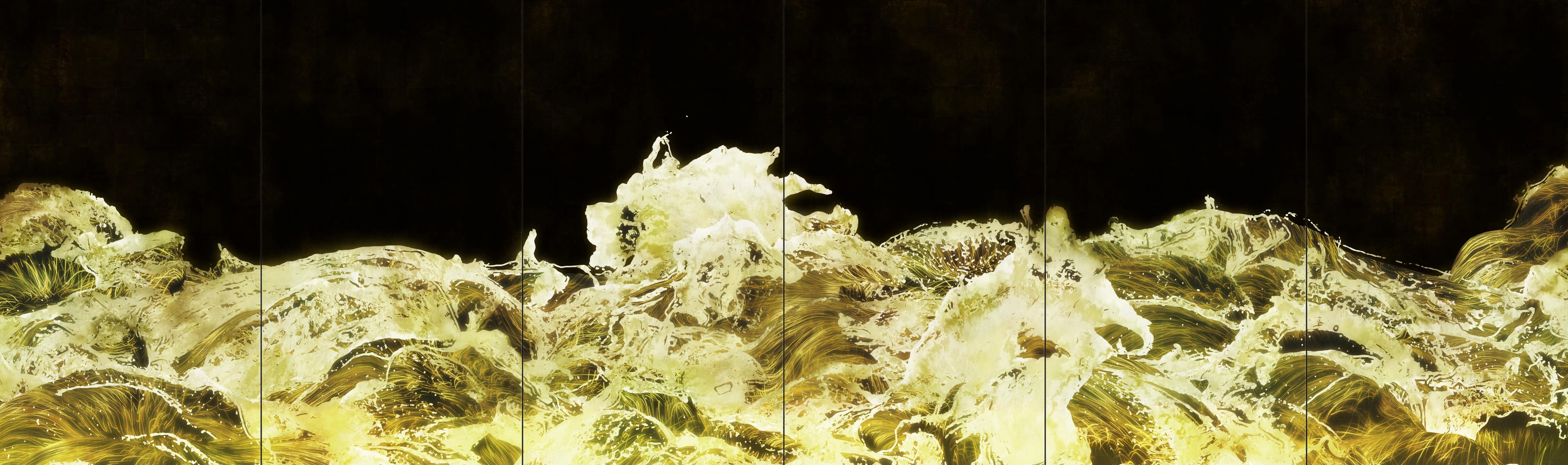
Gold Waves

The movement of waves in water is simulated in a computer-generated three-dimensional space. The water is expressed as a continuous body after calculating the interactions of hundreds of thousands of particles. To visualize the waves, the behavior of the particles of the water was then extracted and lines were drawn in relation to the movement of the particles. The wave created in a 3-D space is then turned into an artwork in accordance with what teamLab refers to as ultrasubjective space.
In premodern Japanese painting, oceans, rivers, and other bodies of water were expressed as a series of lines. These lines give the impression of life, as though water was a living entity.  
This form of expression leads us to question why premodern people sensed life in rivers and oceans. Also, why did they behave as if they themselves were a part of nature? Perhaps something can be discovered by fusing the fixed objective world of today’s common knowledge with the subjective world of premodern people.
While viewing this artwork, if we feel a sense of life in the collection of lines—what can be called the subjective world of premodern people—then perhaps this is one aspect of objective recognition.
When viewing this artwork, as opposed to watching waves shot with a video camera, people may feel that the barrier between themselves and the waves disappears. They feel immersed in the work, perhaps even feeling life in the collection of lines, as if the waves are luring them in. Perhaps we can find a connection to the way premodern Japanese people perceived the world and consequently behaved toward the world.
If we regard ourselves as a part of nature, and consider nature not just as something to be observed, we might join premodern people in perceiving rivers and oceans as living entities. This is a way of seeing the world that lures us in and allows us to feel that there is no boundary between ourselves and nature.

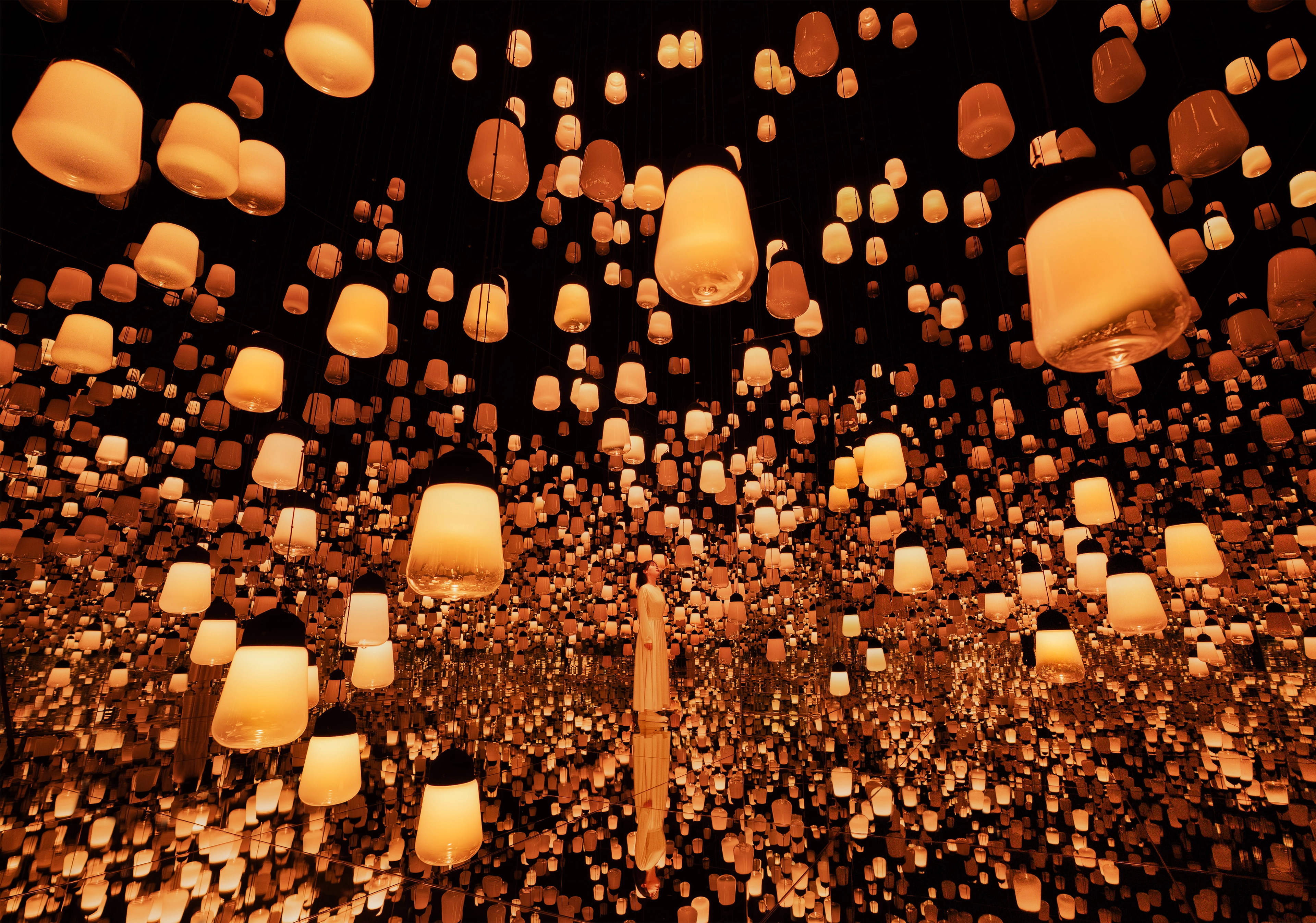
Forest of Resonating Lamps - One Stroke

This artwork, in which lamps are seemingly scattered in a random manner, is composed of resonating light that changes based on the relationship between the people in the artwork space. It is a work that expresses the beauty of continuity.
When a person stands still close to a lamp, it shines brightly and emits a sound. The light spreads to the two closest lamps, which in turn similarly emit a sound, spreading their light to the lamps nearest to them. The light, now divided into two, will pass through all of the lamps in the room once, creating a single trajectory of light. The light created by your presence and light created by the presence of others, will always intersect.
Although the lamps may seem randomly scattered, they have been intentionally placed so that regardless of the light’s starting point, or even if the light spreads endlessly, a smooth trajectory of light will always be created, crossing trajectories of light created by other people. 
More specifically, the arrangement of the lamps is mathematically determined. When drawing a line between lamps that are closest to each other, the distribution in height, direction of the lamp, and the smoothness of the three-dimensional trajectory is quantified in order to create a unicursal line with the same starting and ending point.
As a result, a lamp’s light triggered by a person’s presence will, regardless of the fact that it is only spreading to the closest lamps, always pass through every lamp only once. The light will always cross the light created by others, and return to the original lamp that started its trajectory.
The arrangement of the lamps may appear random, but it is to express the beauty of the continuity of light, created by people interacting with the lamps from any position.

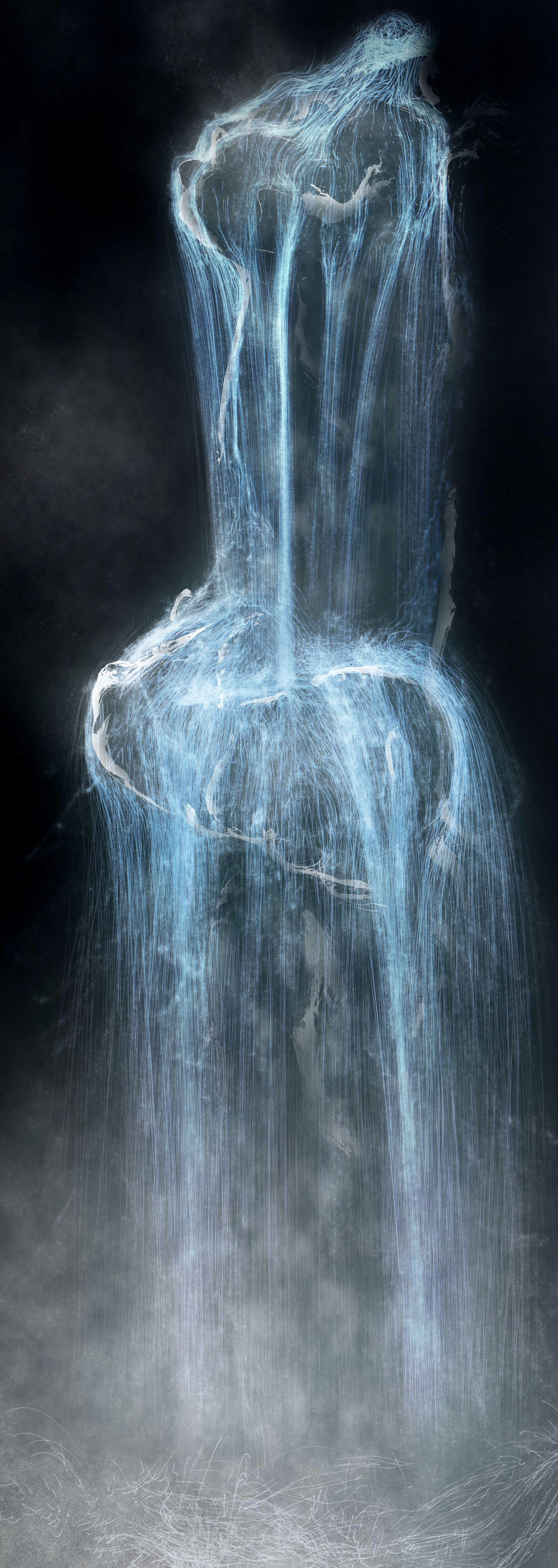
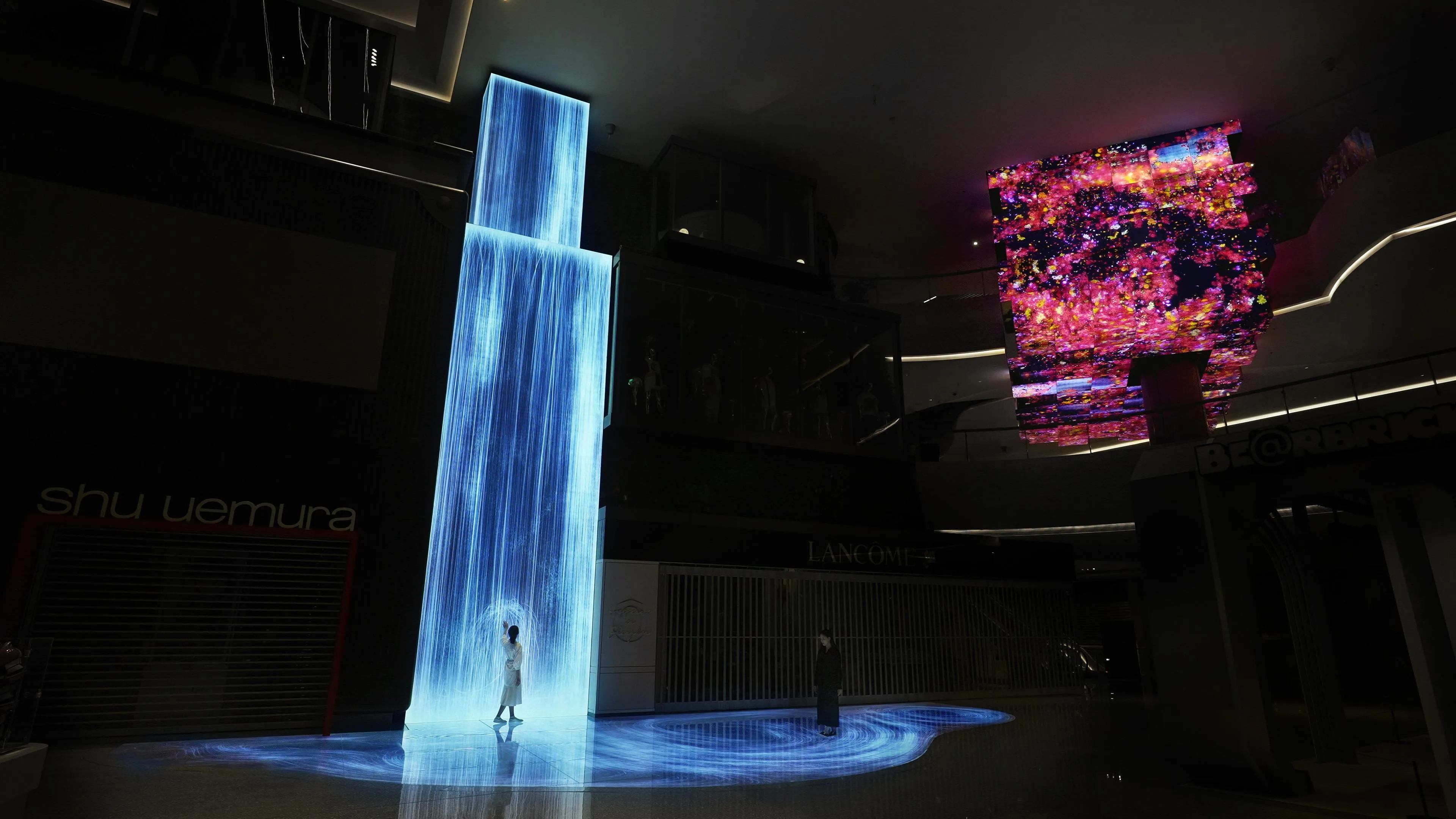
Universe of Water Particles

Universe of Water Particles is a virtual waterfall created in a virtual 3-D space using teamLab’s concept of ultrasubjective space, a term that refers to the depiction of space found in premodern Japanese painting.

Computer-generated water consisting of hundreds of thousands of water particles is virtually poured onto a virtually sculpted rock. The computer calculates the movement of the particles to produce a simulation of water that flows in accordance with the laws of physics. Lines are drawn in relation to a selection of 0.1% of the particles. The sinuousness of the lines depends on the overall interaction of the water particles.

In premodern Japanese painting, oceans, rivers, and other bodies of water were expressed using a series of lines. These lines give the impression of movement and life, as though water was a living entity. This form of expression leads us to explore why premodern people sensed life in rivers and oceans. Universe of Water Particles fuses the objective world of today’s knowledge with the subjective world of premodern people.

When viewing this artwork, regardless of the fact that the waterfall is a reproduction of physical phenomena, it can be possible to feel a sense of life in the collection of lines.

If, when viewing this artwork—as opposed to a video of a waterfall shot with a video camera—people feel the barrier between themselves and the waterfall dissolve, they become immersed in the work as if the waterfall is luring them in. Perhaps we can find a connection to the way premodern Japanese people perceived the world and consequently behaved towards it.

If we regard ourselves as part of nature, and consider nature as something not just to be observed, it is possible to feel that there is no boundary between ourselves and nature.

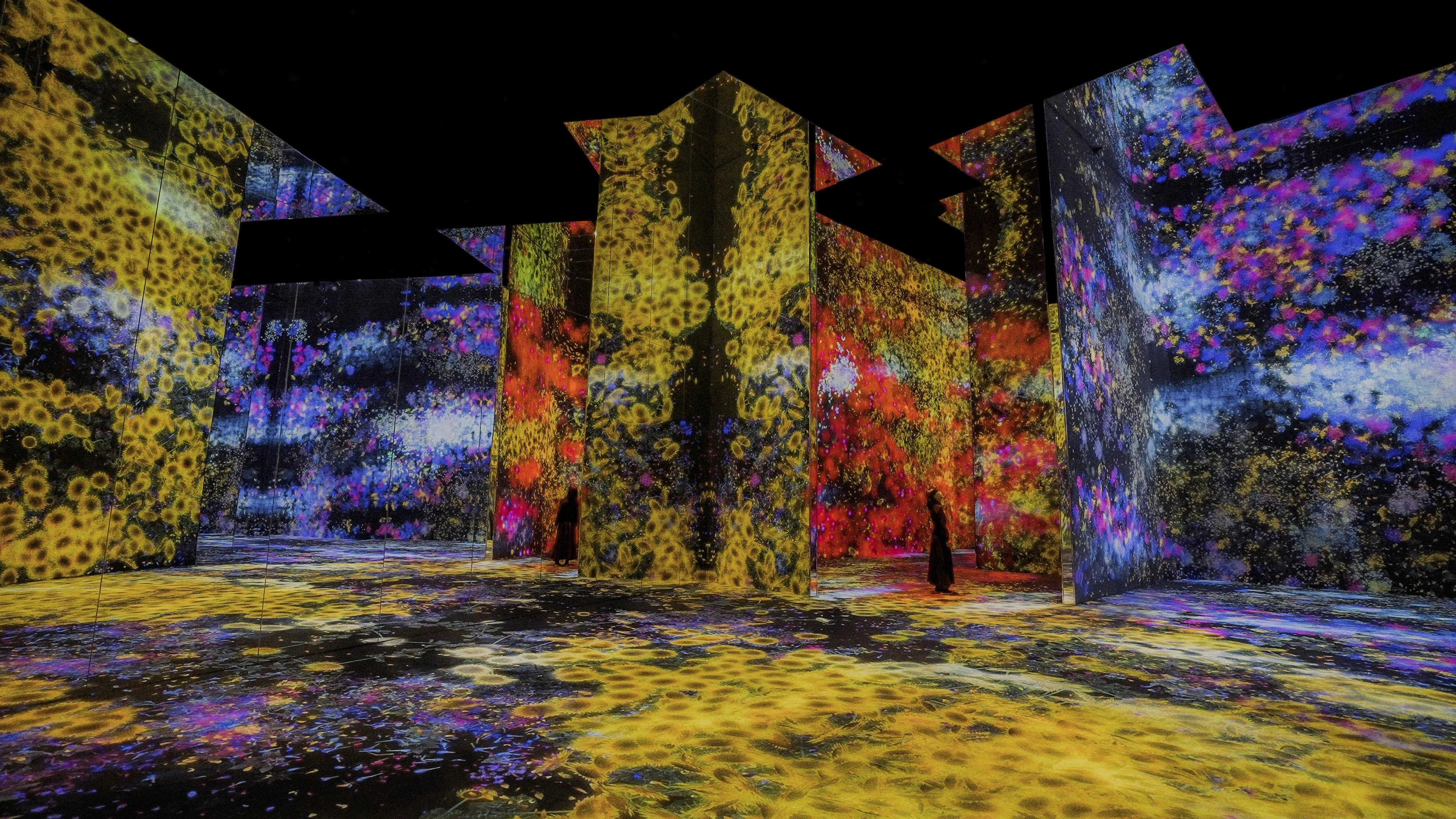
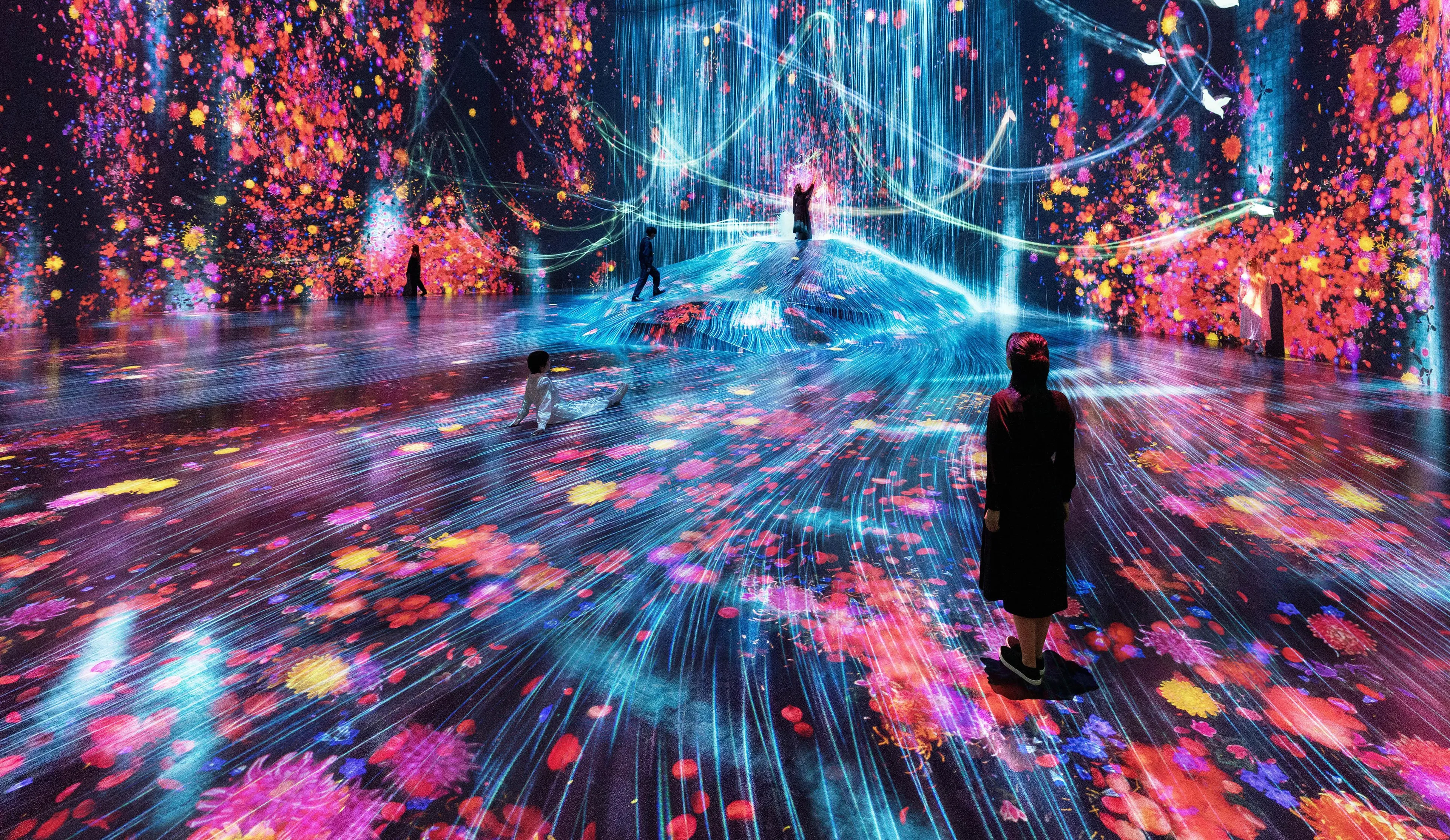
Flowers and People, Cannot be Controlled but Live Together – A Whole Year per Hour

Flowers bud, bloom, and in the course of time, wither and die. While eternally repeating the process of life and death, the places where they grow change gradually. When people stand still, the flowers surrounding them grow and bloom abundantly, but when people touch the flowers or walk around, they scatter and die all at once.The artwork is not a pre-recorded image that is played back; it continues to be rendered in real time under the influence of people's behavior. The picture at this moment can never be seen again.
In spring in the Kunisaki Peninsula, there are many cherry blossoms in the mountains and canola blossoms at their base. A visit to this region led teamLab to wonder how many of these flowers were planted by people and how many of them were native to the environment. It was a place overflowing with flowers, a place of great serenity and contentment. This nature is an ecosystem influenced by human activity, making us feel that nature and humanity are not in conflict. Perhaps a truly comforting nature is one that encompasses human presence as part of the ecosystem. Based on the premise that nature cannot be completely controlled, this artwork explores human activity that lives closely aligned to the rules of nature.
This artwork is an ecological pictorial space drawn through Ultrasubjective Space, which continues to be generated along with the body, others, time, and the environment. Viewers physically walk around and touch inside the world of the artwork, transforming it together with others in the same space.
This pictorial space differs from images or paintings flattened by a lens or single-point perspective. In such images or paintings, space appears behind the picture plane; the space that opens there and the space the viewer inhabits are split, and the picture plane becomes a boundary surface. The viewpoint is fixed at a single point, and bodily freedom is lost.On the other hand, a picture plane formed by Ultrasubjective Space is not a boundary that separates where we are from the world of the artwork. The world of the artwork is not outside a window; it appears as a single field that is continuously connected, without boundary, to the space in which the viewer’s body exists. Moreover, any position — front, back, left, or right — can become a viewpoint, so viewpoints exist in infinite number, and the viewer is physically free to move.Not bound to a single point, the viewer moves their body and lets their eyes roam freely, continually re-composing the world of the artwork as it changes over time, and building the pictorial space within themselves. In that moment, the artwork becomes a centerless, subjective, and embodied pictorial space in which the viewer walks and touches.
In this space, the boundaries between the viewer and the artwork become ambiguous. The artwork transforms simply by the presence of a body there, and the behavior of others also changes the world of the artwork. In conventional art, other people were often considered an obstacle that interferes with a one-on-one relationship with the artwork. However, here, the presence of others enriches and creates new changes in the artwork.
This artwork is an attempt to expand painting from a world on the other side of the screen into a space continuous with the body, others, time, and the environment. The artwork continues to be generated within the relationships among the behavior of people, the life and death of flowers, the passage of time, and the entire space. Here, the painting does not exist on its own as a completed entity; it relates to people's bodies and includes the presence of others, existing as an ecological field without boundaries.
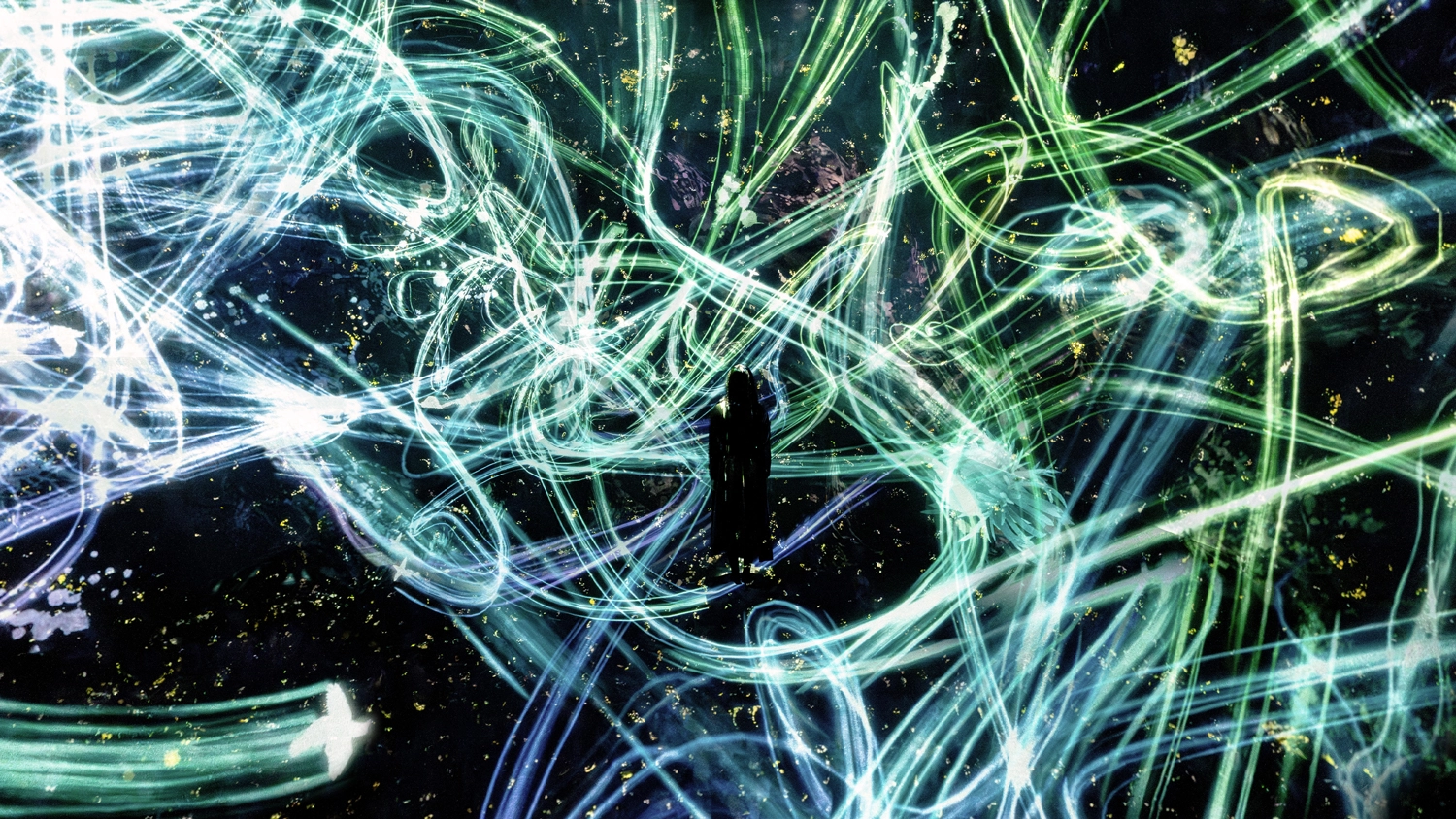
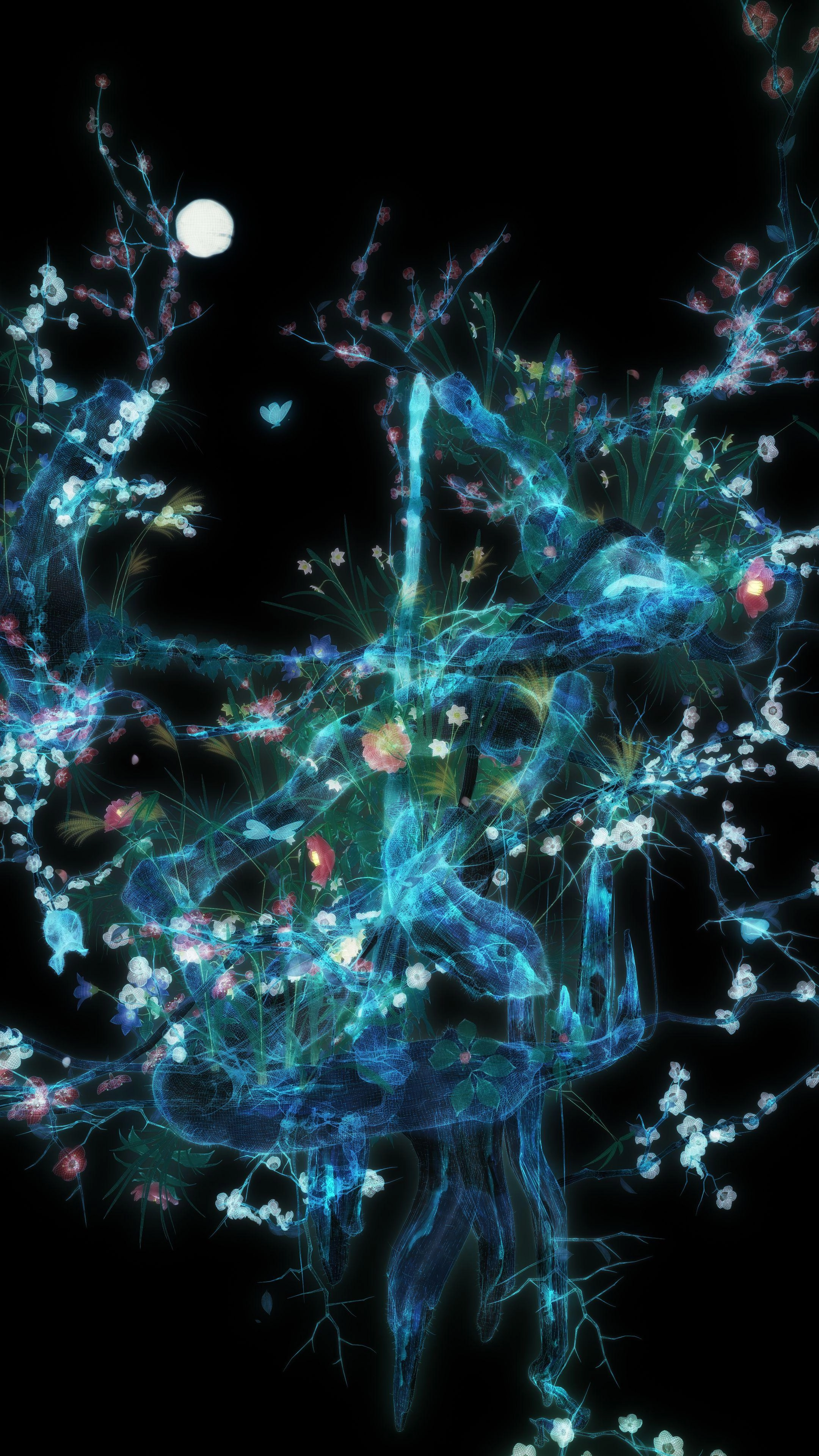
Cold Life

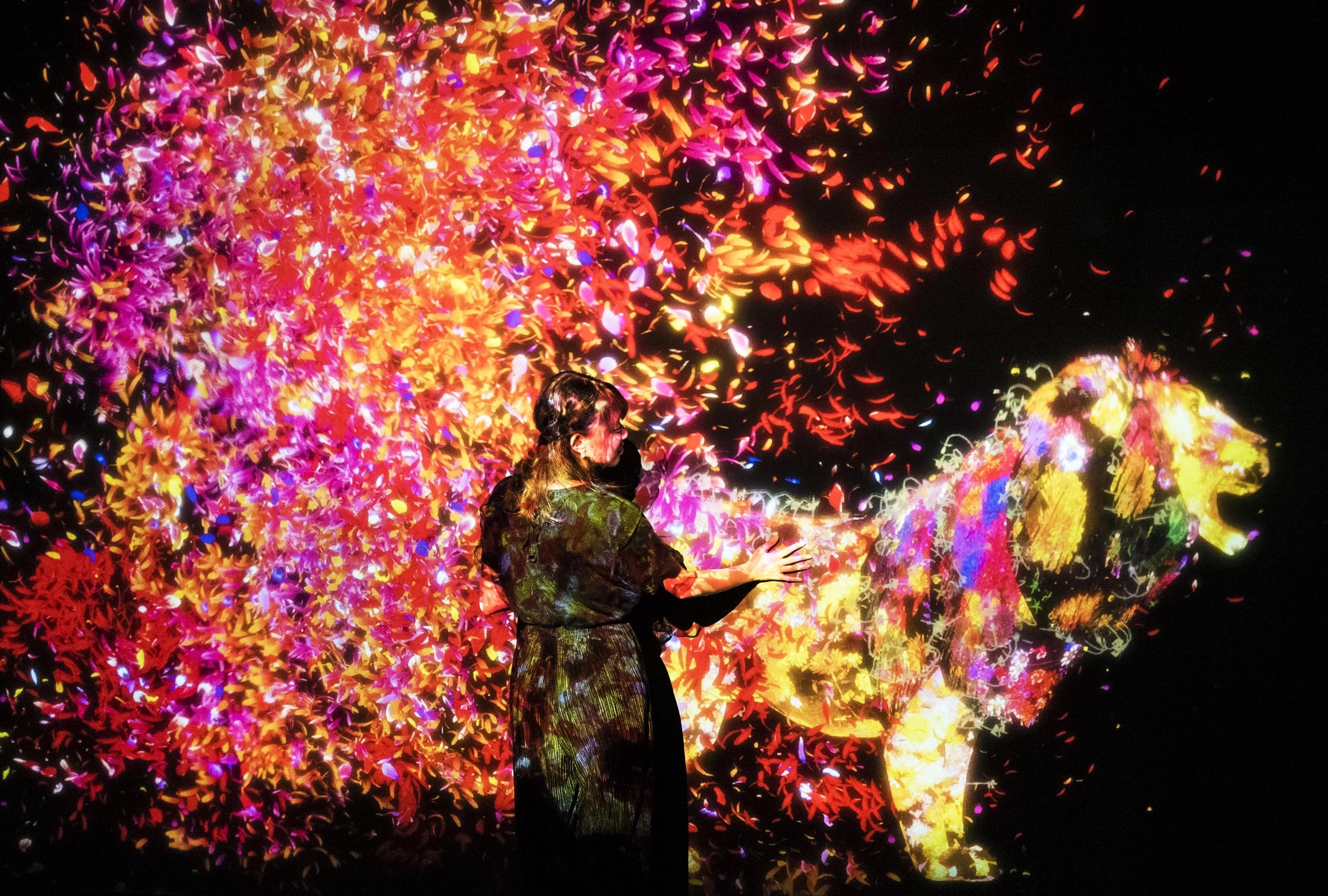
A calligraphic series of brush strokes modeled in virtual 3-D space forms the character 生 (Japanese/Chinese for life) which transforms into a tree. As time passes, various life forms begin to grow from within the tree.
 
This artwork was created by peeling away the surface of the artwork Life Survives by the Power of Life, 2011.
 
In computer graphics, and similarly in this digital work, wireframe models created with high levels of data are rendered as 3-D objects. When the surfaces of these computer-generated images are peeled away, their underlying mesh-like structures are revealed. Expressed by the intricacy of this work, teamLab exemplifies 3-D rendering in its stripped-down state while maintaining a highly complex and elaborate construction.

Nature brings us both blessings and disaster, and with the progress of civilization there are benefits and negative implications; nature and civilization are always connected. There is no absolute evil or true beauty. There is no easy way to understand, no simple way to arrange our feelings and our sensitivities. We must face every situation as it comes, to not despair, to face forward, and to go on with life.

teamLab has been working on the Spatial Calligraphy series since the collective formed. Spatial Calligraphy offers a contemporary interpretation of traditional Japanese sho (calligraphy) in an abstract space. It reconstructs Japanese sho in three-dimensional space and expresses the depth, speed, and power of the brushstroke. Butterflies, birds, animals, plants, and flowers appear from the calligraphy expressing the passing of the seasons. According to Zen Buddhist writing, “In all living things Buddha nature dwells.” All things are impermanent and the natural appearance of things is the Buddha nature. What we put into shape is that which we, the living, think is the heart of life.

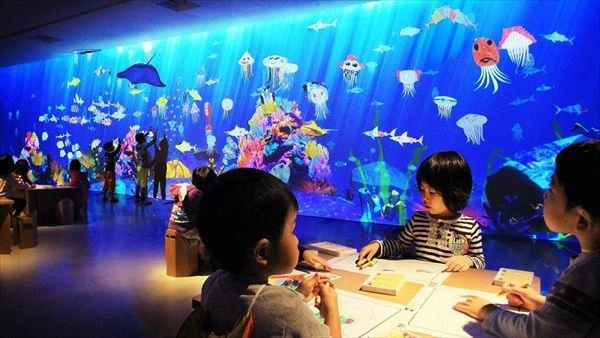
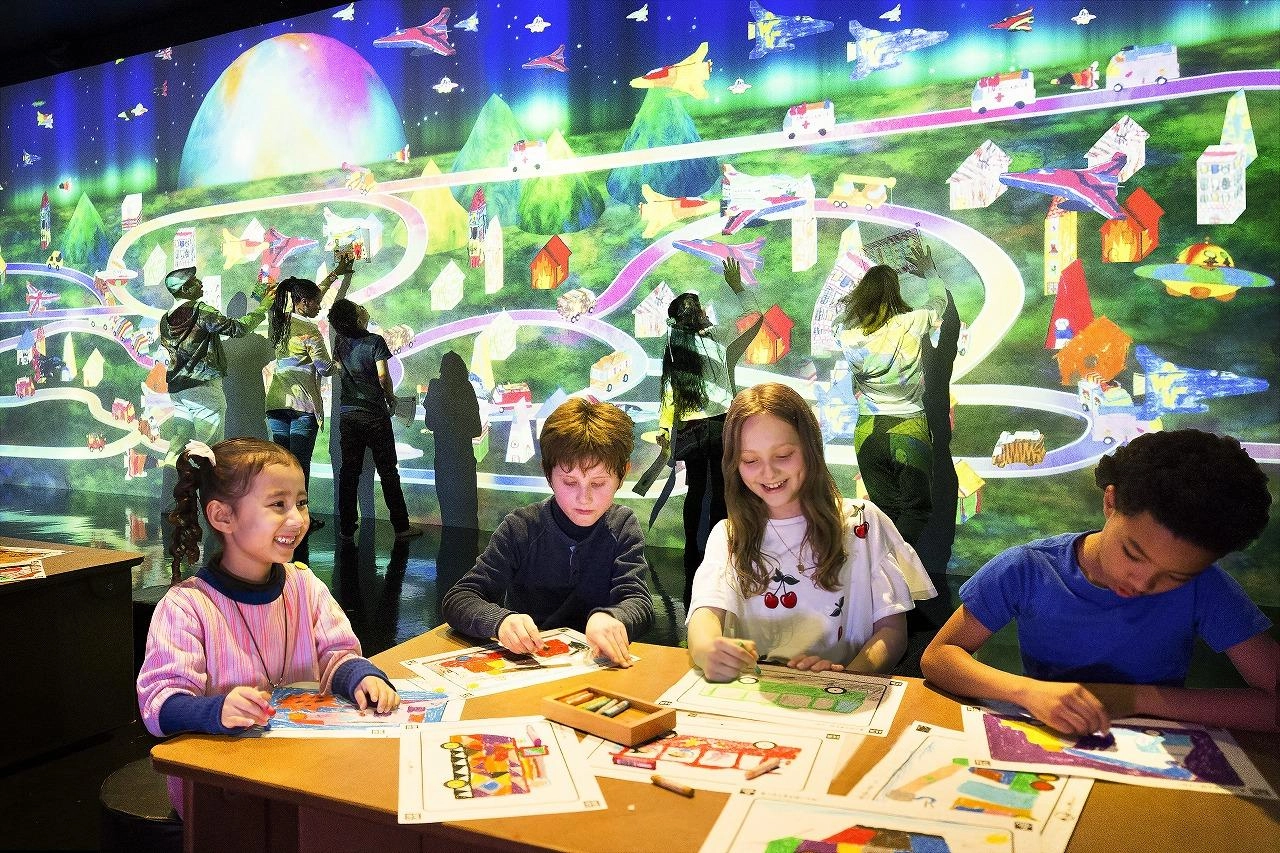
Learn & Play! Future Park

เกี่ยวกับ teamLab
teamLab (f. 2001) is an international art collective. Their collaborative practice seeks to navigate the confluence of art, science, technology, and the natural world. Through art, the interdisciplinary group of specialists, including artists, programmers, engineers, CG animators, mathematicians, and architects, aims to explore the relationship between the self and the world, and new forms of perception. In order to understand the world around them, people separate it into independent entities with perceived boundaries between them. teamLab seeks to transcend these boundaries in our perceptions of the world, of the relationship between the self and the world, and of the continuity of time. Everything exists in a long, fragile yet miraculous, borderless continuity. teamLab’s works are in the permanent collection of the National Gallery of Victoria, Melbourne; Art Gallery of New South Wales, Sydney; Art Gallery of South Australia, Adelaide; National Gallery of Australia, Canberra; Amos Rex, Helsinki; Museum of Contemporary Art, Los Angeles; Asian Art Museum, San Francisco; Borusan Contemporary Art Collection, Istanbul; and Asia Society Museum, New York, among others. teamlab.art Biographical Documents teamLab is represented by Pace Gallery, Martin Browne Contemporary and Ikkan Art.

Venue Details

teamLab: Dance! Art Exihibition, Learn & Play! Future Park

ระยะเวลา

2017.7.08(Sat) - 11.30(Thu)

วลาเริ่มงาน

10:00〜22:00

การเดินทาง

สถานที่จัดงาน

OCT Harbour-OCT Creative Exhibition Center

ผู้จัดงาน

Bloosming Culture and Art