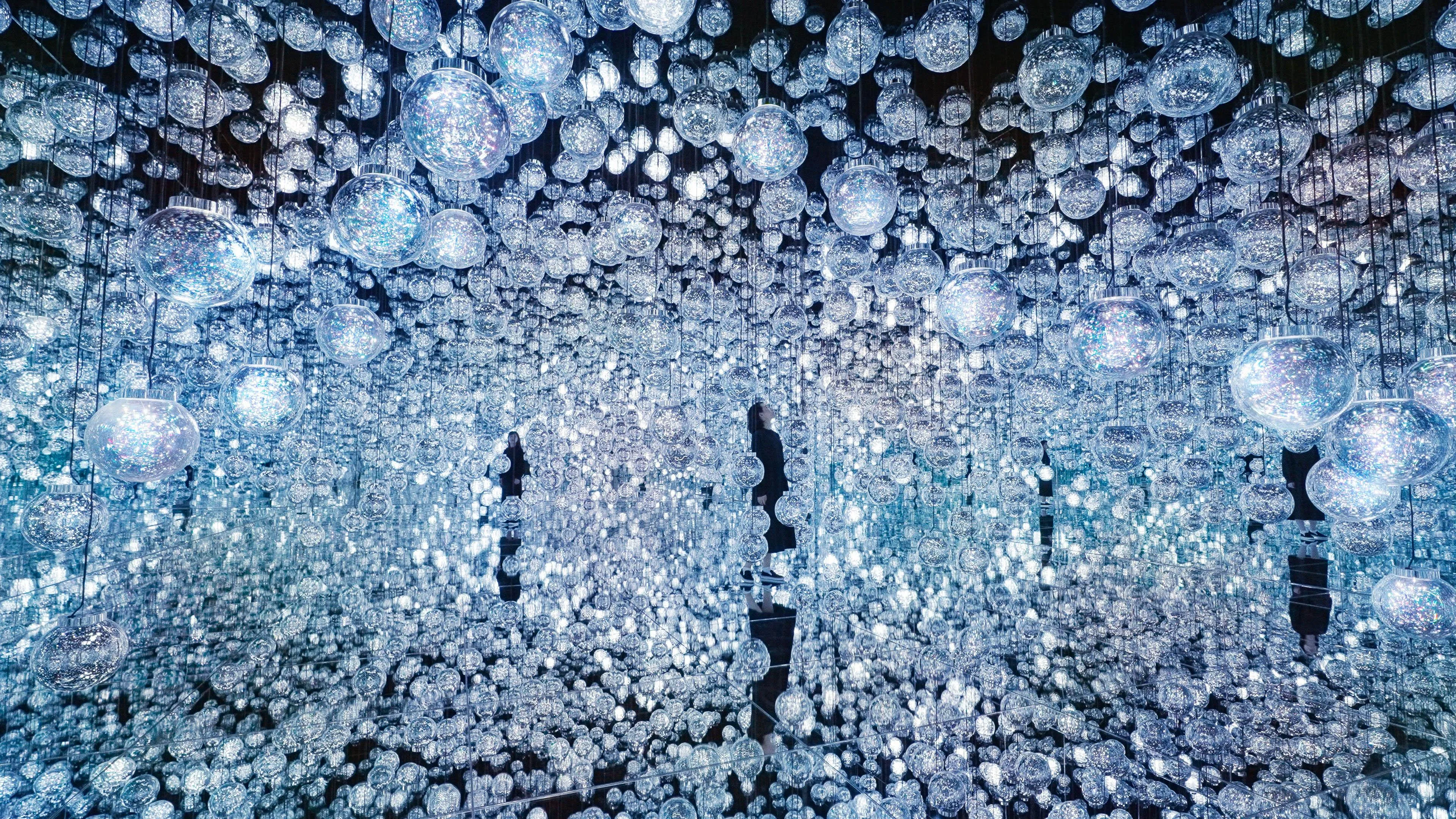
Cognitive Sculpture
2021
When it exists in perception, does it truly constitute existence?
Its material is light. The subject of its creation is the viewer's own body and perception. The artwork is shaped for the first time by the dynamic body and perception of the viewer, becoming a sculpture in their cognitive world.
The artwork explores the possibility of a new existence that is different from material existence, and questions the very nature of existence and perception.
FEATURED WORKS
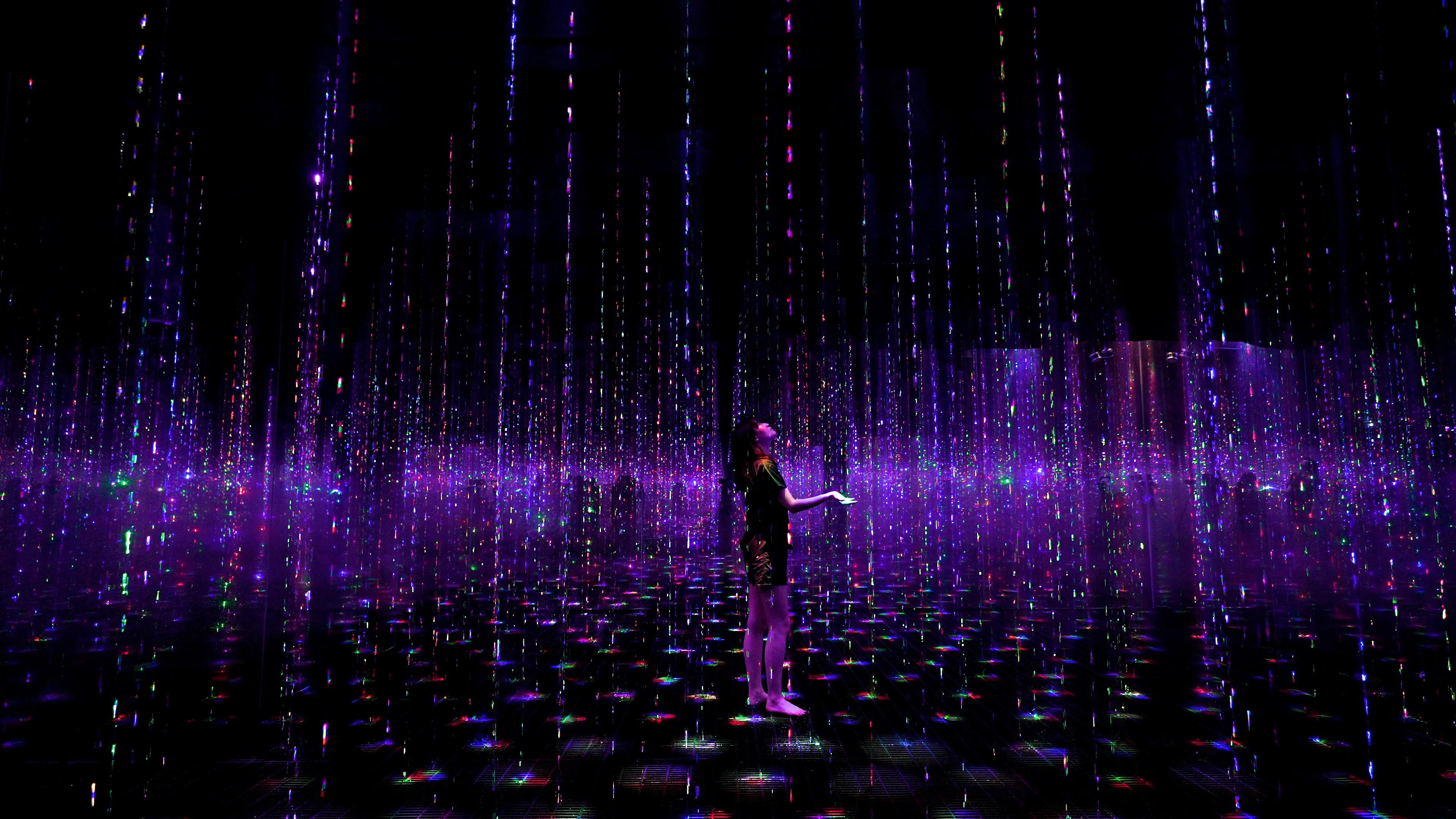
teamLab, 2021, Interactive Installation, Sound: teamLab
Countless solidified light crystals float in the air, rising, falling, and sometimes frozen in space. When people immerse themselves in the artwork, the crystals of solidified light that the people touch breaks, and the light from the crystals spreads throughout the space of the work.
When people touch the solidified light, they realize that the solidified part that they can see is a part of a continuous flow.
Life is a phenomenon that appears as a miraculously solidified, ephemeral crystal of light in a continuum of energy that has been flowing without interruption since a past whose beginning is unknown.
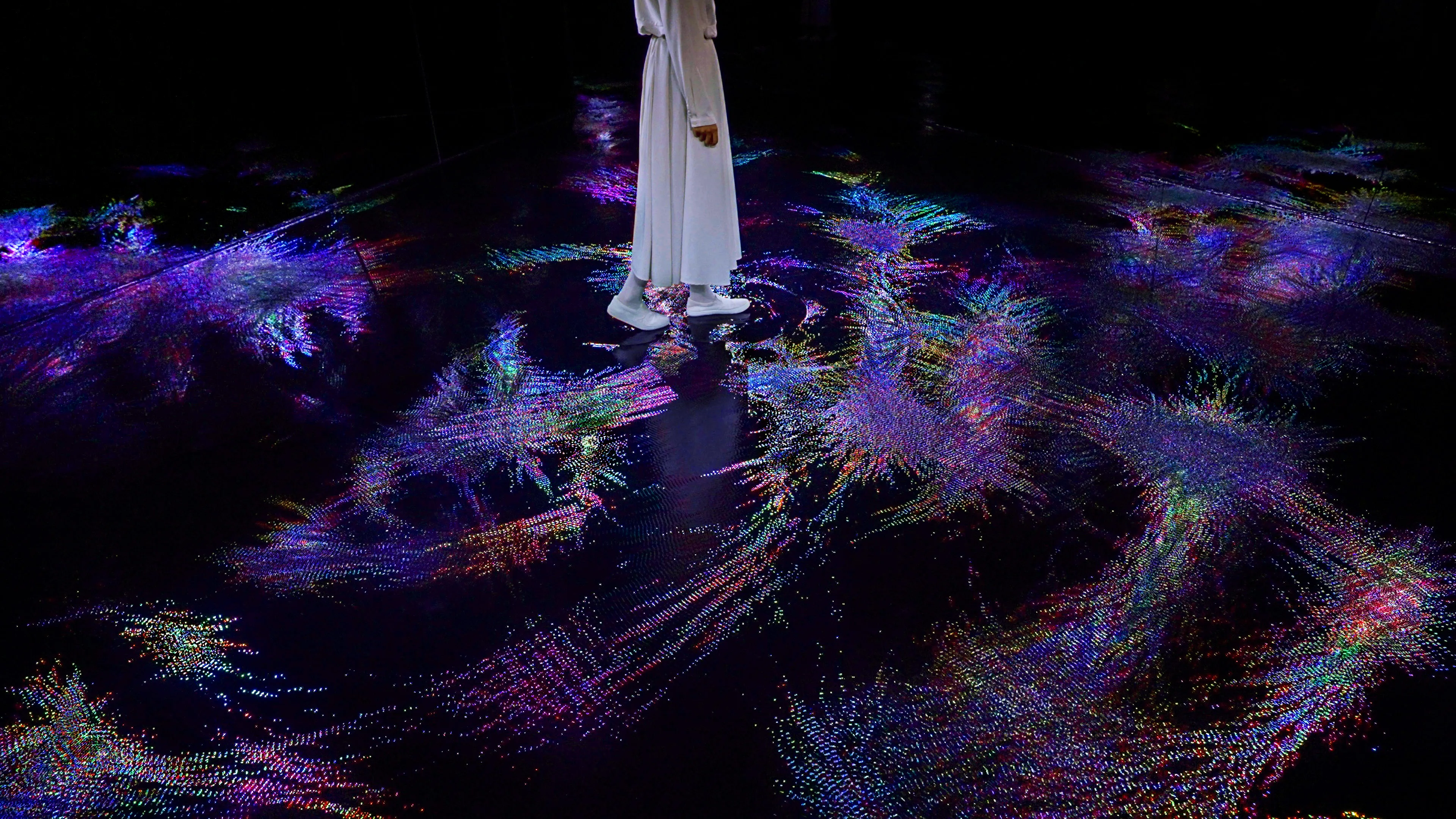
teamLab, 2022-, Interactive Installation, Sound: teamLab
Like an organic entity created from crystallized light, the work shines iridescently from its center as it moves around, merging and dividing continuously.
People can walk into the artwork, and even if they do so, the artwork will continue to be maintained, its existence unharmed. If a person touches the artwork, they realize that what they are looking at is ordinary water. The artwork’s existence is not independent, but is actually a unique phenomenon created by its environment.
The places where the work appears will change as the viewer moves. The work’s appearance is unique to the viewer, so someone viewing the artwork from another angle will see a different colored work appearing in a different place. In other words, the existence of the artwork being seen is created by its environment, and exists only in the viewer.
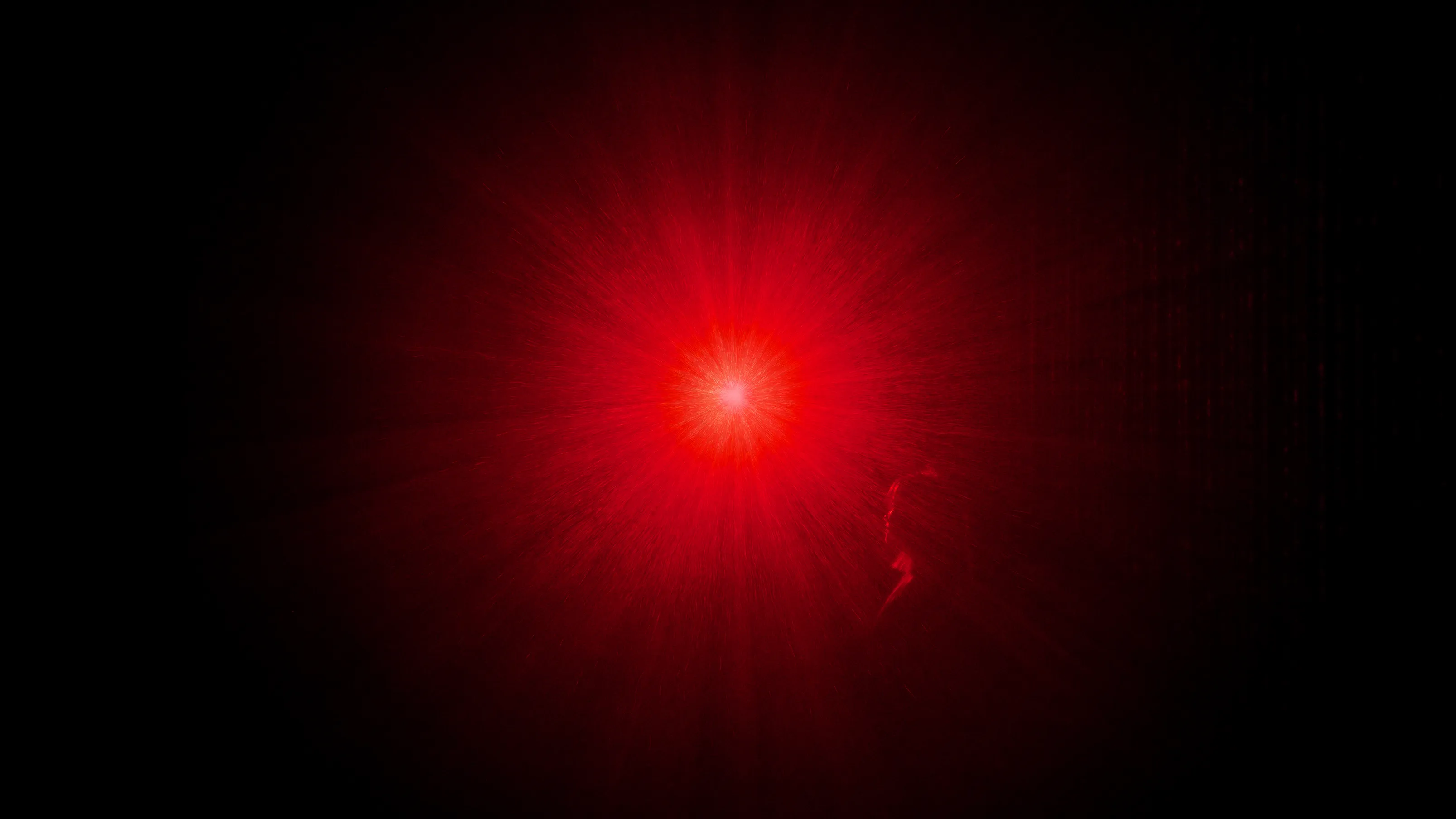
teamLab, 2022-, Installation, Sound: teamLab
We do not perceive the world we see, we see the world we perceive.
A sphere made of accumulated rays of light.
The light radiates from the center in infinite fine rays, creating its spherical shape. The light source remains motionless, yet the countless lines emitting from it wriggle continuously.
The sphere has no surface boundary, and the perception of the boundary between the artwork and the body is ambiguous. When you try to touch the sphere, it reacts, but since it does not have a physical boundary, your hand goes into the sphere.
What is this sphere? Why do the rays of lines wriggle?
Our world is within us.
And if we perceive this sphere made of accumulated lines, the world we perceive will expand, and we may see the spheres of accumulated lines in our daily lives. As the world you perceive changes, the way you see the world goes on to change.
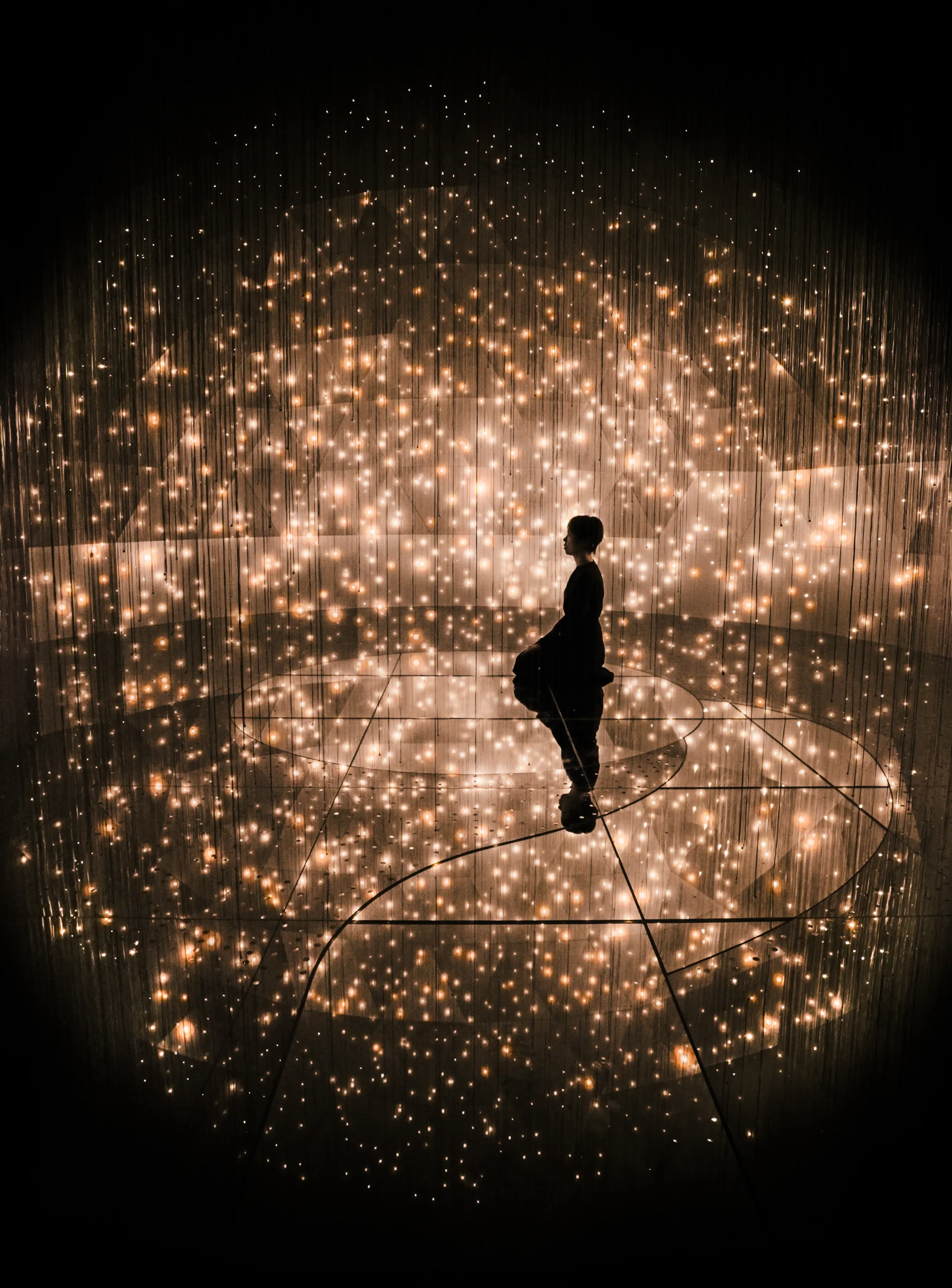
teamLab, 2022-, Interactive Installation, Endless, Sound: Hideaki Takahashi
We do not perceive the world we see, we see the world we perceive.
A group of countless spheres of light. When people approach the spheres, they shine brightly and the surrounding spheres respond one after the other.
When you widen your field of vision, spheres made of darkness also begin to appear, as though darkness has been solidified. However, these spheres of light and spheres of darkness do not exist. The spheres of darkness cannot even be captured on camera.
There is no material, such as glass, on the surface of the spheres; the spheres are made only of light. There is no material surface boundary, and the perception of the boundary with your body is ambiguous. In reality, light cannot solidify into a spherical mass in the universe. Therefore, the spheres do not physically exist.
This is a Cognitive Sculpture that appears only in the human world of perception. The materials are light and the environment. And the subject of its creation is the viewer's own body and perception.
The spheres cannot exist on their own - its existence is a phenomenon created in relation to its environment. The phenomenon created by the environment is shaped for the first time by the dynamic body and perception of the viewer, becoming a sculpture in their cognitive world.
The artwork explores the possibility of a new form of existence distinct from material existence, and questions the very nature of existence.
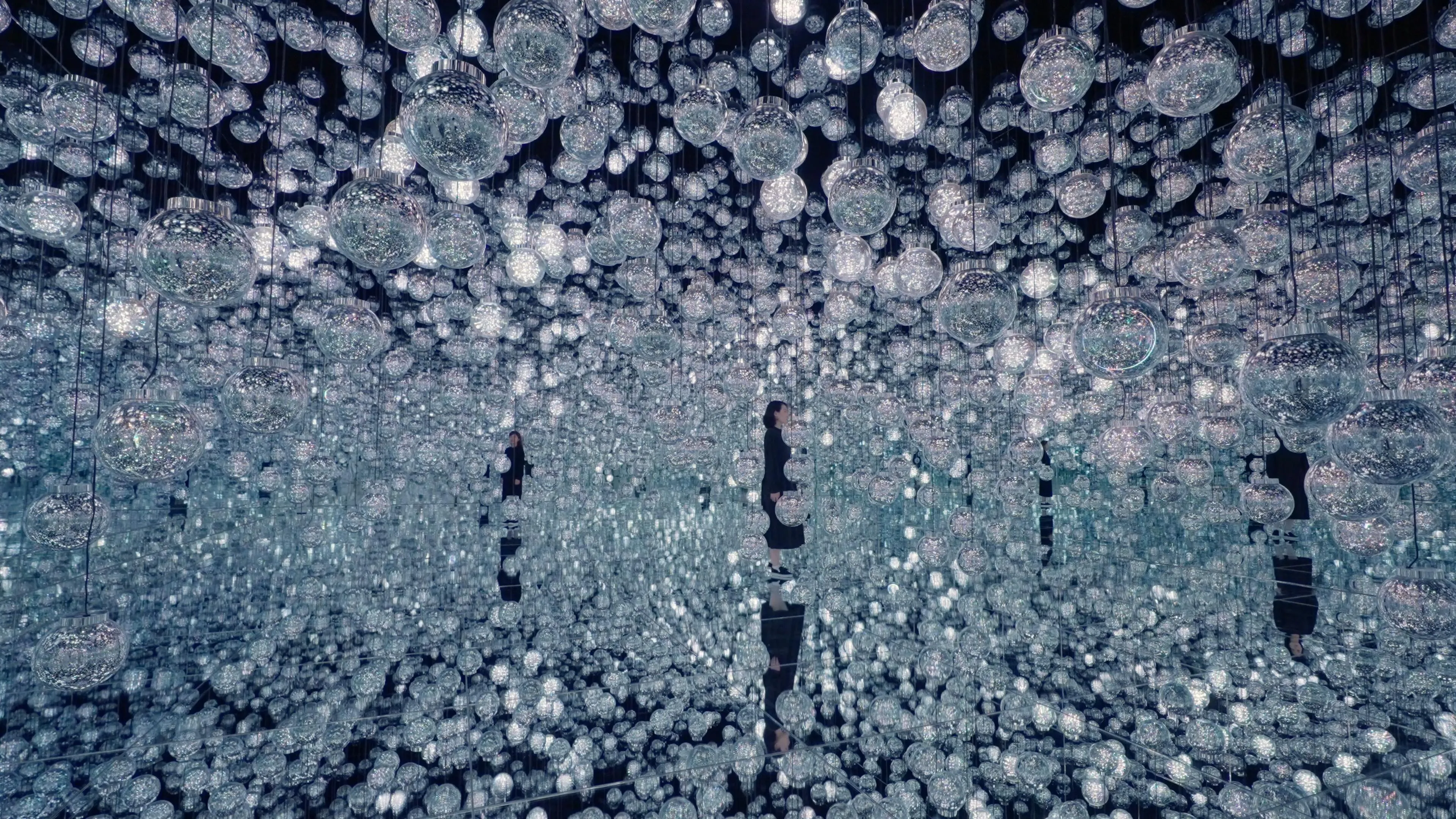
Bubble Universe: Spherical Crystallized Light, Wobbling Light, and Environmental Light - One Stroke
teamLab, 2023, Interactive Installation, Endless, Sound: Hideaki Takahashi
What are you looking at? Where is the focus? And does it exist?
Inside the sphere there is a mixture of real, physical light, a strong spherical light that looks like light has crystallized and which instantly breaks down, high up is a faint light like a wobbling lump of jelly, and countless lights are created by the surrounding environment, with alternating moving light and still light.
However, spheres of light and light jelly do not exist.
There is no glass or other material on the surface of the sphere of light; the sphere is made only of light. In the physical world, light does not solidify and light does not become a spherical mass. In other words, this sphere of light does not exist. The same is true for light jelly.
The spheres of light and light jelly do not exist in the physical world, but are Cognitive Sculptures that exist in the world of perception.
The materials are light, body, and perception. The shape is created by the dynamic body and perception of the person experiencing it, and it is a sculpture that appears and exists only in the person's own world of perception. When it exists in perception, it exists.
The light in each sphere cannot produce all the light by itself; other spheres act as an environment that creates countless lights within each sphere. Each sphere becomes part of the environment that generates the light of the other spheres. The phenomenon created by the environment brings the artwork into existence.
Dynamic bodies, perceptions, and environments open up new possibilities for existence that are different from material existence.
Rethinking perception and existence.
When a person stands still, the sphere closest to them shines brightly, and its light continues on to the next nearest sphere. It also intersects with light born from other people.
The seemingly random arrangement of spheres in the space is mathematically derived such that, starting from any sphere, a line continuously drawn to the nearest sphere results in a single, connected path of light that passes through every sphere exactly once, like a unicursal stroke.
The light from a sphere that responds to a person always connects to its nearest neighbor, passing through every sphere once as the light propagates to all spheres in the space.
This is a work that explores the beauty of continuity itself, found in the continuous light that is born from the presence of people.