
Eternal Existence in the Sun and Rain
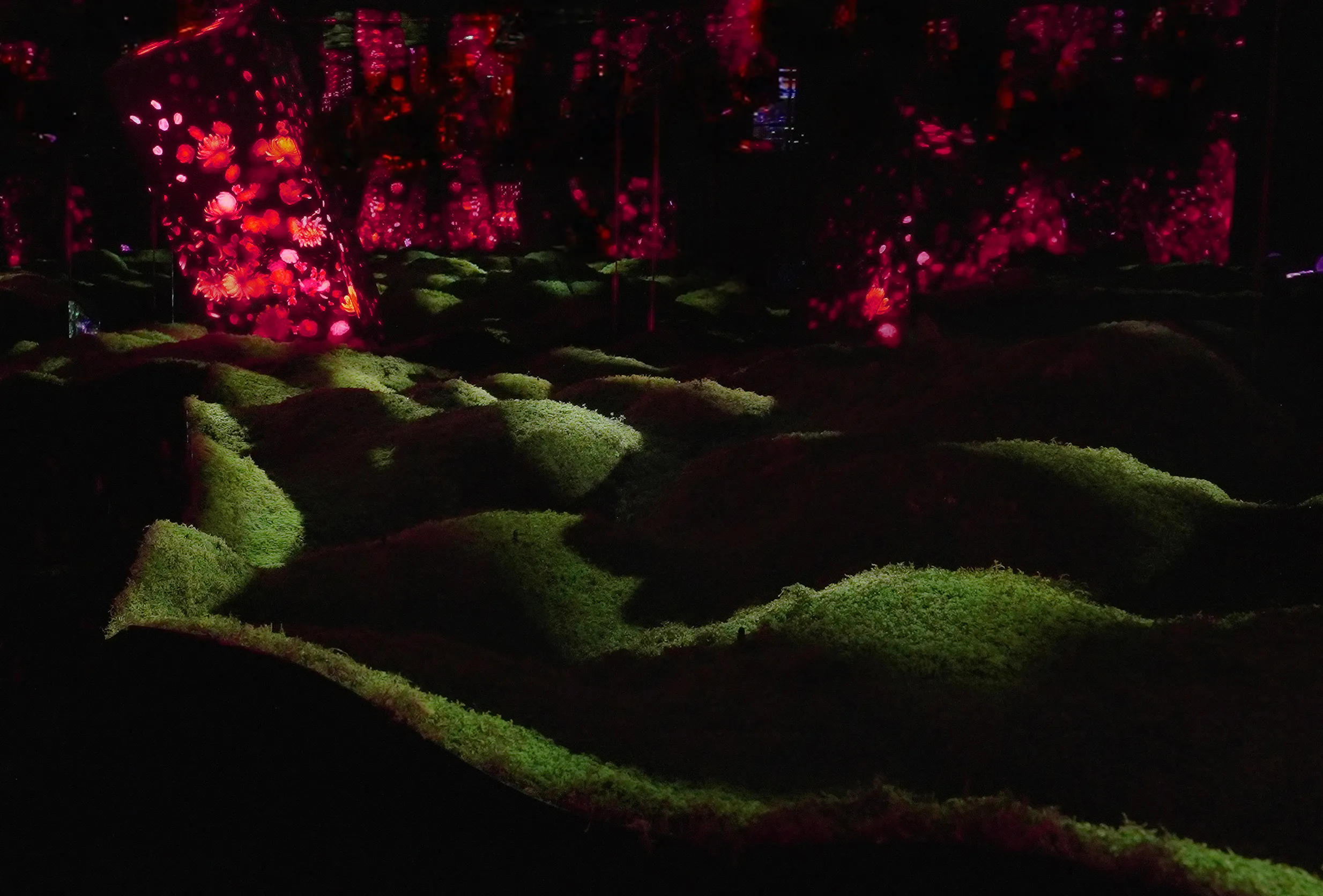
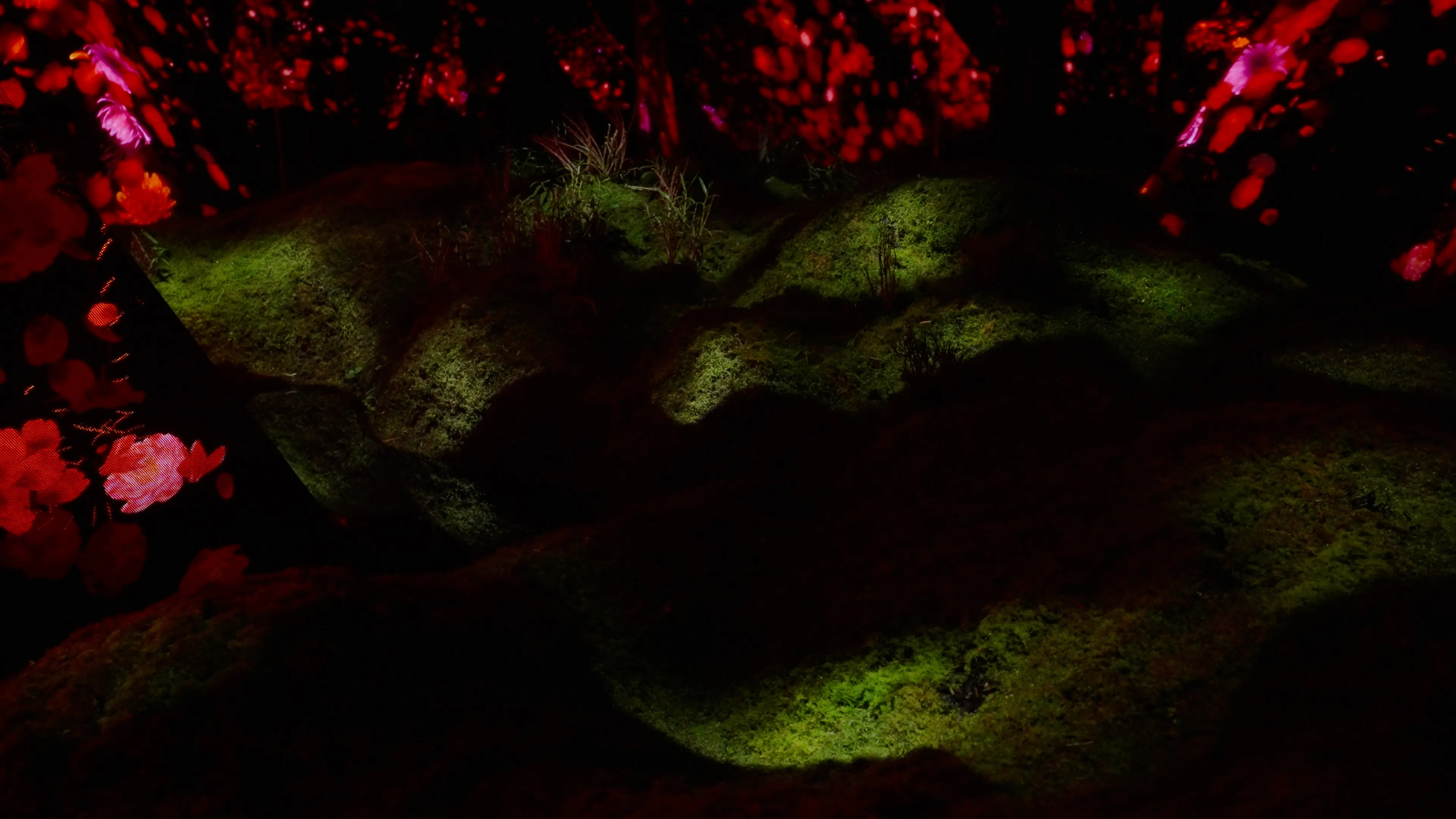
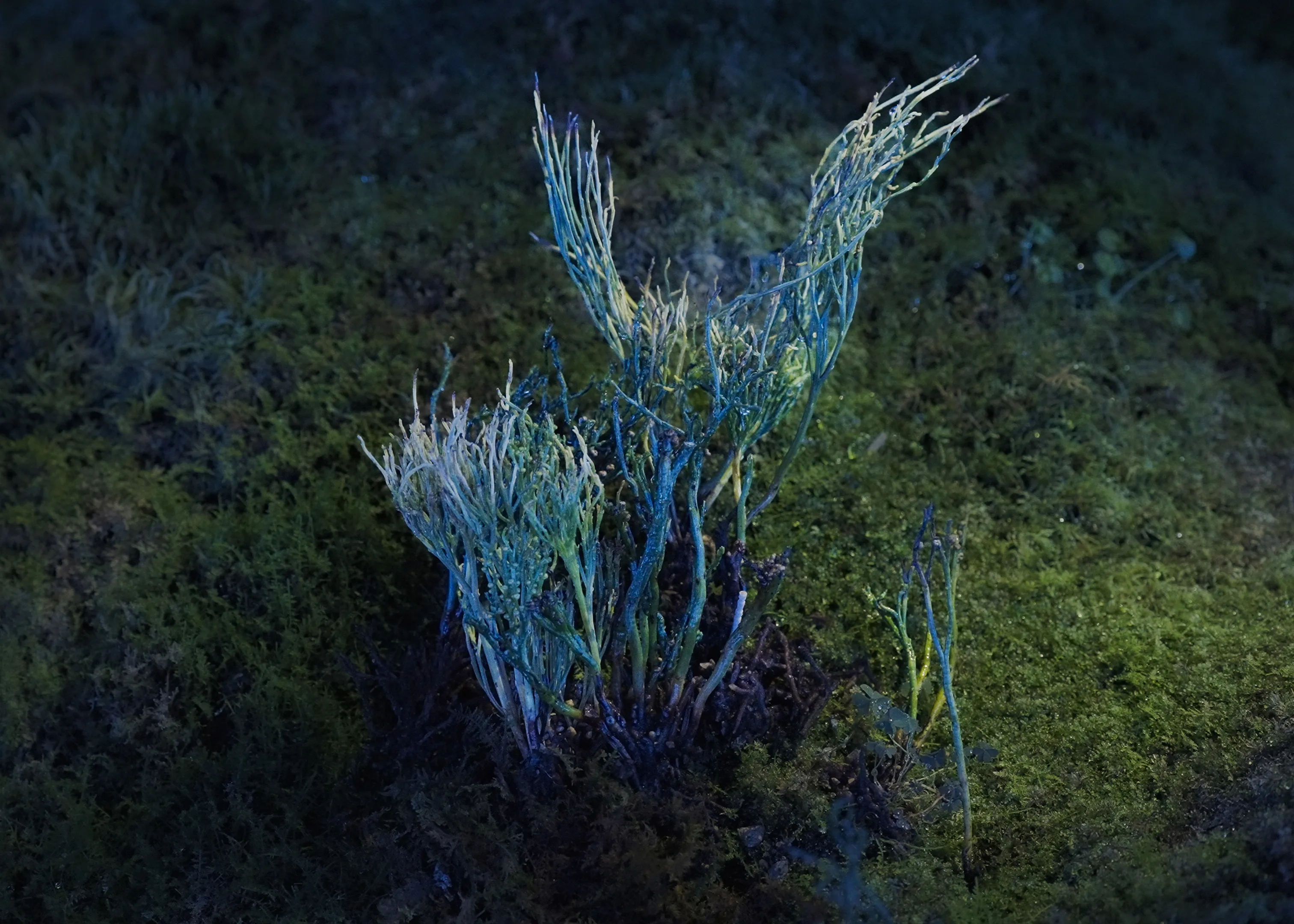
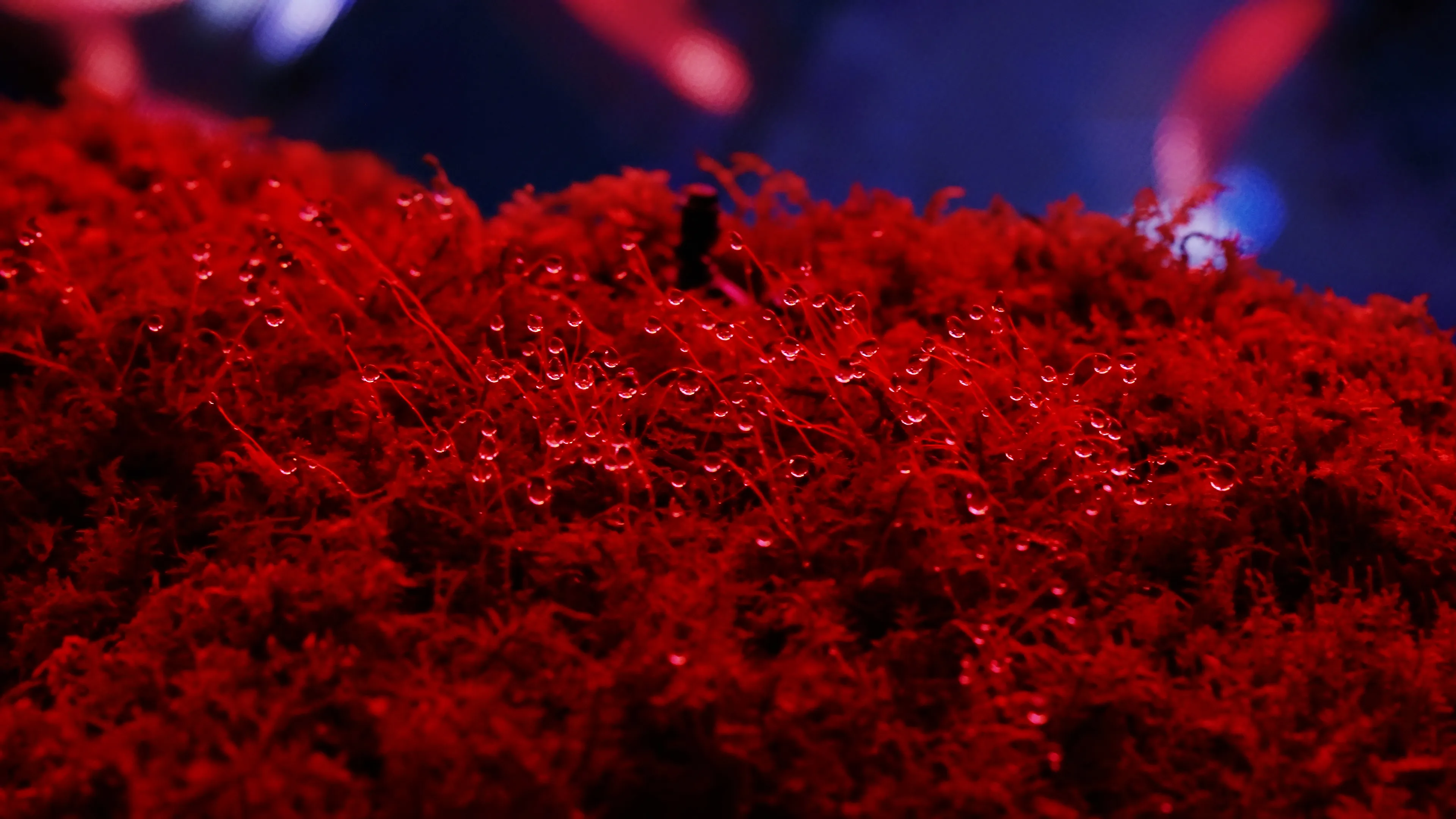
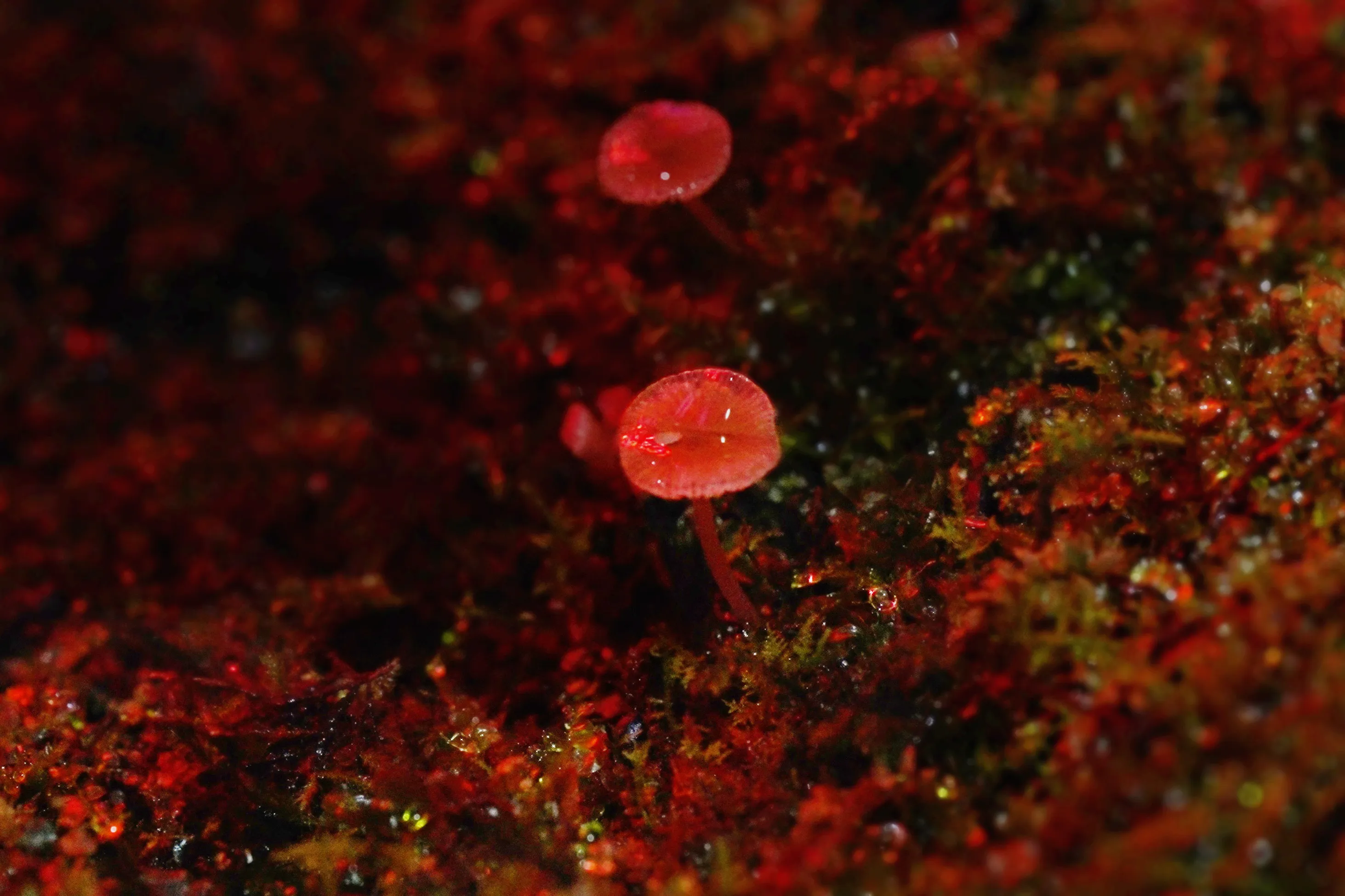
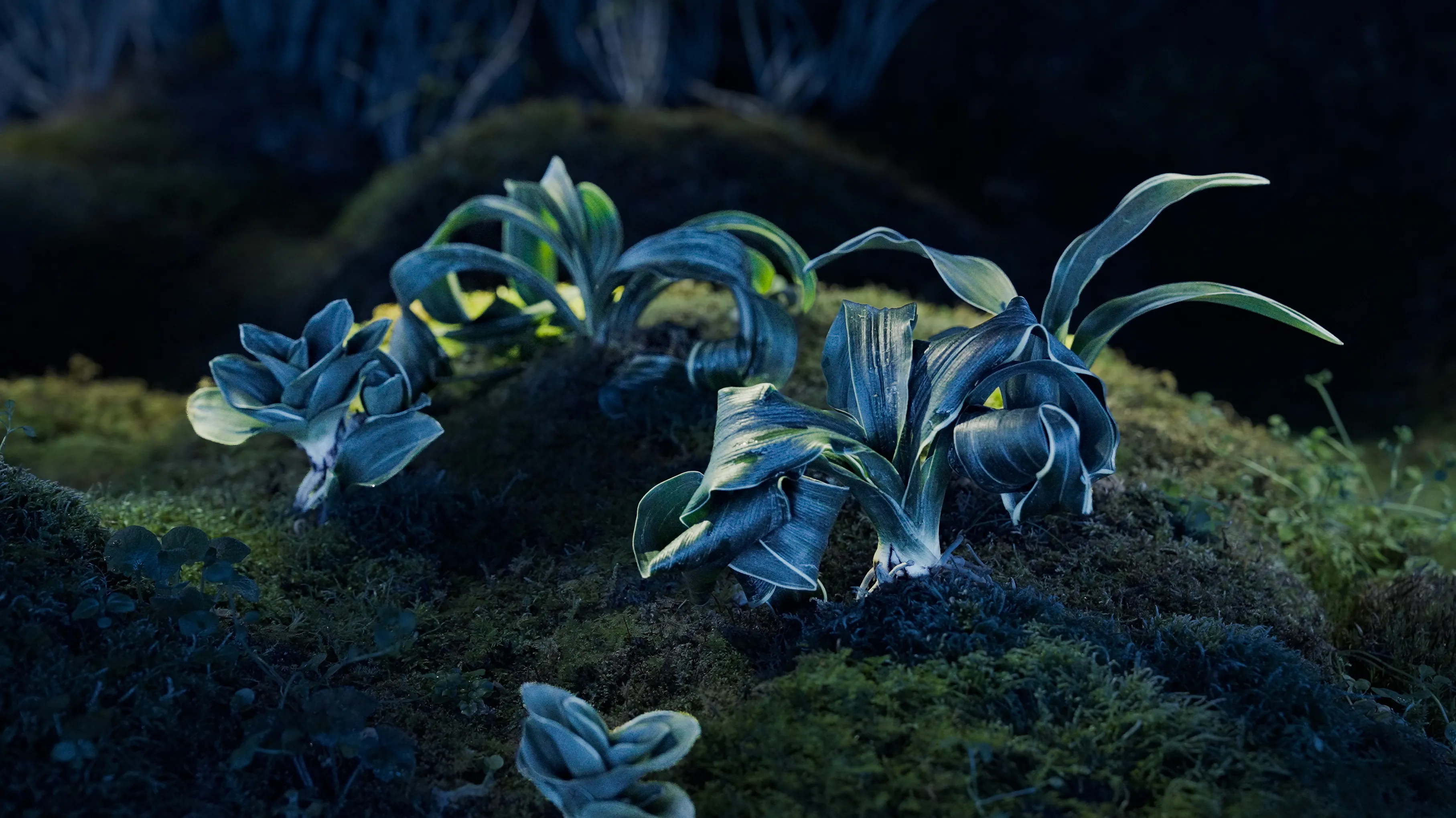
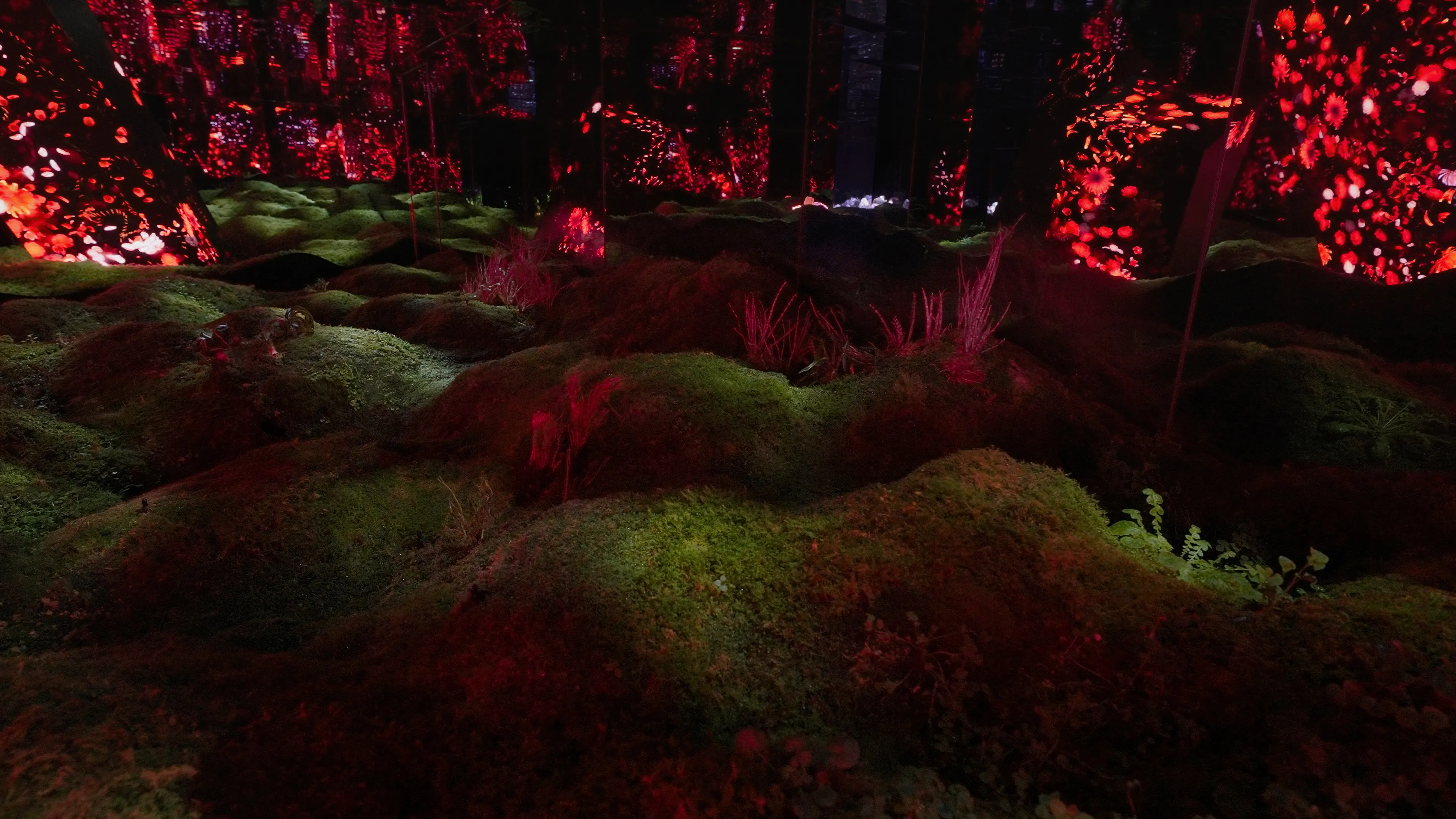
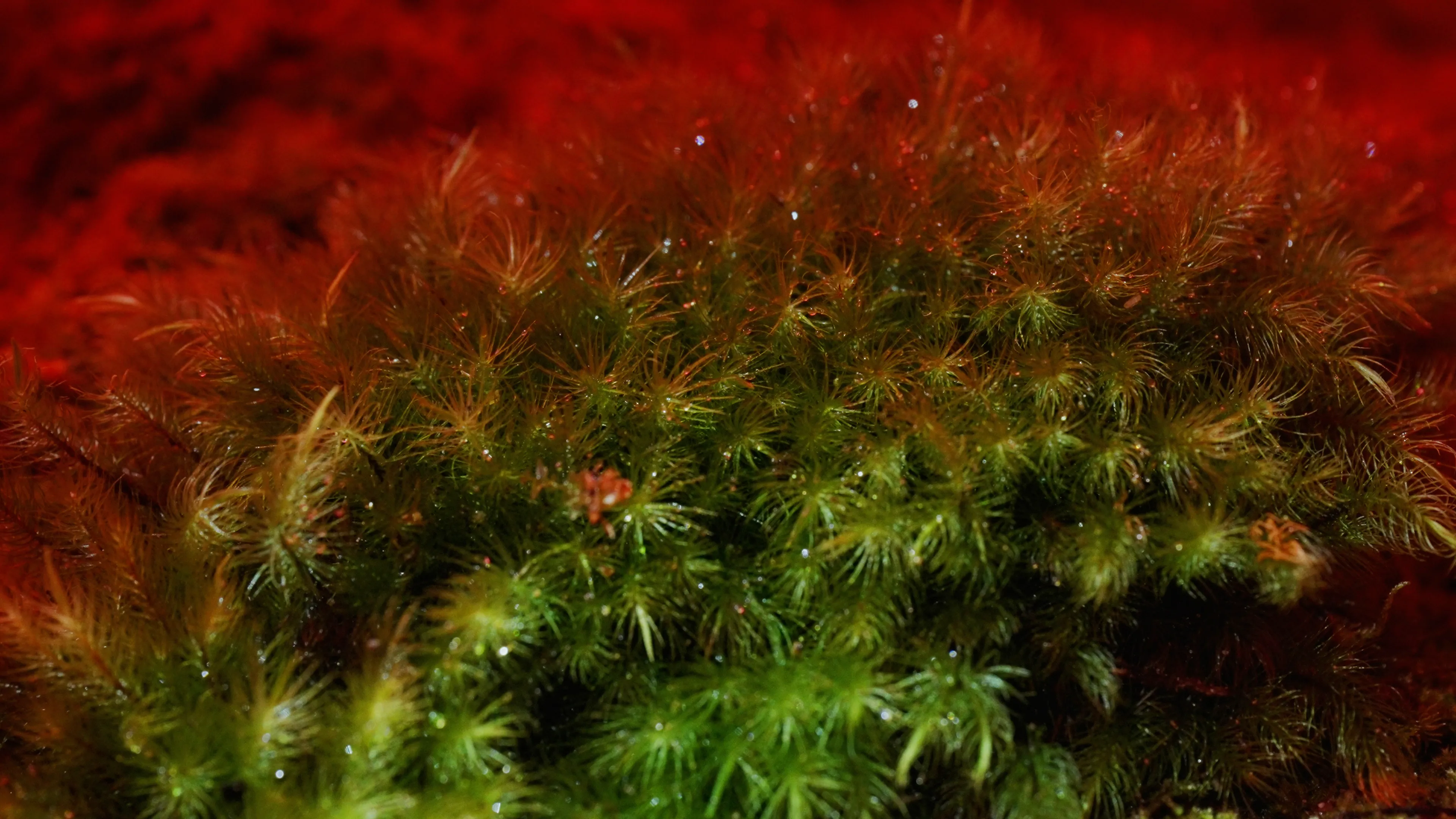
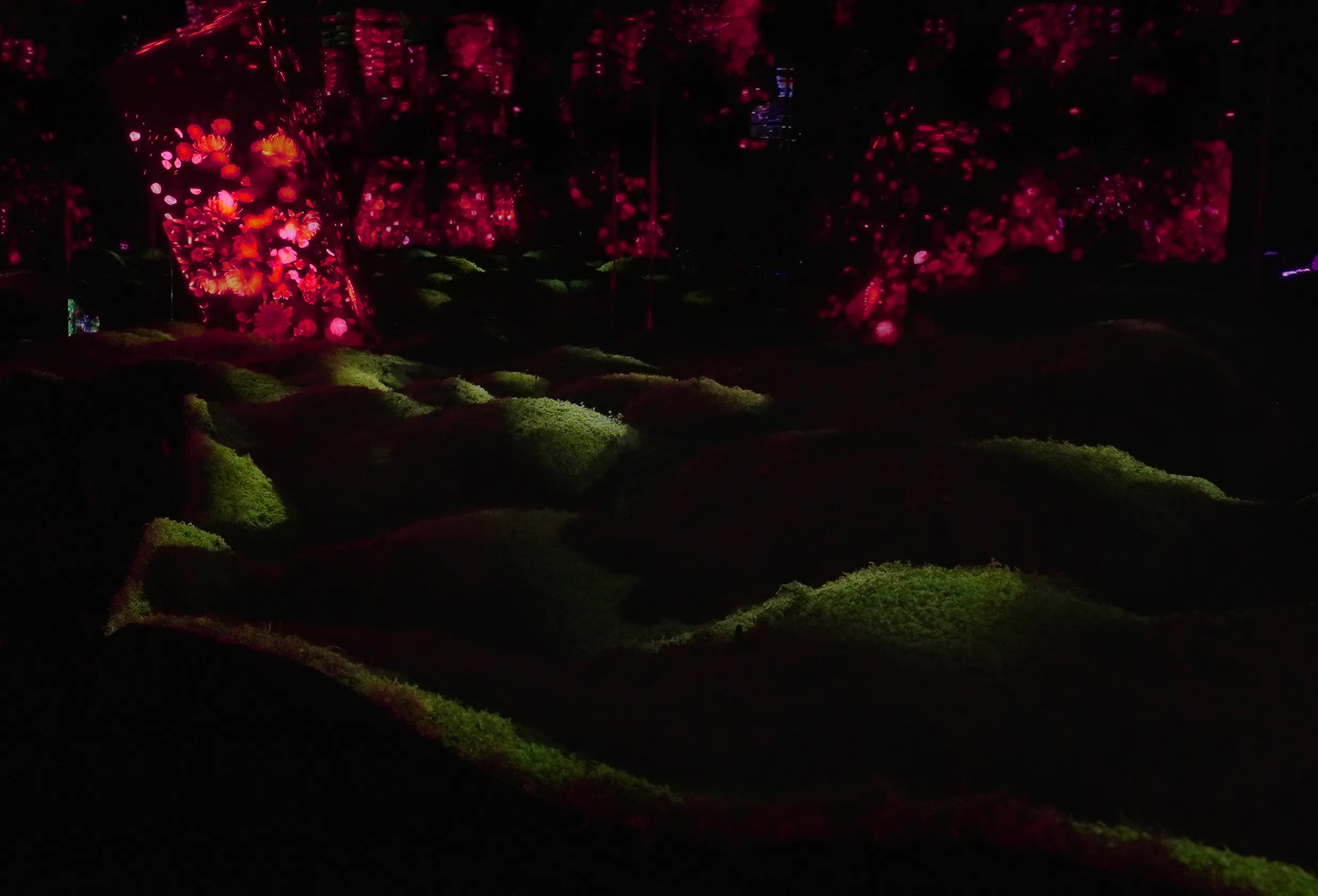
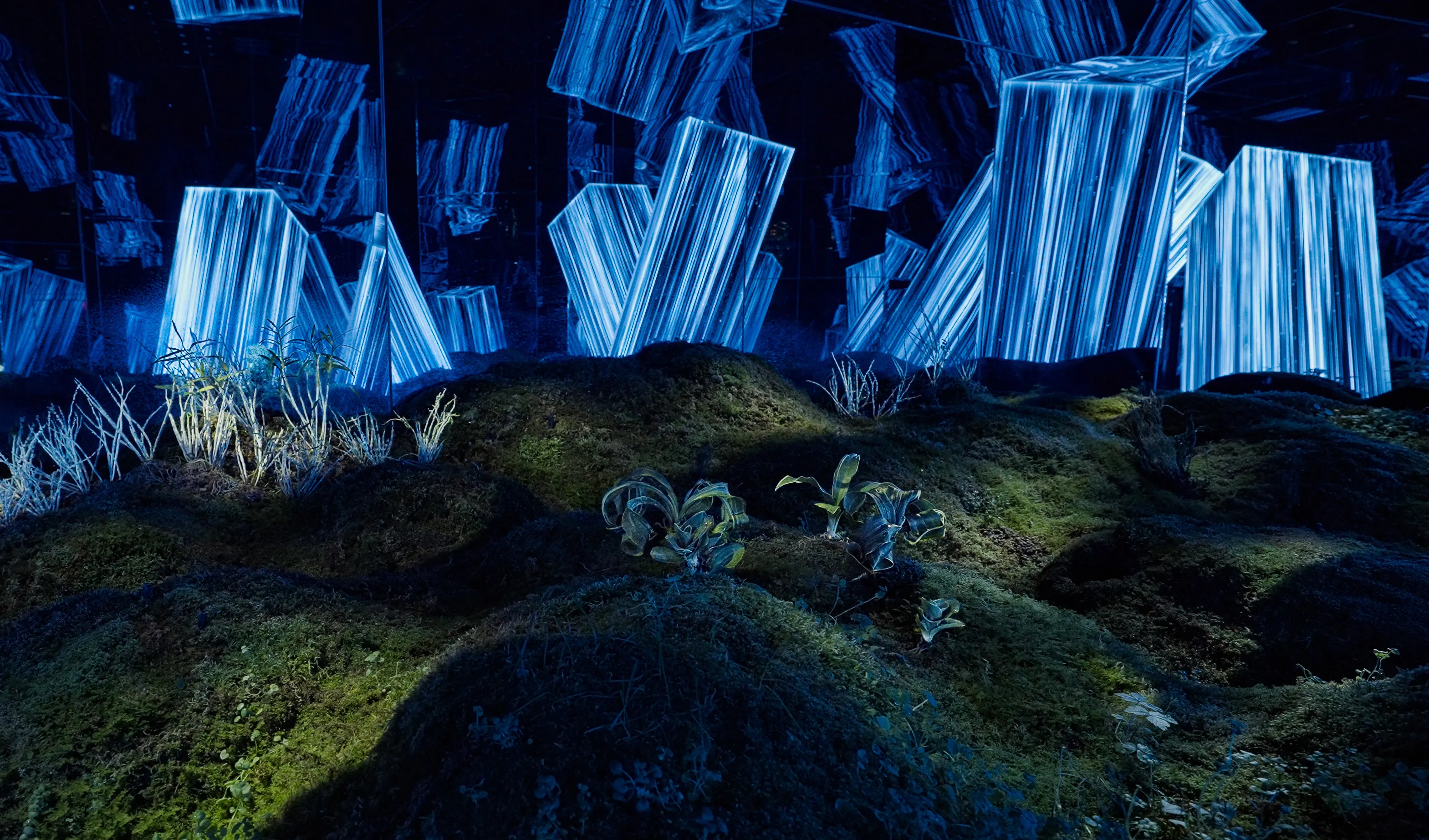
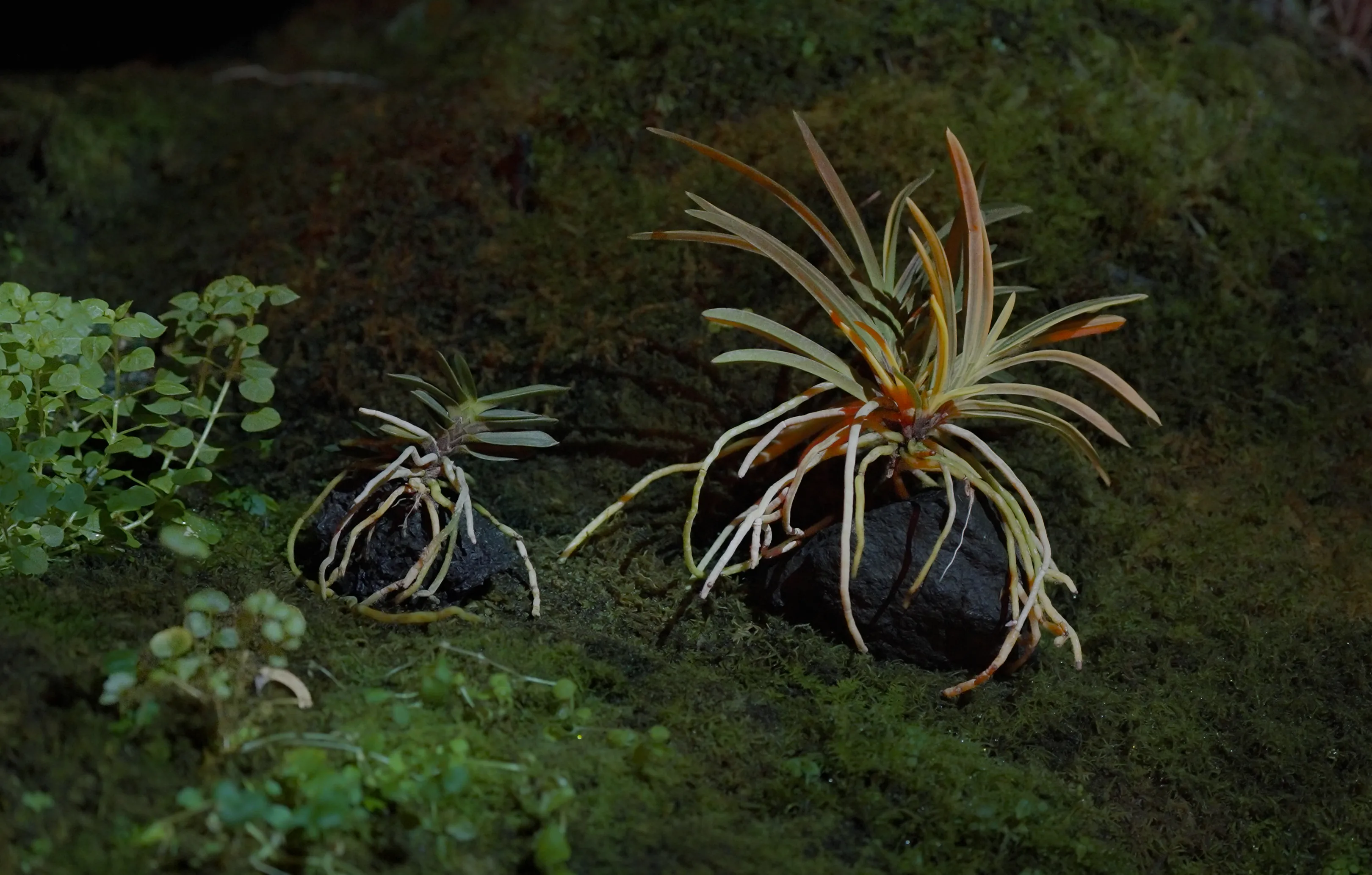
Living moss spreads across this space. The moss mountains shine brightly in response to the diurnal motion of the sun, and at times, Ephemeral Crystallized Rain pours down. The moss mountains are dotted with classical horticultural plants such as Rohdea Japonica, Dendrobium, Whisk Fern, and Spikemoss.
Reversal of Values: Where Does Eternity Dwell?
Before the modern era, from the mid to late Edo period (late 18th to early 19th century), as the paintings of Maruyama Okyo, Itō Jakuchū, and others matured in Kyoto, classical horticulture simultaneously achieved its own unique development.
Classical horticulture is a horticultural culture that achieved unique development in the Edo period, in which extremely rare mutations from original species were discovered, selected, preserved, and inherited. At the time, these circulated in the secondary market at high prices like modern art auctions, and some were even so valuable that a single plant was worth a whole mansion. According to research, during the Tenpo era (1830-1844), prices soared to 300 to 400 Ryo (Ryo is a gold currency unit during this period) for a single plant, and at the end of the 18th century, there remains a record of a high price of 2,300 Ryo for one pot.
In contrast, the paintings of Maruyama Okyo, Itō Jakuchū, and others were not viewed as investment assets that were repeatedly resold at that time. As an example of Maruyama Okyo's primary market (production cost), a set of three hanging scrolls is recorded as worth 3 Ryo. Toward the end of the Edo period, approaching the modern era, Okyo's artworks appeared in the secondary market in the Shoga Kakakuroku ‘Market Price Guide for Art’ (1861) and were valued at one piece of gold (about 25 Ryo in the market at the end of the Edo period), described as having the highest market value, but even so, it was incomparably lower than that of horticultural plants.
Entering the modern era, this sense of value reversed. In the present day, horticultural plants do not circulate as massive assets, but paintings circulate in the secondary market for enormous amounts of money. This difference may have changed depending on what we perceive as eternal.
Eternity in a Closed System, Eternity in an Open System
Things that circulate in the secondary market at high prices are believed, even if unconsciously, to exist for eternity.
People today unconsciously think that plants wither and die, and do not possess eternity, and conversely, they think that paintings possess eternity.
The modern city is covered with things created by humans, in other words, physical objects. The continuation of a physical object does not require an open system that exchanges energy and matter from the outside. Rather, being in a closed system, a state of a closed box cut off from the outside world, is considered ideal for the permanence of a physical object.
The modern age, surrounded by physical objects, may perceive the world based on the premise of a closed system. When this world is perceived as a closed system, a painting approaches eternity, escaping deterioration, and a plant becomes an ephemeral existence that withers and dies.
However, originally, this world is an open system.
Sun rises, and rain falls. As long as there is a cycle of energy and matter, classical horticultural plants like Rohdea Japonica can continuously revitalize themselves and live forever. In fact, some of the classical horticultural plants scattered here were discovered as "miraculous mutations" in the Edo period, and a single individual named like the title of a modern artwork has survived to the present day, having its pot changed and being divided by human hands for 300 years, without ever losing its life.
People before the modern era may have unconsciously thought of this world as an open system.
In a Zen temple in Kyoto, art pieces are placed in areas open to the garden, where the surfaces of the artworks can be seen peeling and the original form gradually being lost. They were kept in these open spaces despite the fact that they were deteriorating. The spirituality of maintaining permanence by destroying and rebuilding everything every 20 years, like the Shikinen Sengu of Ise Jingu which has continued for over 1,300 years, is also established precisely because this world is perceived as an open system.
When this world is perceived as an open system, classical horticultural plants possess eternity, while on the other hand, when perceived as a closed system, it is the paintings that possess eternity.
Depending on how the premise of the world is set, the perception of what is eternal changes, and as a result, the objects that circulate in the secondary market at high prices may have also changed.
Eternity changes depending on the premise of this world.
Nature-made Three-Dimensional Artworks
A mutation in a plant is the creation of new information that breaks stability. Classical horticulture discovered a single individual with an appearance no one has ever seen before from the natural world, placed that unstable mutant individual on the boundary between life and death into a pot, and continued to maintain it for hundreds of years.
This is a one-time miracle released by the natural world, which humans sublimated into stable information within an open system, and fixed by continuing to intervene. It is a Nature-made three-dimensional artwork based on the premise of an open system.
teamLab is also attempting three-dimensional artworks based on the premise of an open system. The series of artworks we call Higher-Order Sculpture, such as Massless Amorphous Sculpture, Morphing Continuum, Transient Abstract Life and Return, and Levitation with Satellite, are fundamentally different from conventional physical existences that do not require an open system, and are existences based on the premise of an open system.
However, classical horticulture seems to be the very three-dimensional artwork of an open system created hundreds of years ago and continued culturally.
This space where moss spreads is a small open system.
This is a place to question again what is eternity: a ritualistic microcosm that lives together with the eternal existence of an open system.