teamLab is opening an outdoor nighttime art exhibition, teamLab: Hama-rikyu Gardens, in Tokyo. The exhibition will be open from Wednesday, November 25 to Thursday, December 24, 2026.
Hama-rikyu Gardens is a representative example of a daimyo garden—a garden belonging to a feudal lord—from the Edo period (1603 - 1868). Its tidal pond, Shioiri-no-ike, draws seawater from Tokyo Bay, its scenery changing with the ebb and flow of the tides.
For approximately 400 years, this site has remained in use, its role evolving from a falconry ground to a retreat for the shogun family, then an imperial detached palace, and finally a garden for the public.
In this exhibition, the garden, with its long continuity of time, becomes an art space. Influenced by the wind and rain, as well as by the ever-changing forest, this art space is transformed by the existence of the people of today.
The exhibition is held in Hama-rikyu Gardens as a special project of ARTE TOKYO (Tokyo International Festival of Arts and Culture), organized by the Tokyo Metropolitan Government and the Executive Committee for the Tokyo International Festival of Arts and Culture, with Ou Sugiyama (SHINRYOIKI, Inc.) as the producer of the project.
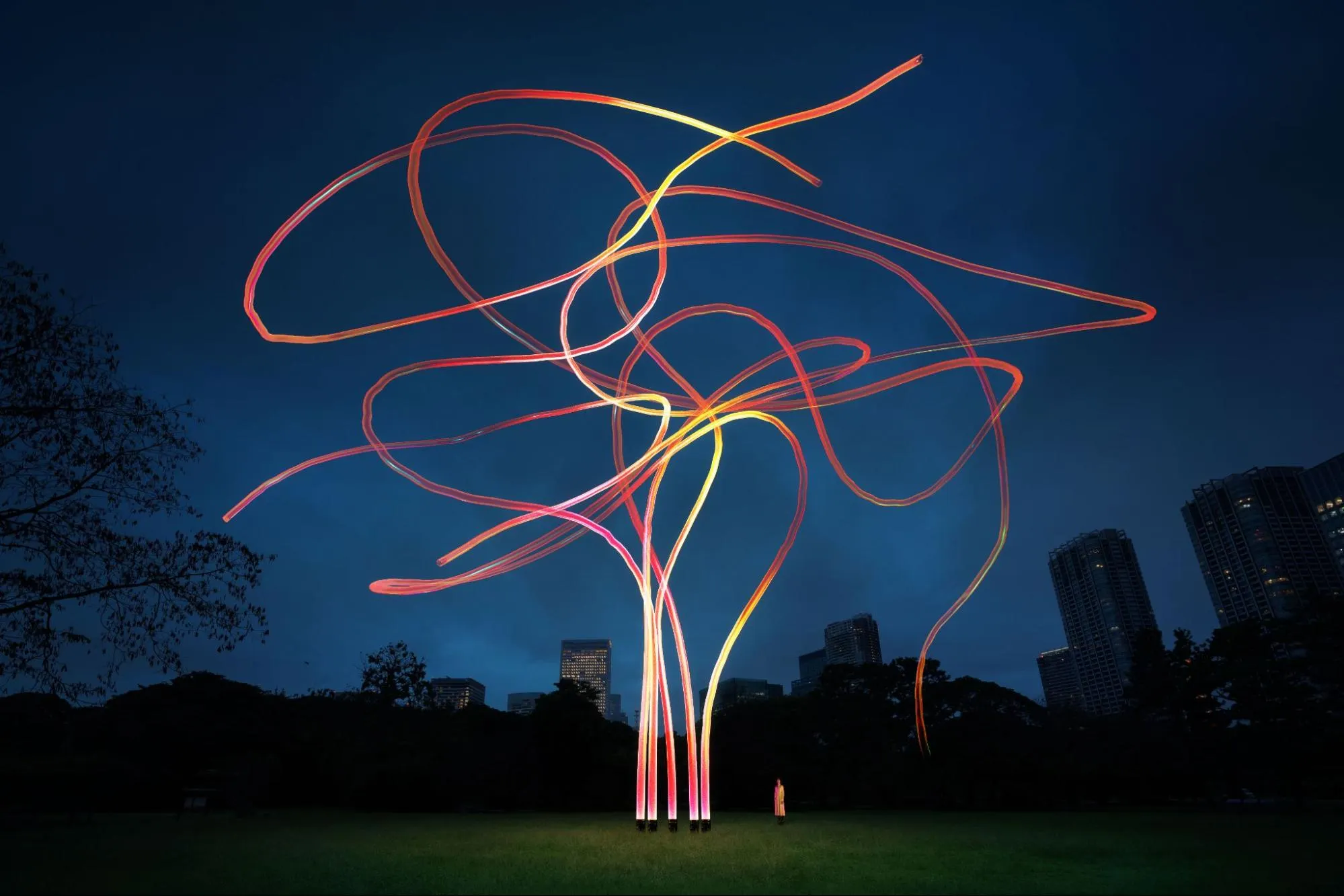
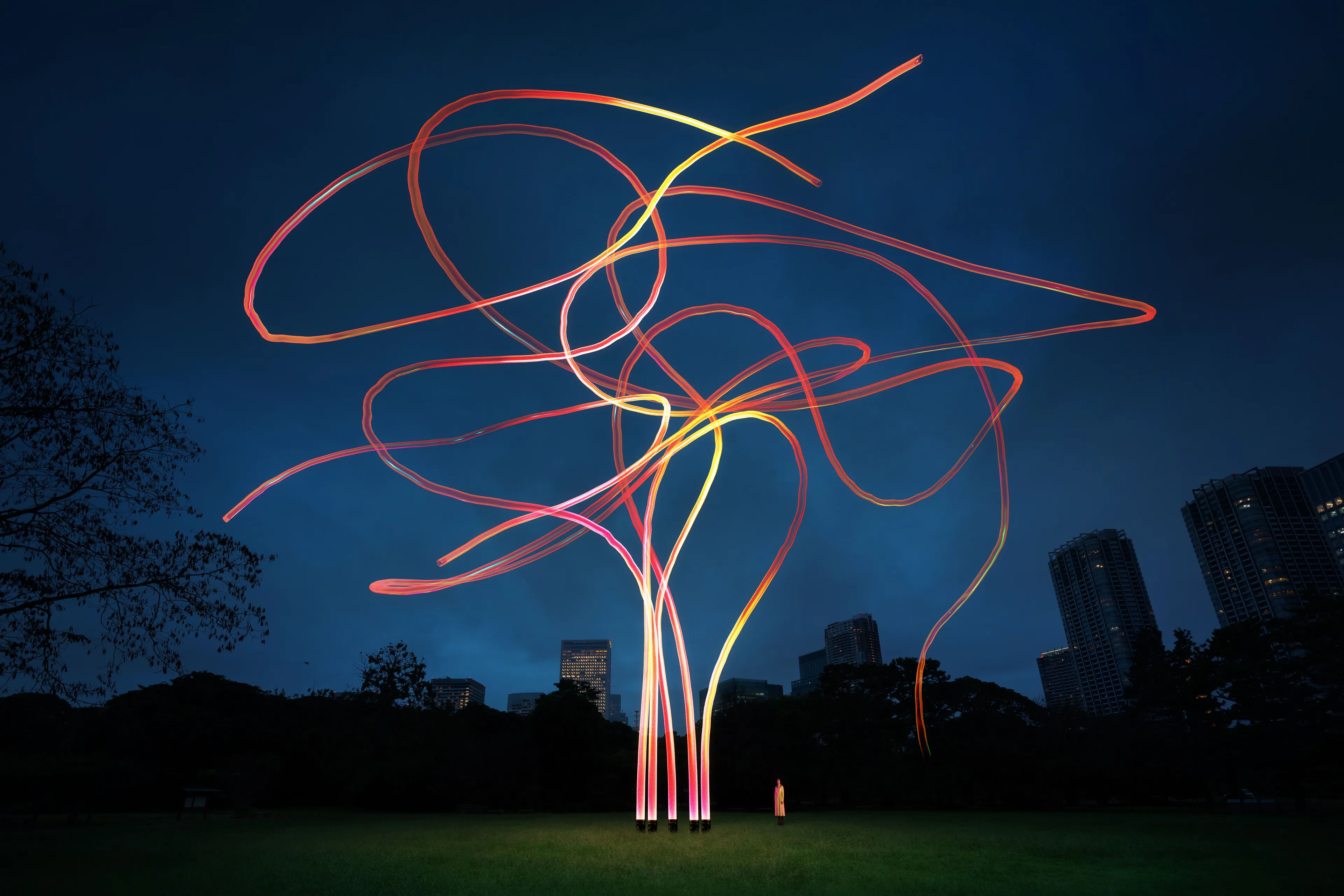
The artwork is strongly influenced by the environment, such as wind, rain, and humidity, significantly changing its movement and height. As long as the environment that gives rise to existence is maintained and the flow continues, the artwork’s existence is maintained even whilst it constantly changes shape.
It is continually moving, flexible, soft, and fragile.
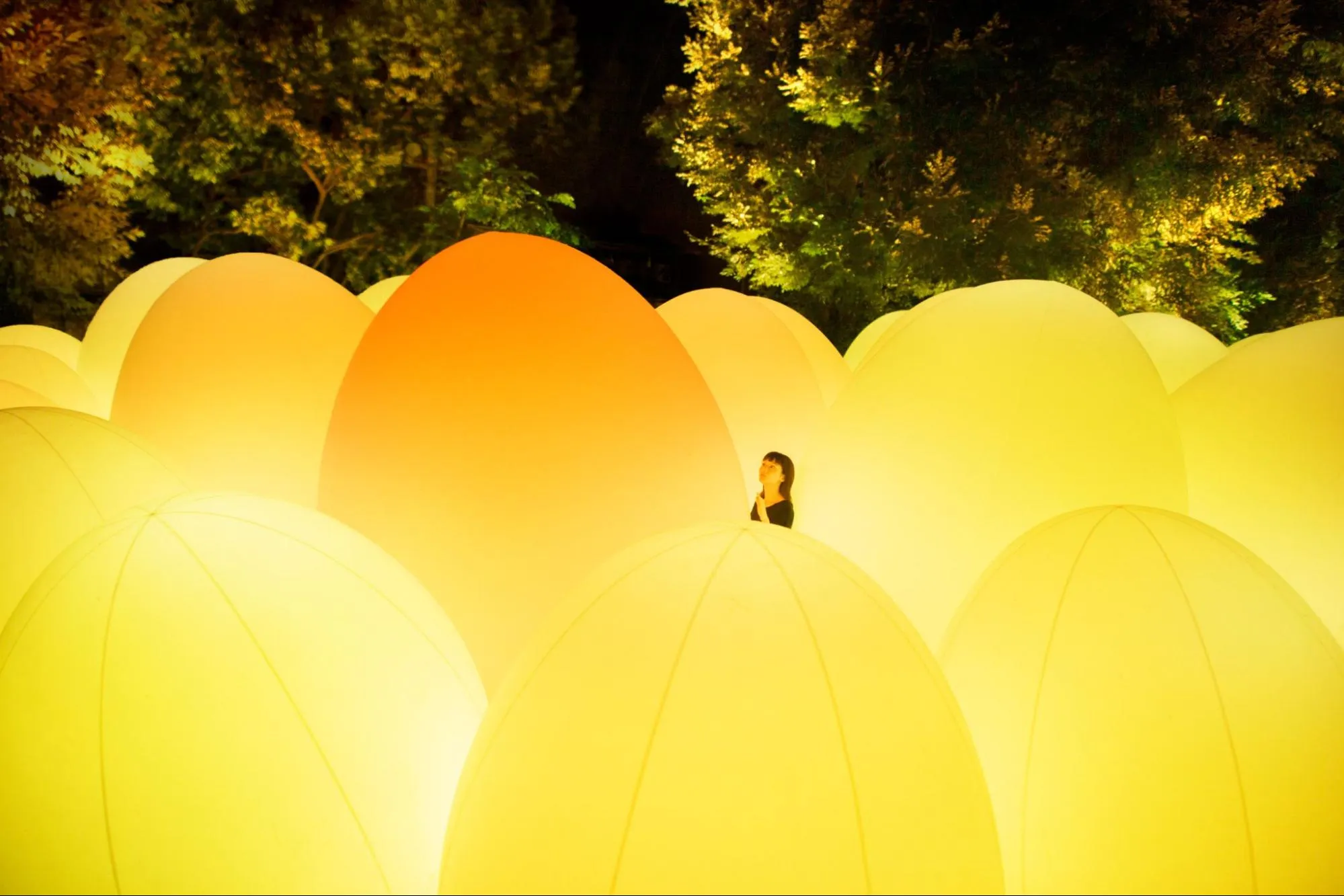
Each Ovoid, when pushed by a person, shines brightly, sounds a tone, and rises back up on its own. The surrounding Ovoids then resonate one after another, continuously transmitting the same light and tone.
The light and color of the ovoids continues to resonate out to the surrounding artwork, Resonating Trees. The artwork space is transformed by people’s actions, making people and the environment part of the artwork.
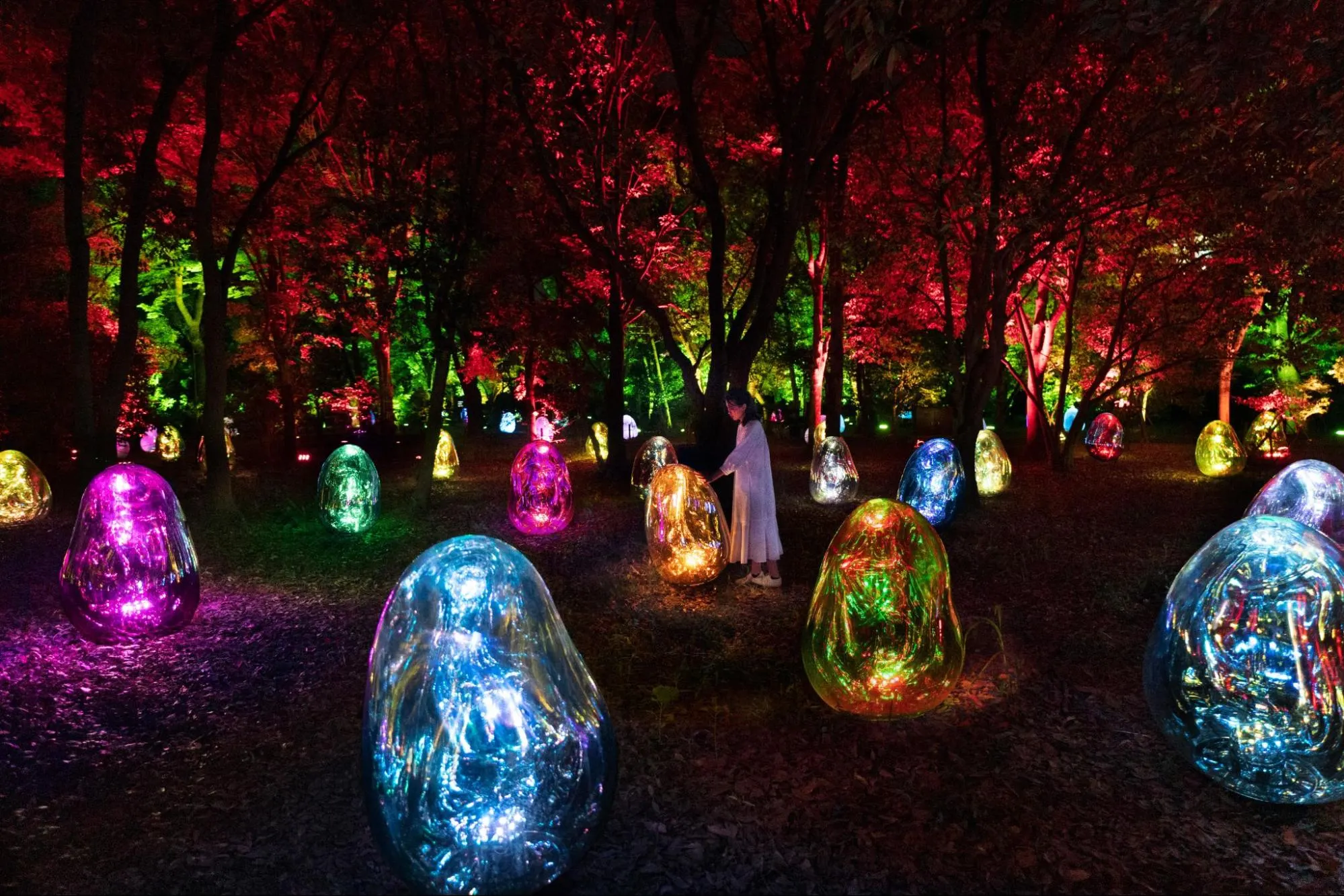
When each ovoid is pushed over by a person, it shines brightly and emits a sound tone as it rights itself. The surrounding ovoids also respond one after another, and the same light color and tone continues to resonate out. The artwork space is transformed by people's actions, making people and the environment part of the artwork.
The patterns of color that appear within the ovoid exist as infinite possibilities until they are seen, and only at the moment it is viewed from a certain perspective is a single appearance fixed. They continue to transform in response to the viewer's moving body, the fluctuations of the sculpture itself, and the surrounding environment.
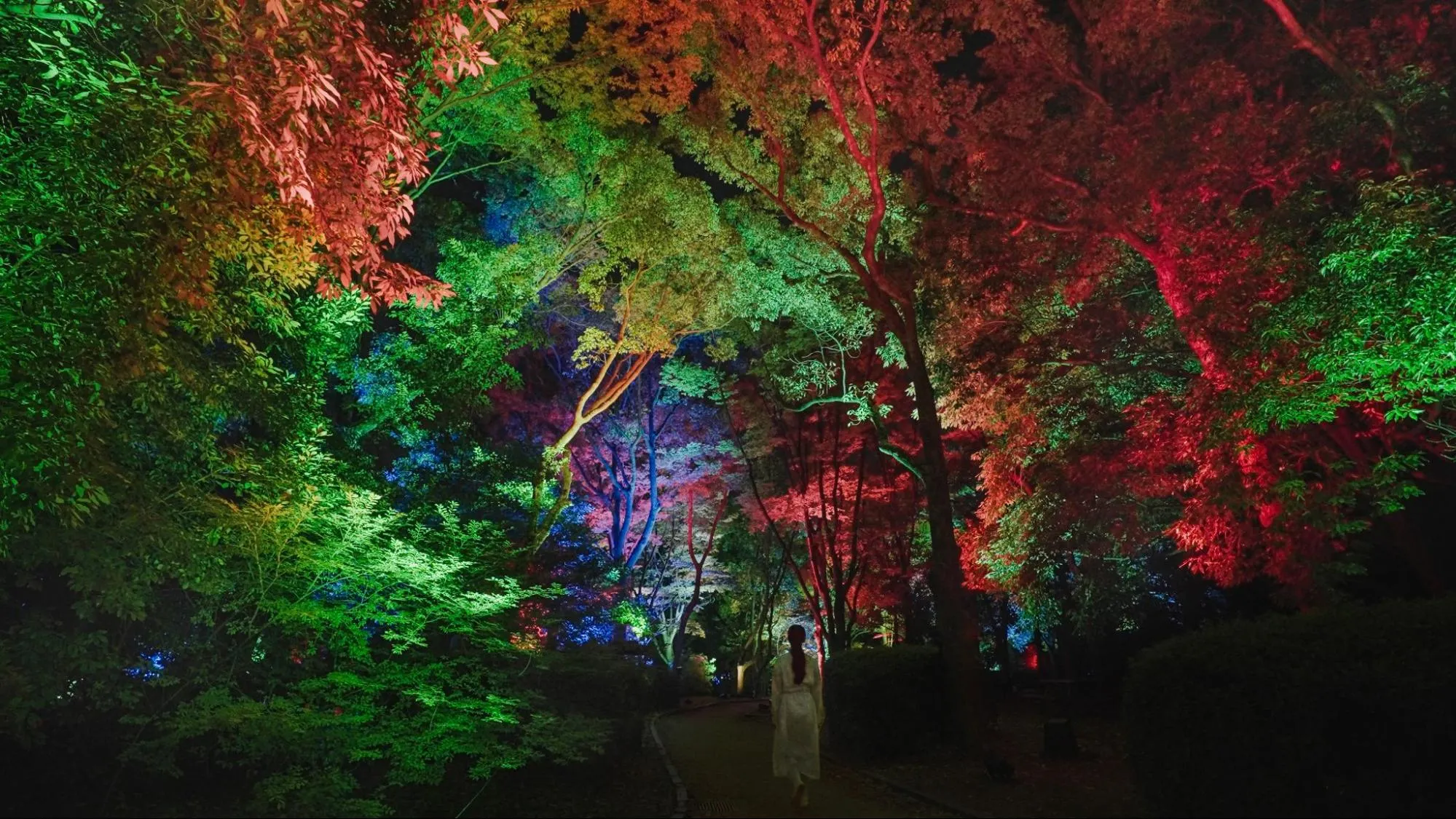
Each tree shines brightly and resonates a tone when people or wild animals approach it. The surrounding trees respond one after another, continuously transmitting the light and tone.
The trees also resonate with the surrounding artwork, Autonomous Resonating Life, creating a continuous flow of light and tone with each other. If a wave of light approaches from the depths of the trees, it signifies the presence of people or wild animals there. The artwork space is transformed by the body, the behavior of others and wild animals, as well as the surrounding artworks, making the people and the environment a part of the work.
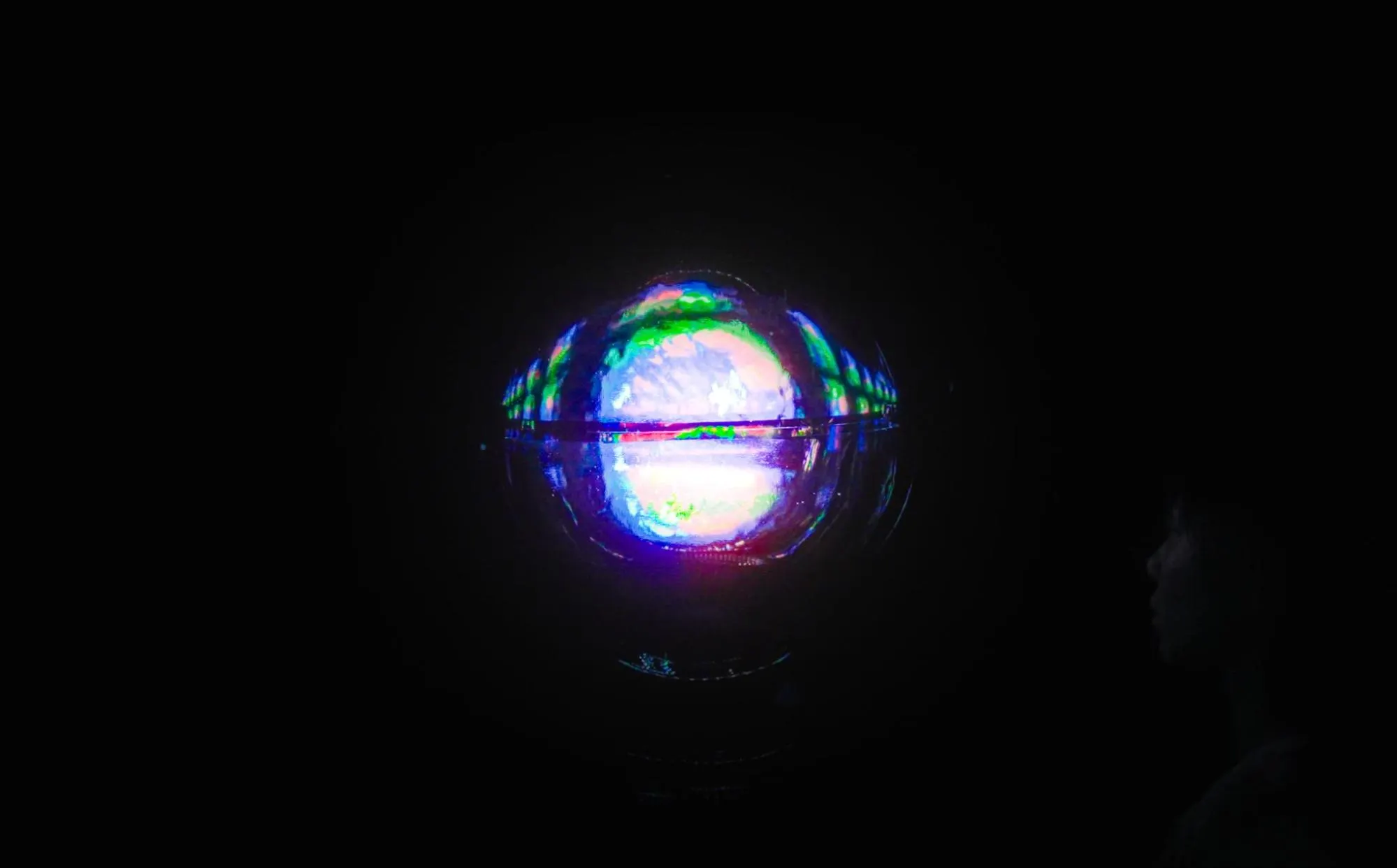
A sphere of light exists in the center of a transparent sphere. However, this sphere of light does not exist.
There is no material, such as glass, on the surface of the sphere of light; this sphere is made only of light. However, in the physical world, light does not solidify, and light does not become a spherical mass. In other words, this sphere of light does not exist.
This sphere does not exist in the physical world, but is a Cognitive Sculpture that exists in the world of perception. Its materials are light, body, and perception. A sculpture that is shaped by the dynamic body and perception of the person experiencing it, and that only appears and exists in the world of perception of the person experiencing it. When it exists in perception, it exists.
The artwork questions perception and existence, and opens up the possibility of new existence that is different from material existence.
teamLab: Hama-rikyu Gardens Concept
Hama-rikyu Gardens is a representative example of a daimyo garden—a garden belonging to a feudal lord—from the Edo period (1603 - 1868). Its tidal pond, Shioiri-no-ike, draws seawater from Tokyo Bay, its scenery changing with the ebb and flow of the tides. The site was originally a coastal marshland covered with reeds, where the Tokugawa shoguns hunted waterfowl with hawks. Land reclamation began around 1654, and a residence known as “Kofu Hama-yashiki” was subsequently built here. During the reign of the sixth shogun (1709 - 1712), it became known as “Hama-goten” and served the shogun family for approximately 160 years. With the beginning of the Meiji era, it became an imperial detached palace. Although many of its buildings were lost to earthquakes and war, the gardens opened to the public in 1946 as a gift from the Imperial Family.
For approximately 400 years, this site has remained in use, its role evolving from a falconry ground to a retreat for the shogun family, then an imperial detached palace, and finally a garden for the public. In this exhibition, the garden, with its long continuity of time, becomes an art space. Influenced by the wind and rain, as well as by the ever-changing forest, this art space is transformed by the existence of the people of today.
As we wander through the garden’s forest, walking where layers of time and the present intersect, nature and people, the long continuity of time and the present, all form a continuity without boundaries.
Message from Ou Sugiyama, Producer of the Hama-rikyu Art Project (SHINRYOIKI, Inc.)
A garden designated as a Special Place of Scenic Beauty and a Special Historic Site of Japan with a long and distinguished history. We are deeply honored to present "teamLab: Hama-rikyu Gardens" in this irreplaceable setting, together with the internationally renowned art collective teamLab.
With the utmost respect for the garden's history and natural environment, passed down since the Edo period, we will create an experience through art that reveals a distinctive side of Hama-rikyu after dark, unlike anything seen during the day. We look forward to sharing these unique sights with visitors from across Japan and around the world.